


Hi there,
Upsells are so impactful in e-commerce, contributing 10-30% extra revenue for a brand (Wisernotify, 2025).
More importantly, it often comes at a higher profit, as you’ll likely upsell them on their existing order. I’ve even seen it improve customer retention by getting them to try a broader range of products.
Finally, if you manage to do this effectively for new customers, it can allow you to work with a higher acquisition cost thanks to the boost in average order value.
So today, we will focus on a specific type of upsell: the post-purchase upsell.
Tools for post-purchase upsells
First things first, let’s consider the practicality of it. How will you manage your post-purchase upsells? There are a load of Upsell tools that integrate directly with Shopify, but there are two main ones I see being used:
Aftersell: This is better for a simple and quick setup. If you aren’t as tech-savvy or value speed over customisation, go for Aftersell.
ReConvert: Better for a more customised and branded experience.
It’s hard to compare pricing as ReConvert is slightly cheaper but charges an extra 0.75% of the upsell revenue (which Aftersell doesn’t do), so for most brands, it works out to be a similar amount.
Personalisation is key
Usually, I’m a fan of starting simple and building it out from there. That being said, avoid a blanket offer for all as a starting point because:
It can devalue your product to offer the same discount each time
It can worsen the experience for new customers if it’s too pushy
It might be irrelevant, e.g., you don’t want to offer the same product at a discounted price if they wouldn’t buy 2+
It is so simple, in this case, to offer a specific personalised offer, and then you can build out more as you go. If you have a popular bundle, a common add-on product offered once at a discount could work well.
For example, I bought a wavy haircare starter kit with shampoo, conditioner, and various styling products. They upsold me a hair mask at a discount post-purchase.
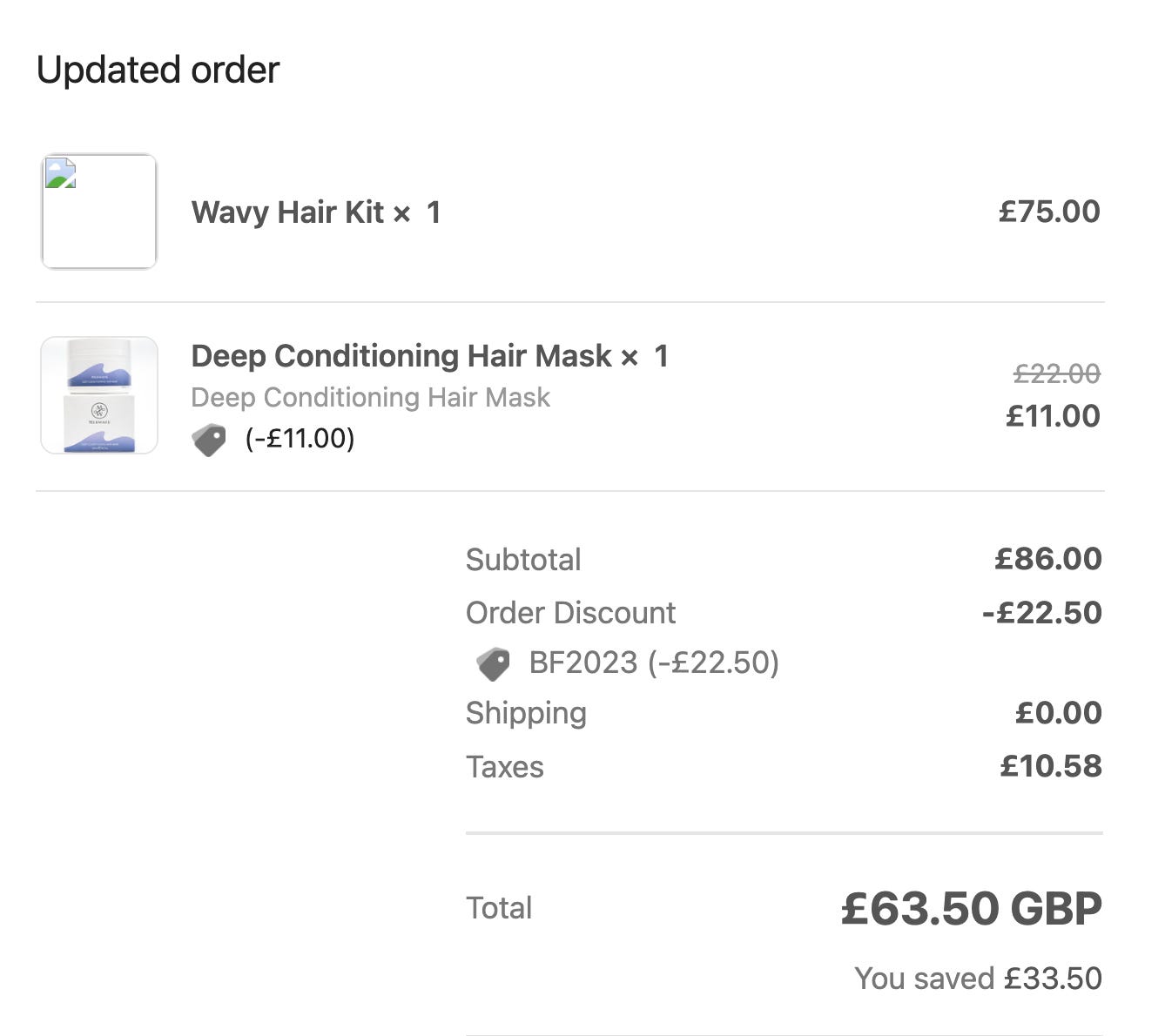
As you can see, it convinced me to purchase the mask. Even when I know exactly what a brand is doing, I’m easily convinced.
What you offer and how you categorise the offers will depend on your product category, but I’ll walk you through some general tips and inspiration on driving more upsells and cross-sells post-purchase.
What I wish I’d known when I started out
Just a few general tips based on what I’ve learned over time:
Discounts are needed. So that it doesn’t come across as a ‘please buy more’ situation, I would always offer some type of discount for the Upsell.
One clear offer is better than a blanket discount. The more specific the offer, the better it tends to work. That being said, a secondary offer (if they reject the first) can teach you a lot and bring in some extra revenue.
Don’t be too aggressive with offers for new customers. You are still building up their trust in your products and brand, so only offer value adds and focus first on additional offers to existing customers.
Work on your hierarchy of importance. Some of your segments will overlap, and that’s okay, but analyse which offers are working and which aren’t so that you can prioritise them to drive the most revenue.
Spend some time segmenting your orders. This helps you ensure offers are worth setting up. I’ve had ideas I was excited about, but I only found out after setup that the segment was far smaller than I expected, and the upsell wasn’t worth the effort of running it.
Really consider how often you show an offer. If you offer 20% off for every 3rd product, your customers might get used to that, which can hurt your margin. I often show offers only once and then have backup offers if they’ve seen the initial one to mix it up.
Don’t underestimate the benefit of gentle urgency. Usually, a tool will have an automatic countdown, but indicating that the offer is limited in the copy works well in driving success.
Test a full landing page for the upsell of other products. Don’t assume customers know your products, take the time to create a bigger landing page with trust symbols, can go a long way in encouraging them to test out the other products.
Upsell Examples
Here are some segments/examples of potential upsells to consider testing (and to help you think about options).
My usual starting point is analysing common product combinations to see which ones are worth targeting as well as thinking from a customer journey perspective about what would add value for a 1st vs. 2nd order or a specific segment:
1. Try other variants: This is great for food/drink/beauty products to encourage retention as it helps them find a product that matches them.
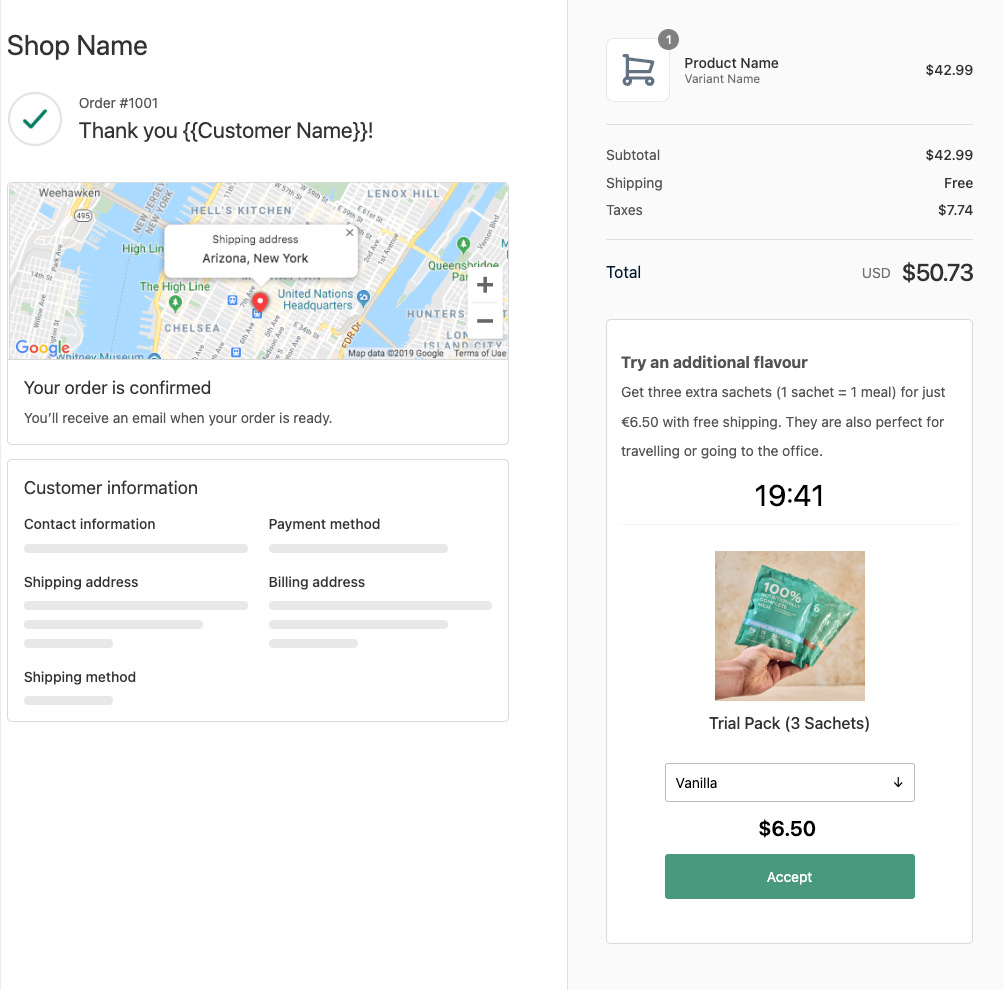
2. Complimentary products: Complete the set and explain why it would benefit them. This is what we saw with my hair mask example.
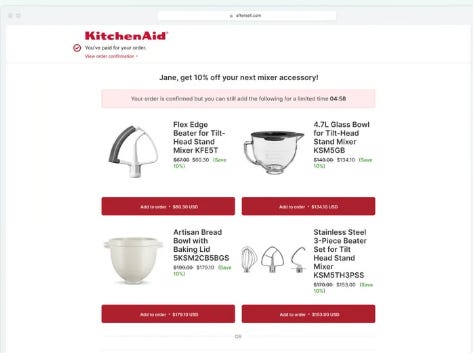
3. Treat yourself: Small additional products to add on.
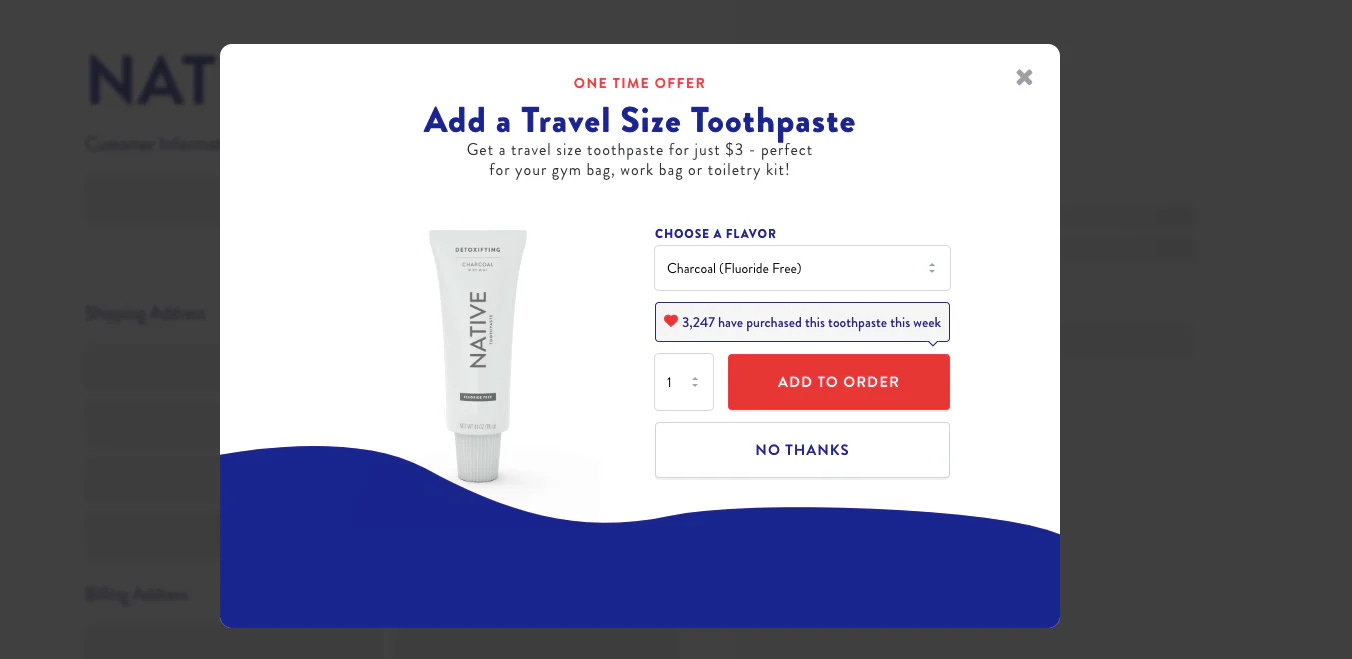
4. Bulk buyers: Additional product at a discount, e.g. get the 3rd product at 50% off.
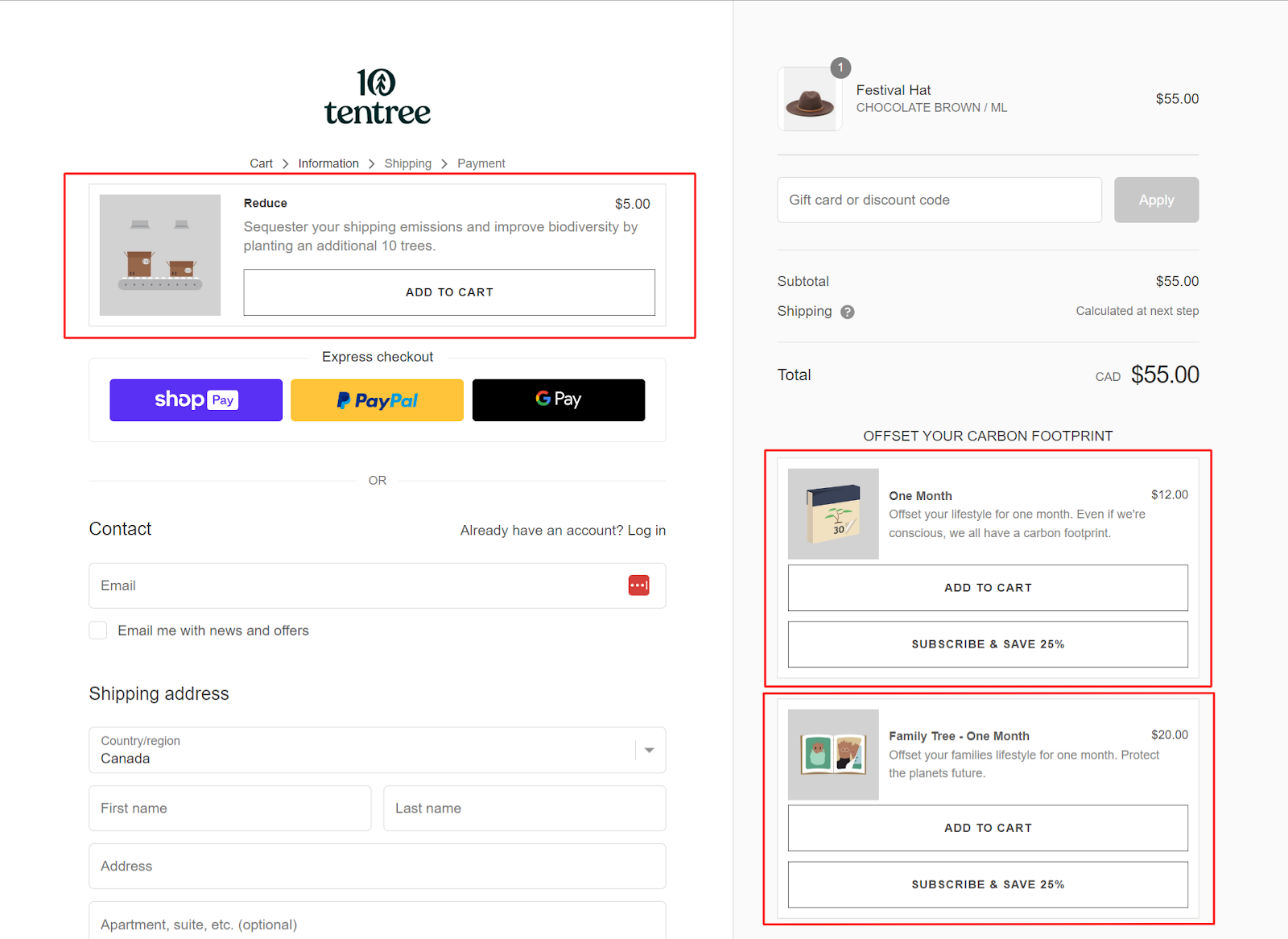
5. Non-physical product upsells: Great for margin and also improving their experience, e.g., courses, ebooks, but can also be sustainability upsells, warranties
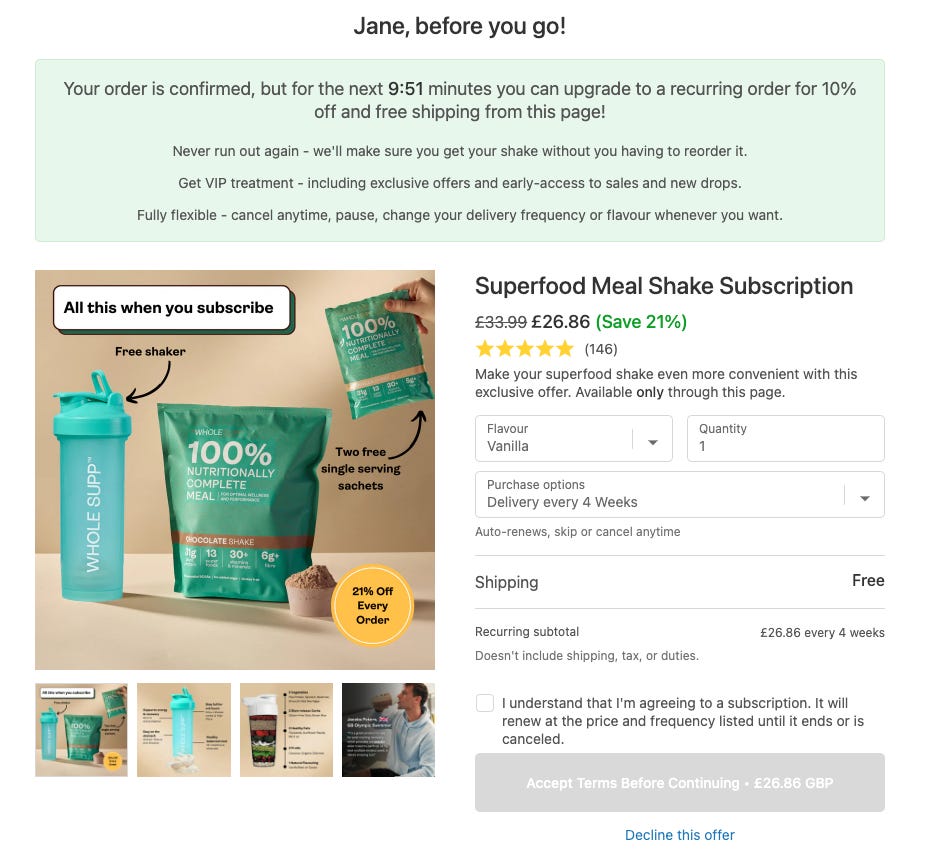
6. 2nd or 3rd purchase but not subscribed yet: Upsell to a subscription to get an extra discount (this segment tends to be quite small in the beginning)
Recommendation
If you are keen to try out post-purchase upsells, but are still a bit nervous about the whole setup, check out this great 10 minute video on YouTube by ‘How to Shopify’ on setting up upsells in Shopify with Aftersell:
ReConvert has a similar walkthrough of their own product on YouTube as well:
This is a great way to compare the tools before you commit. Speaking from experience, it is frustratingly difficult to switch them once you’re all set up, so try to get it right the first time. Both videos are from 2025, so they should be up to date!
As a rule of thumb, if you earn at least £20K in monthly revenue and have 3+ SKUs, you should consider a post-purchase upsell tool.
Before that, achieving the rewards can be a lot of effort, and you want to focus on bigger levers rather than an add-on.
From that level, you’ll usually see in the beginning a 2-3% boost in revenue (of course, it varies per brand), which you can build out to around 10%, if not more, through personalisation and A/B testing offers.
Let me know if you end up trying it out,
Daphne