


Hi there,
I primarily work with health and wellness brands, and repeatedly, I hear the same names come up as inspiration (or envy material.)
For e-commerce, it’s usually:
Huel
AG1
Heights
Maybe I hear the last one more often because I worked for them, but my point stands.
If you had just started running, would it be fair to compare yourself to Usain Bolt? Or even compare your pace to that of your friend who does marathons?
But just like a new runner shouldn’t measure themselves against a professional marathon runner, nor should you compare yourself to successful competitors.
They have brand recognition you don’t [yet]
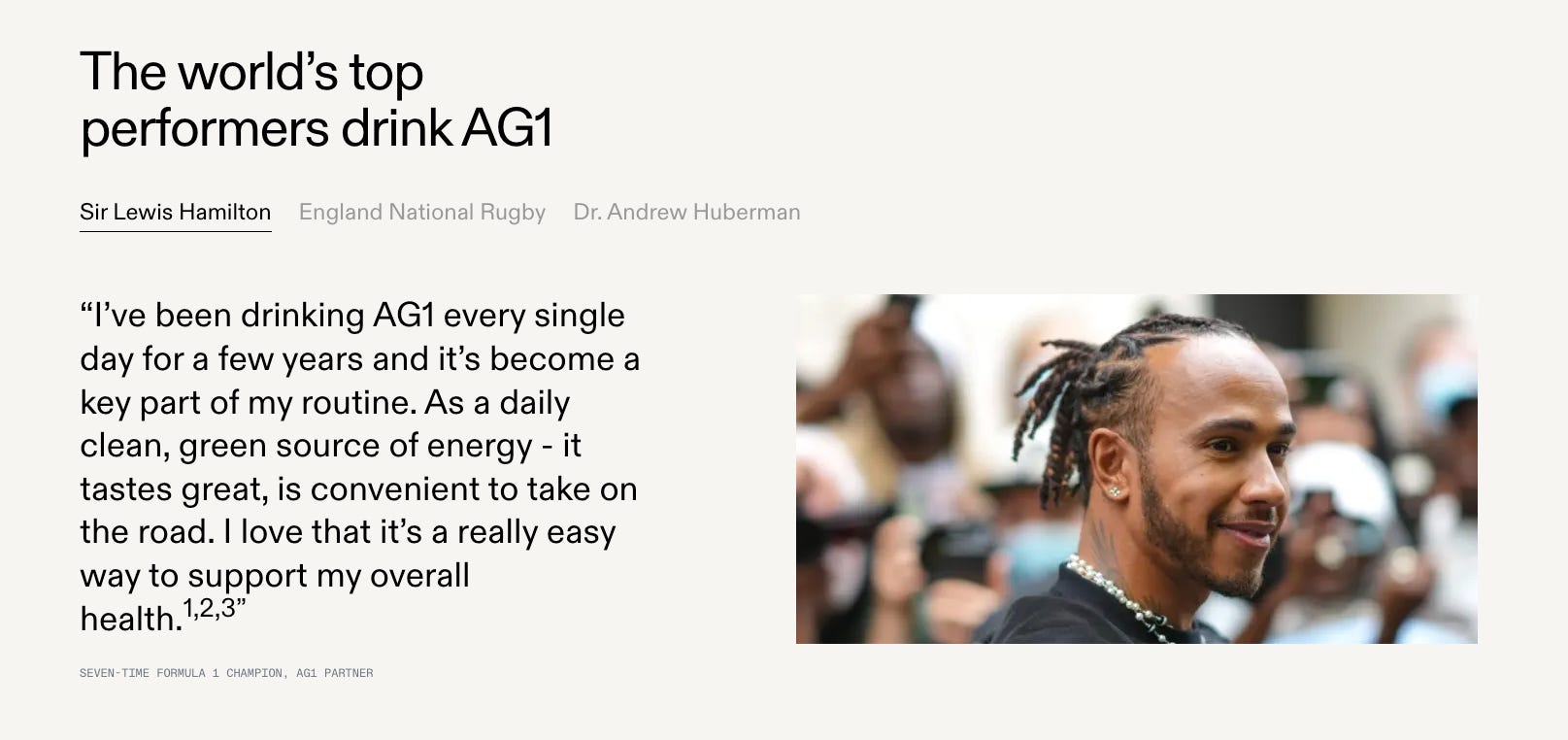
Athletic Greens can get away with vaguer ads, fewer reviews, and more because they have some huge names using their products. Maybe you’ve heard of…Lewis Hamilton?
Huel doesn’t show specific customer reviews either and focuses instead on a high-level number, playing on quantitative over quality of reviews:
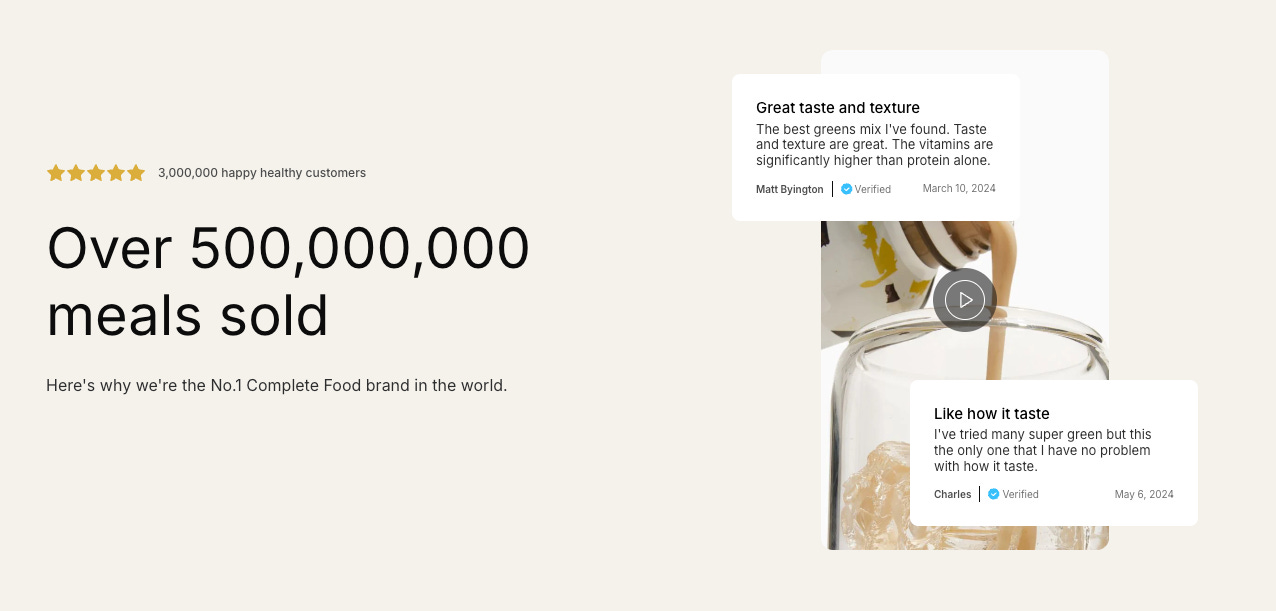
But this isn’t something I’d recommend for a new brand. They both have huge names using their products and offline awareness.
So, what they will focus on and show will be different from yours. You’ll need to work harder to build trust, and they will probably share more information than you do now.
Heights don’t have a ‘How it Works’ page anymore because more people know and understand their products, but they did when I still worked there. They also focused more on a quiz and warming up the audience. Strategies change with time and growth.
In the beginning, you’ll often need to:
Have more information available for people to dive into the brand
Share more social proof informing customers why they should choose you
Focus more on building brand trust and credibility
So please don’t assume that their way is the best way because, for you, it probably isn’t.
Their websites often cost 100,000s
“Comparison is the thief of joy,” and I don’t think Theodore Roosevelt could’ve ever imagined how true this would be for websites—or what a website actually is.
Often, these brands are on version 3 or even version 10 of their websites; they have way bigger budgets to work with and also probably different data to put on their website. Trust me, their first website did not look this good.
If you try to reach their level immediately with a tenth of the budget, you’ll end up with a cheap copy.
The other day, I came across what appears to be a new CBD drink brand, Skip.
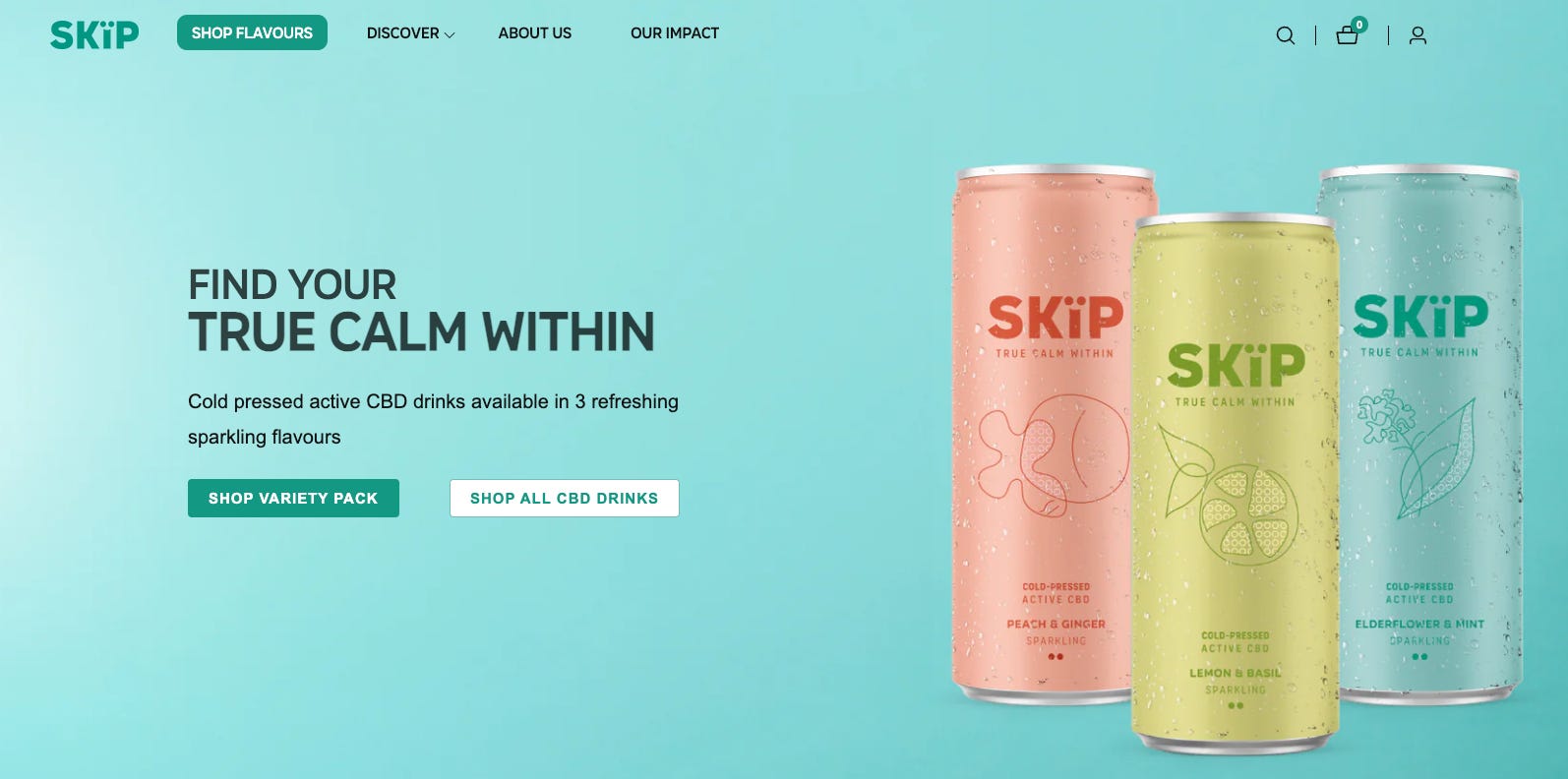
Does it make you think of anything? UK readers will likely be reminded of this popular brand, Trip (time for a game of spot the difference).
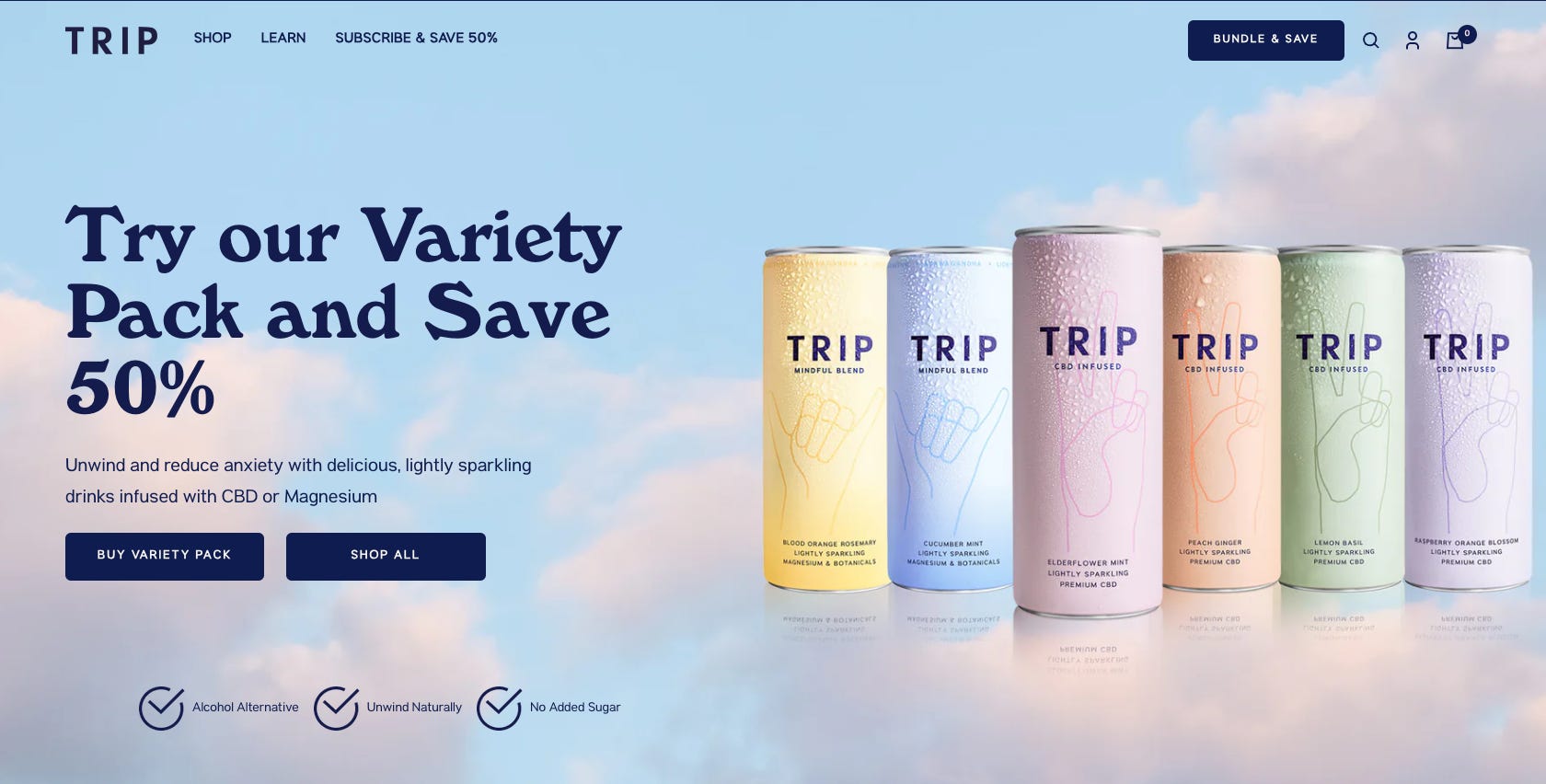
There are too many similarities to list, including the branding and language. But why would I try Skip over Trip? I really looked into it but I couldn’t find a clear reason.
Copying isn’t winning.
Even if you don’t directly copy, it will also be demotivating. This is one of Athletic Greens’ old websites:

This is their website now:

Quite the difference, right? They’ve come a long way, and you will too, but give it time. Their website, tech stack, and even messaging changed with their audiences, and yours will need to do the same.
I’m sure your v1 will be better than their v1, but it doesn’t need to be their v100 on the first go.
Focus on what makes you different
Now, I’m not saying you shouldn’t analyse competitors at all, far from it. But instead of focusing on being the same as the top competitor, I’d recommend doing the following:
Start with understanding your target audience
Understand what your competitors focus on
See if you can find a gap to stand out
Use their website to pick and choose parts they do well that help you stand out in the gap
For example, in my Message-Market Fit Programme, I share how to use these insights to work out a position map:

Recommendation
In every edition of Growth Waves, I also share a related resource to check out related to the week's topic.
While researching this topic, I came across a great article on how to do a UX analysis of competitors without copying them in the process. Matt Isherwood discusses the standard approach most brands take and what to do differently.

Rosie Hoggmascall also wrote a great piece on when to and when not to copy a competitor:

It’s easy to get distracted by other brands and assume they know best.
When I was at Heights, countless people would tell me they also tried something we had implemented. That terrified me, as we were still working it out and weren’t yet convinced of those things.
So don’t see other brands as the be-all and end-all. If you need and want inspiration, look at brands in entirely different spaces to get more unique approaches.
And most importantly, do what is right for the current phase you are in.
Until next week,
Daphne