


Hi there,
I was just 1km into a 40km hike when the storm hit.
My boots were already soaked, squelching with every step. I was halfway up the first peak, with another 39km and the better part of 10 hours still ahead of me. (Yes, I’d checked the weather. Saturday “looked fine.” Saturday lied.)
So I had three options:
Pivot: Turn back and try again on Sunday.
Adjust: Slow down, find shelter, change the plan.
Or Stay the Course and keep climbing.
I kept climbing and finished the hike.
Recently, I was thinking about that moment on the trail because I’d just sat down with a founder facing a different version of the same decision.
Most of us reach points where we have to choose a direction. Instead, we convince ourselves we can climb three mountains at once.
During our strategy call, he explained he was building in one of the most crowded categories imaginable. (I’ll keep him anonymous, but think weather apps. Almost everyone has one on their phone.)
Which was exactly why he felt stuck.
He had at least five different audiences he could build for. And when almost everyone uses your type of product, the possibilities feel endless.
So he was trying to serve all of them at once.
That’s the trap.
Five audiences means five slightly different products, each pulling in a different direction. Your roadmap slowly fills with competing priorities. You build a little for everyone and something indispensable for no one.
So I gave him the same thing I reach for whenever I’m overwhelmed by too many options: a way to make the decision smaller.
Here’s the thing, almost no one says out loud: the fear of focus is really the fear of permanence.
We don’t avoid choosing an audience because we can’t decide. We avoid it because choosing feels final. “If I commit to runners, I’m abandoning everyone else forever.” So we stay broad and water the product down for all of them.
But committing to an audience isn’t a tattoo. It’s a direction of travel. And there are only ever three things you can do with a direction.
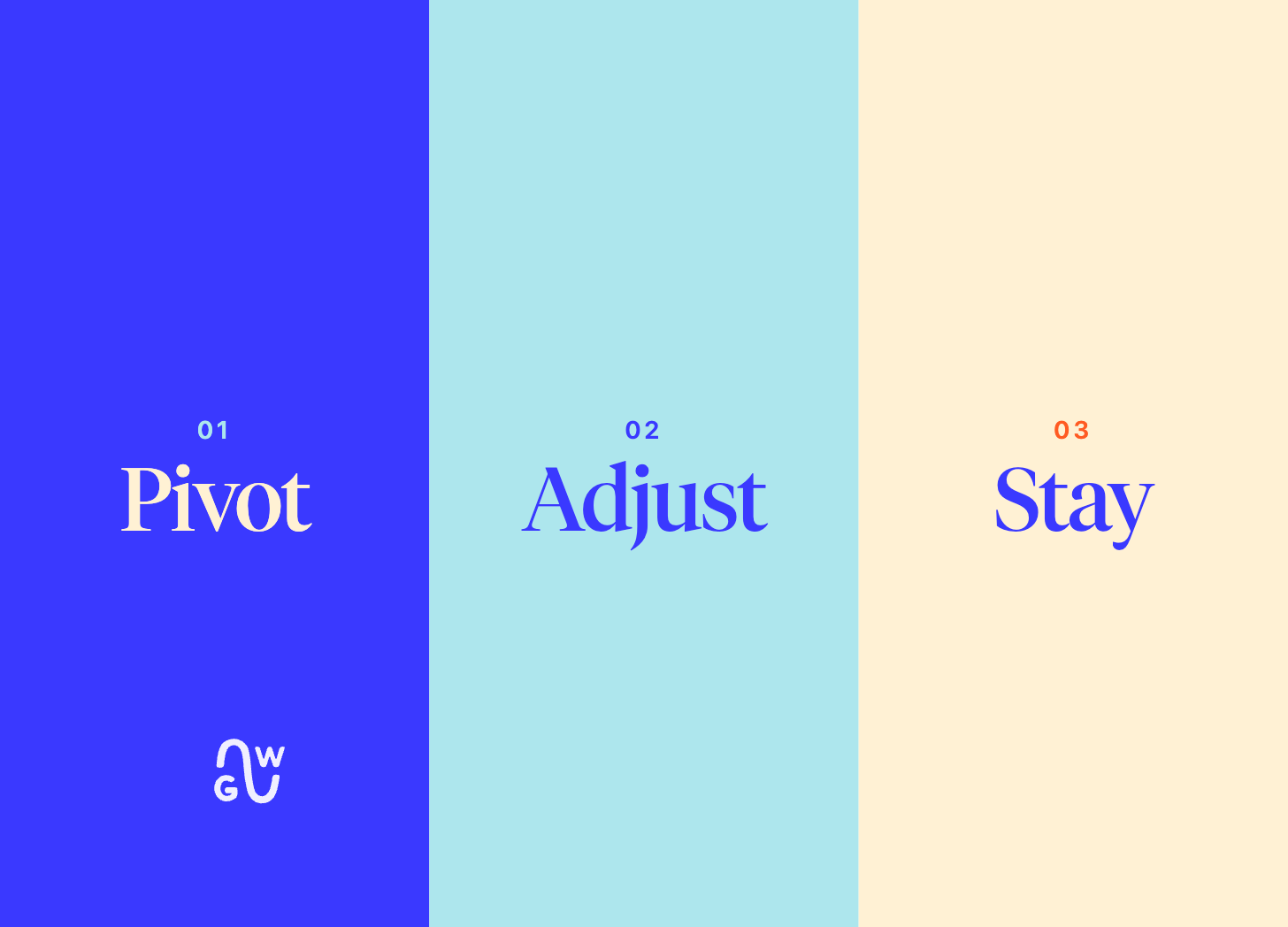
The 3-way check: stay, refine, or pivot
You pick an audience, then run this every few weeks. Look at the evidence, then choose one:
1. Stay the course. The signals are good. Your target users are activating, the feedback’s right, there’s payment intent. Don’t second-guess it. Put your energy into execution.
2. Refine. The direction’s right, the details are off. Maybe it’s not athletes training for an event, just people who want to move more. Maybe it’s one use case, not five. Same mountain, better route.
3. Pivot. The evidence killed your core bet. Your target users tried it and didn’t see the value. Change the problem, the user, or the solution. On purpose, not in a panic.
That’s it. Three options. The goal isn’t to be right on day one. It’s about committing hard enough to actually learn, then steering.
It’s how the apps you admire got there:
Calm could have been “wellness for everyone.” They committed, saw Sleep Stories take off, and doubled down.
PhotoRoom could have been “Photoshop, but easier.” They picked one job (background removal) for one audience (non-designers selling online who need speed, not perfection), then expanded.
Ladder (I use it most days) had real product-market fit with fans of specific influencer coaches. They hit roughly $1M ARR and a ceiling. To grow, they pivoted to a broader audience who didn’t want to pay extra for 1-on-1 access.
None of them got it right up front. They committed, then adjusted.
What to actually do this week
If you’ve got multiple audiences you’re juggling and you’re scared to pick, do this:
1. Score them.
For each audience, rate three things out of 5:
How painful the problem is
How badly it’s being solved today (aka are other apps not meeting their needs)
How willing they are to pay.
Use that to prioritise the highest potential audience.
2. Write it as a hypothesis.
“We’re building for [audience] who struggle with [problem]. We’ll know we’re right if [specific signal].”
A hypothesis is easy to change and can be proven/disproven.
3. Decide your evidence in advance.
Before you ship anything, write down what would make you stay, refine, or pivot. Otherwise you’ll just read the data to confirm what you hoped. We all do it, let’s not pretend otherwise.
I’m a pivot’er

Quick confession, so you don’t think I’m preaching from some serene strategic mountaintop: I’ve repositioned my own consultancy more times than I’d like to admit.
I’ve dropped services, added new ones, niched down, then niched differently.
You know what happened? Nothing.
No one cared. (Sorry, but it’s oddly freeing.)
The hard part isn’t choosing the perfect direction. It’s choosing one, knowing you can always change it later.
What I’d recommend this week
If this hit a nerve, I get properly practical on this in my free course with RevenueCat: Early product decisions: How to build an app people will pay for.
It walks through how to choose your first audience, define what “working” actually looks like, and run the stay/refine/pivot check without spiralling into endless second-guessing.
It’s the exact framework I kept reaching for during that strategy session.
I’d also highly recommend watching the Pivot scene from Friends again. Pivoting is far less scary when you have the phrase “Pivot, Pivot, Pivaat!” in your head.
One last thing I told that founder, because it’s the real risk when you’re trying to do too much: don’t fall for the solution before you’ve nailed the problem.
He’d sketched out a genuinely clever feature, the kind that makes you go “Oh, that’s actually different,” and I loved it. But a clever feature for an audience you haven’t committed to is just a nicer way of going off-topic.
Problem first. Then solution.
So: pick the audience with the strongest pull. Commit until the evidence tells you otherwise. Then decide whether to stay, refine, or pivot.
You’re not signing your life away. You’re simply choosing which path to take.
And when the storm rolls in, you can always change direction. (Ideally in drier boots than mine.)
See you next week,
Daphne