


Hi there,
I cancelled my Peloton subscription after a price increase.
Not because it got worse.
The price increase just forced me to confront something I’d been avoiding for a while: I wasn’t really being retained anymore.
That’s what makes price increases so dangerous for subscription apps.
They can work really well, unless you have a retention issue.
It’s not that they cause churn; rather, they can shine a very bright light on what’s already not working.
This is what happened with Peloton.

When a price increase becomes a mirror
Peloton had actually done price increases well in the past:
Clear communication
A strong story around how the product had evolved
Ironically, I’d even used one of their older emails as an example of good practice around communicating price increases.
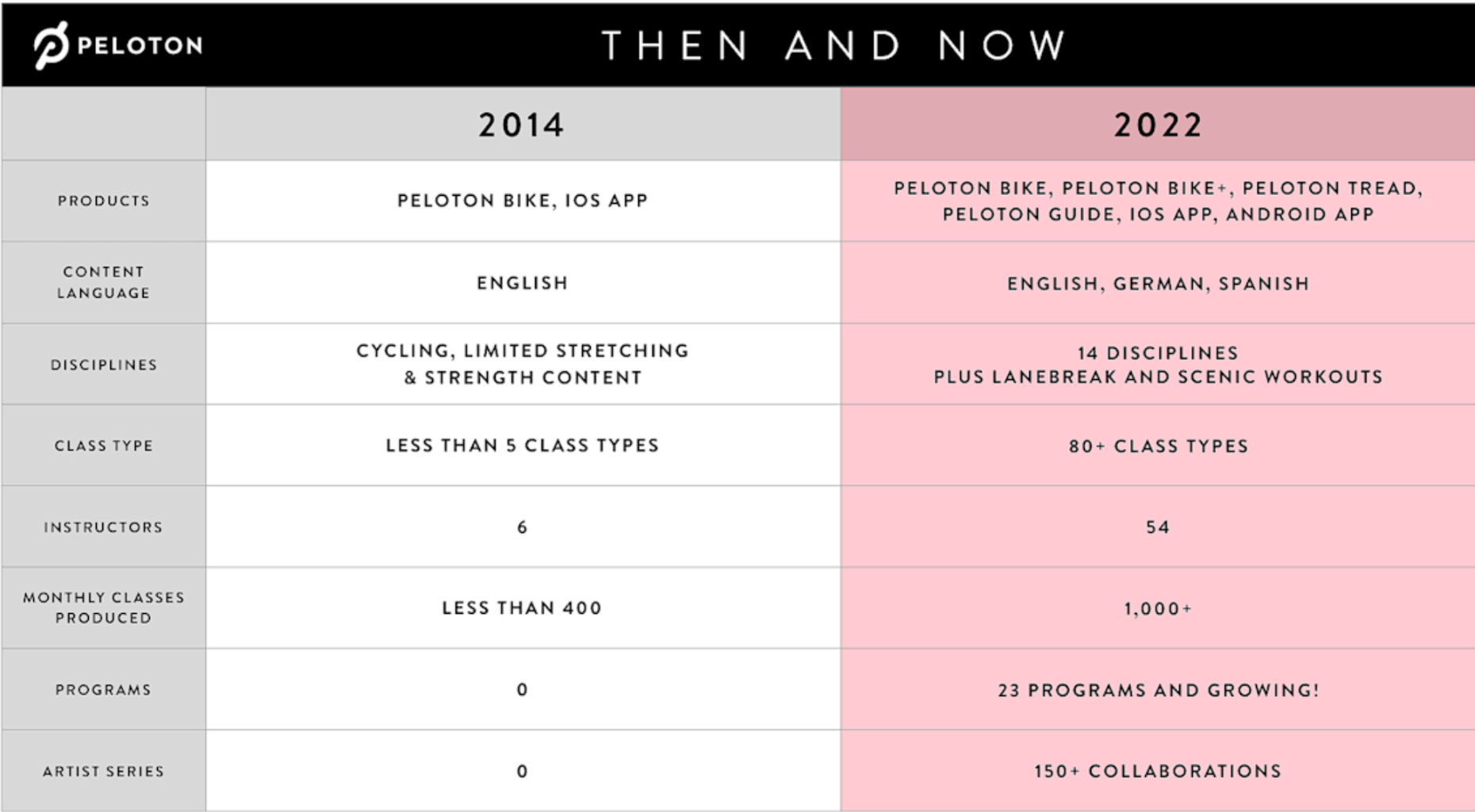
This time felt different.
It started with the increase, and they were going to be offering more benefits:
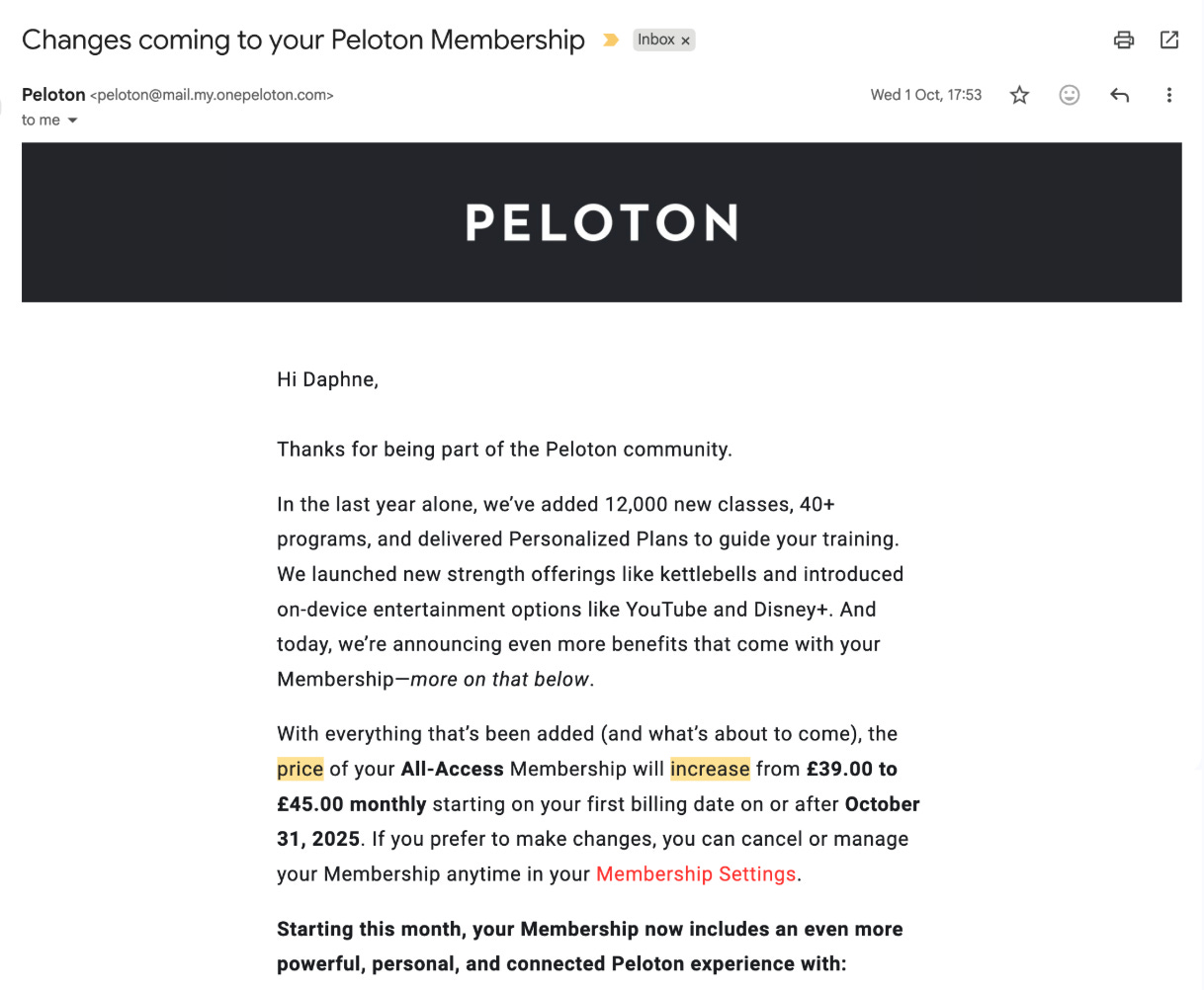
But some were confusing, like what is Breathwrk? (I only learned much later that it was a separate app). While others, I just didn’t care about too much, like Club Peloton.
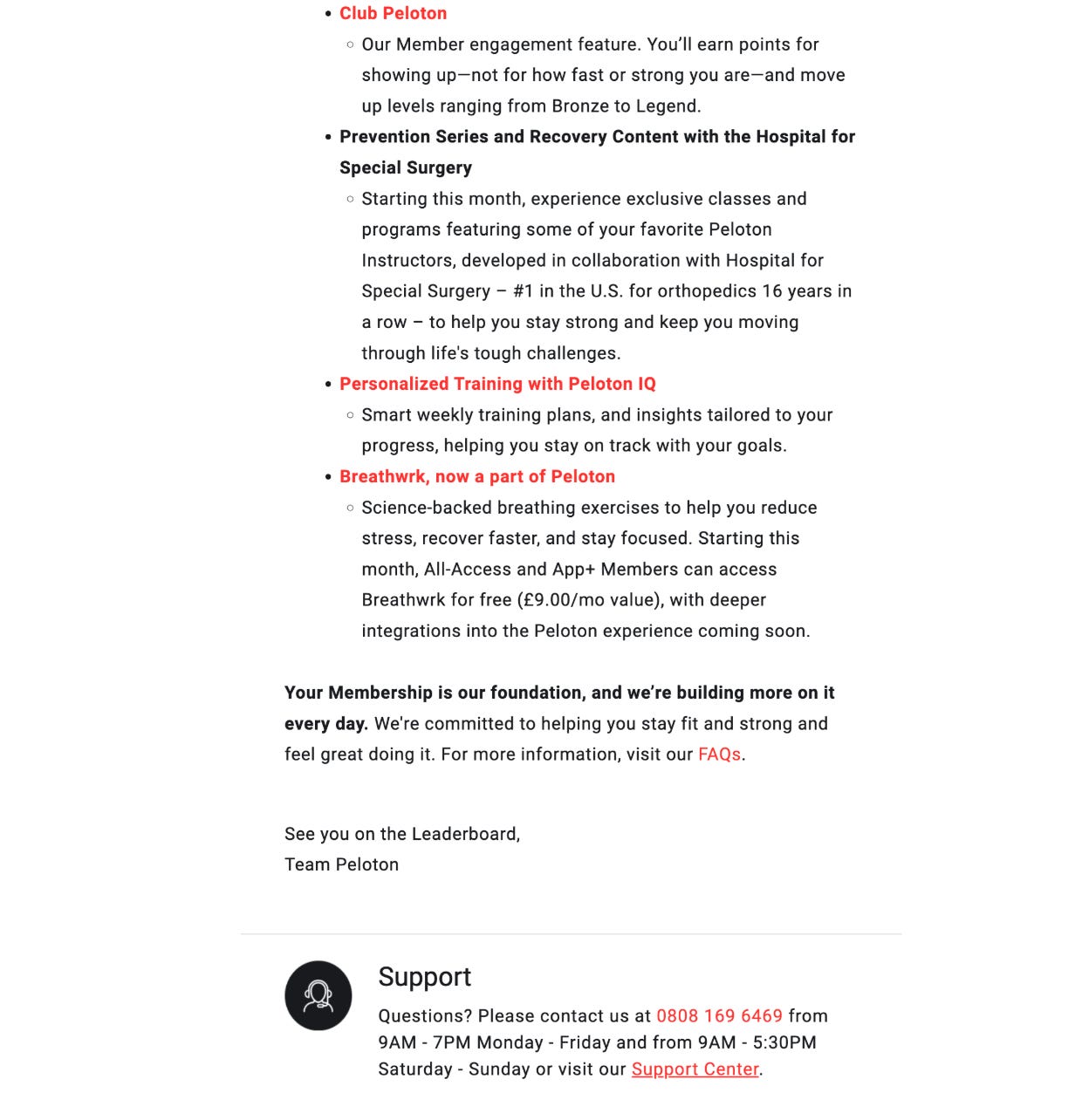
That moment made me realise something important: I couldn’t clearly explain what I was paying extra for, and I wasn’t convinced I wanted to.
If users can’t do that, the relationship is already fragile.
What the price increase exposed
Once I started questioning the price, other cracks became harder to ignore.
I was still using the product, but I didn’t feel like I was progressing. Personalisation was there, but it no longer felt directional. I couldn’t tell what I was working toward or what “better” looked like for me.
This is where many subscription apps struggle. Activation and habit-building get most of the attention. Long-term retention quietly assumes users will just keep going.
But when progress stalls, price becomes the catalyst for a decision that was already forming.
The moments after matter more than you think
What surprised me most came after I decided to cancel.
The cancellation itself was easy. Polite. Fast. No dark patterns. Credit where it’s due.
But no one asked why I was leaving.
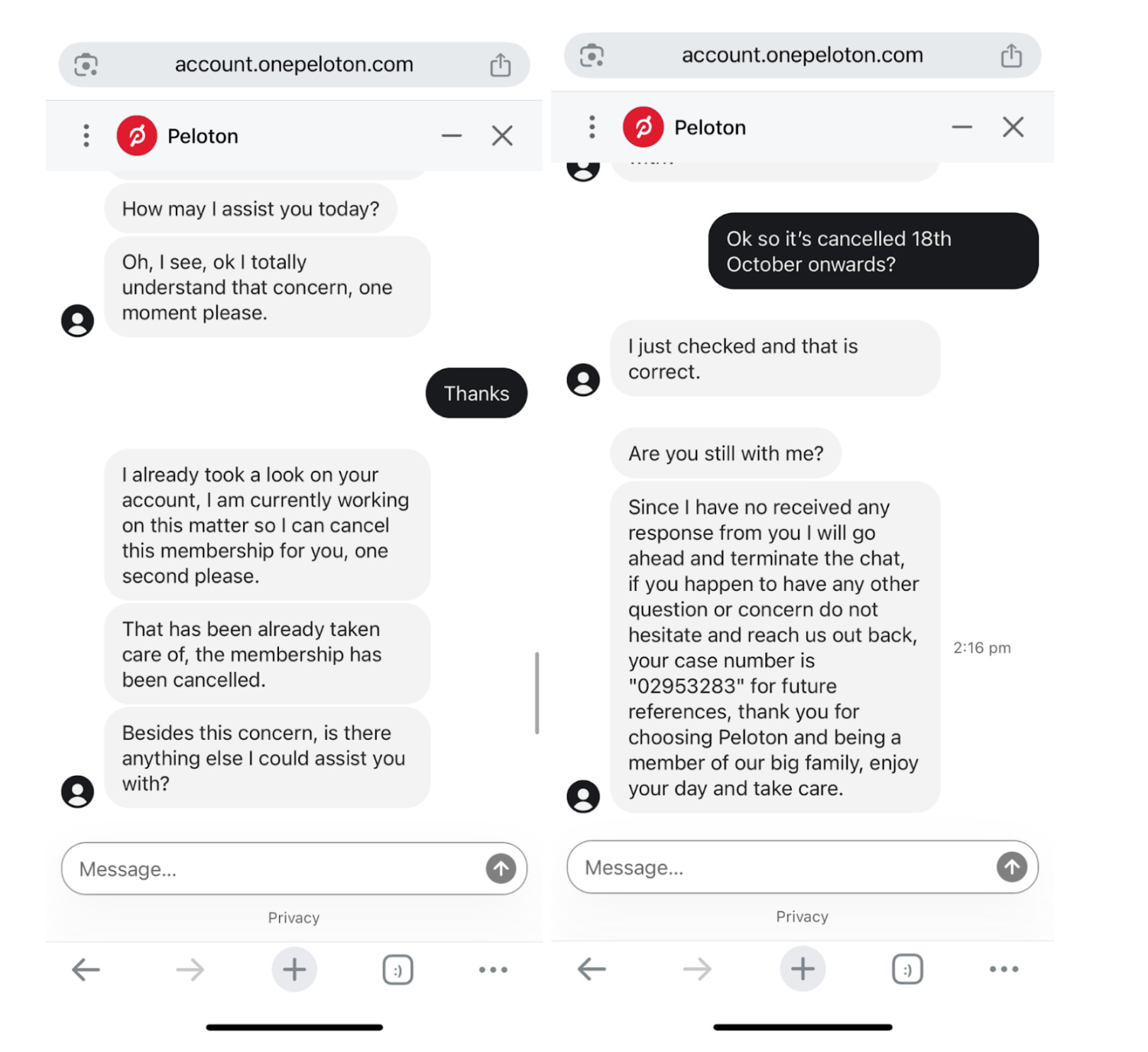
Not during the flow. Not in the confirmation email.
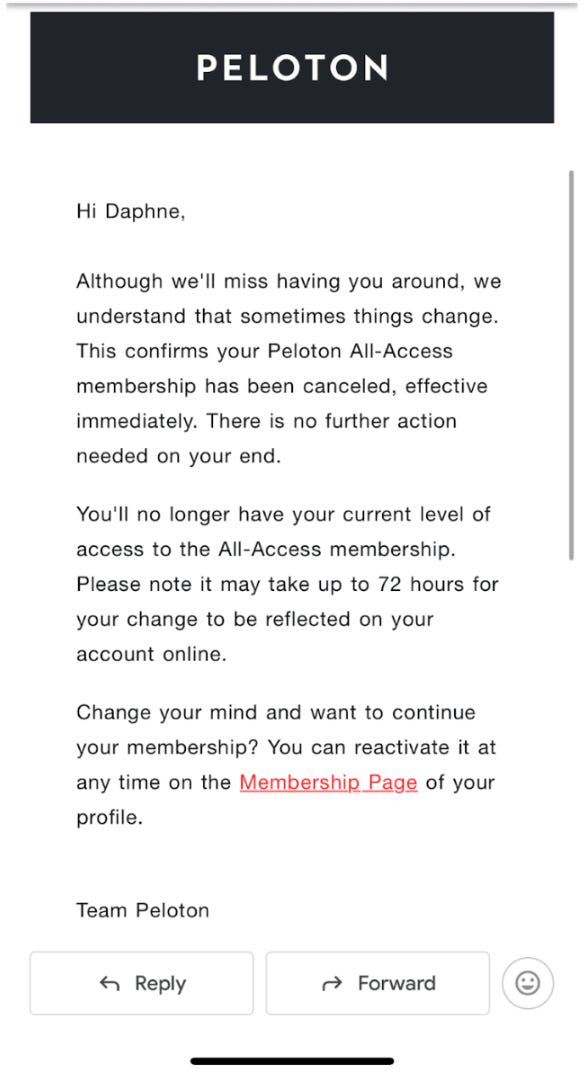
Not even in a follow-up survey that actually acknowledged I’d cancelled.
For app teams, this is a huge missed opportunity. The moment someone cancels after a price increase is when their feedback is most honest and most valuable. That window closes fast.
Recommendation
In every edition of Growth Waves, I also share a related resource to check out related to the week's topic.
I unpacked this full journey — from falling in love with Peloton, to the price increase, to the quiet cancellation and what happened afterwards — in a detailed article for RevenueCat.
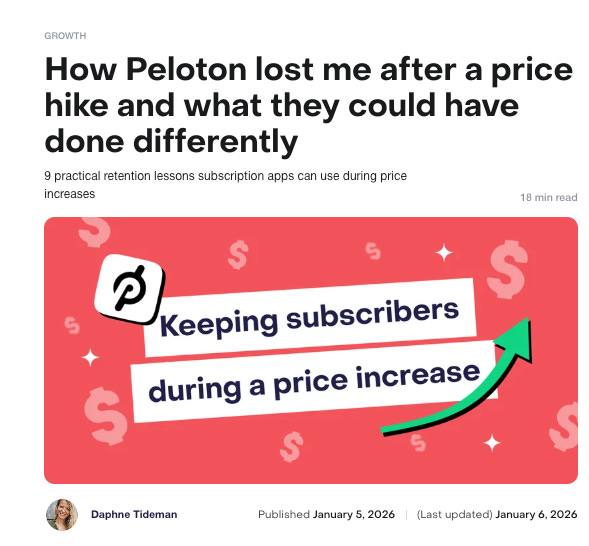
It goes much deeper into:
Where Peloton did retention right
Why the price increase landed poorly despite good intentions
What could realistically have changed the outcome
And what subscription apps can learn from the aftermath, not just the churn
You can read the full article for free here:
If you like this type of case study, here are a few previous ones I shared before:


The biggest lesson I took away from Peloton?
Price increases don’t break relationships; they reveal whether one still exists.
Till next week,
Daphne