


Hi there,
The other week I carried two houseplants into my shower:
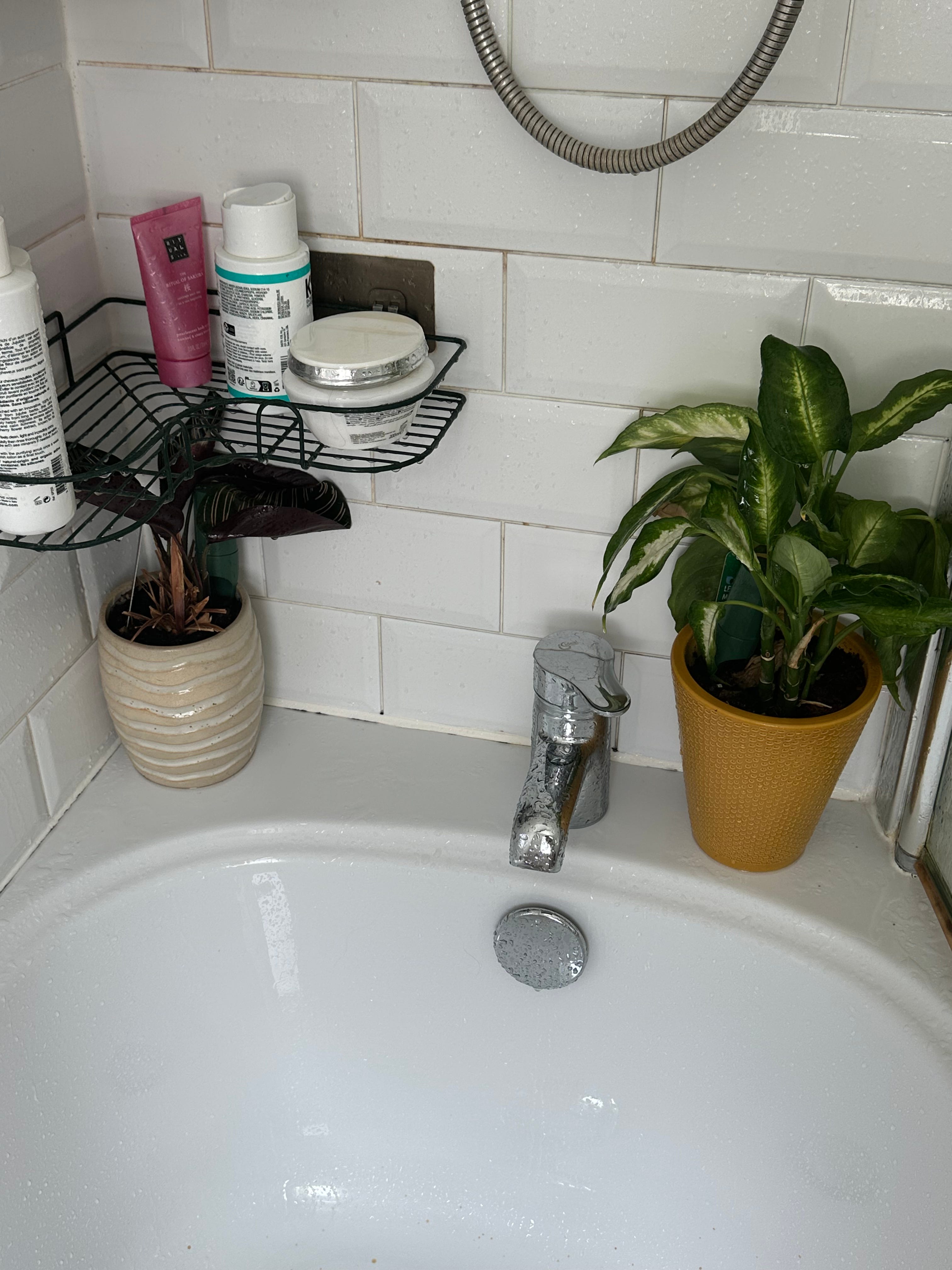
It was 33°C outside (peak summer), my flat was bone dry, and a plant care app, Willow, had told me that Dark horse (a Calathea, named by me, don’t ask) was at 23% happiness with the words “Help! I’m struggling.” So I did what any rational growth consultant would do: I put the plants in the bathroom and had a shower.
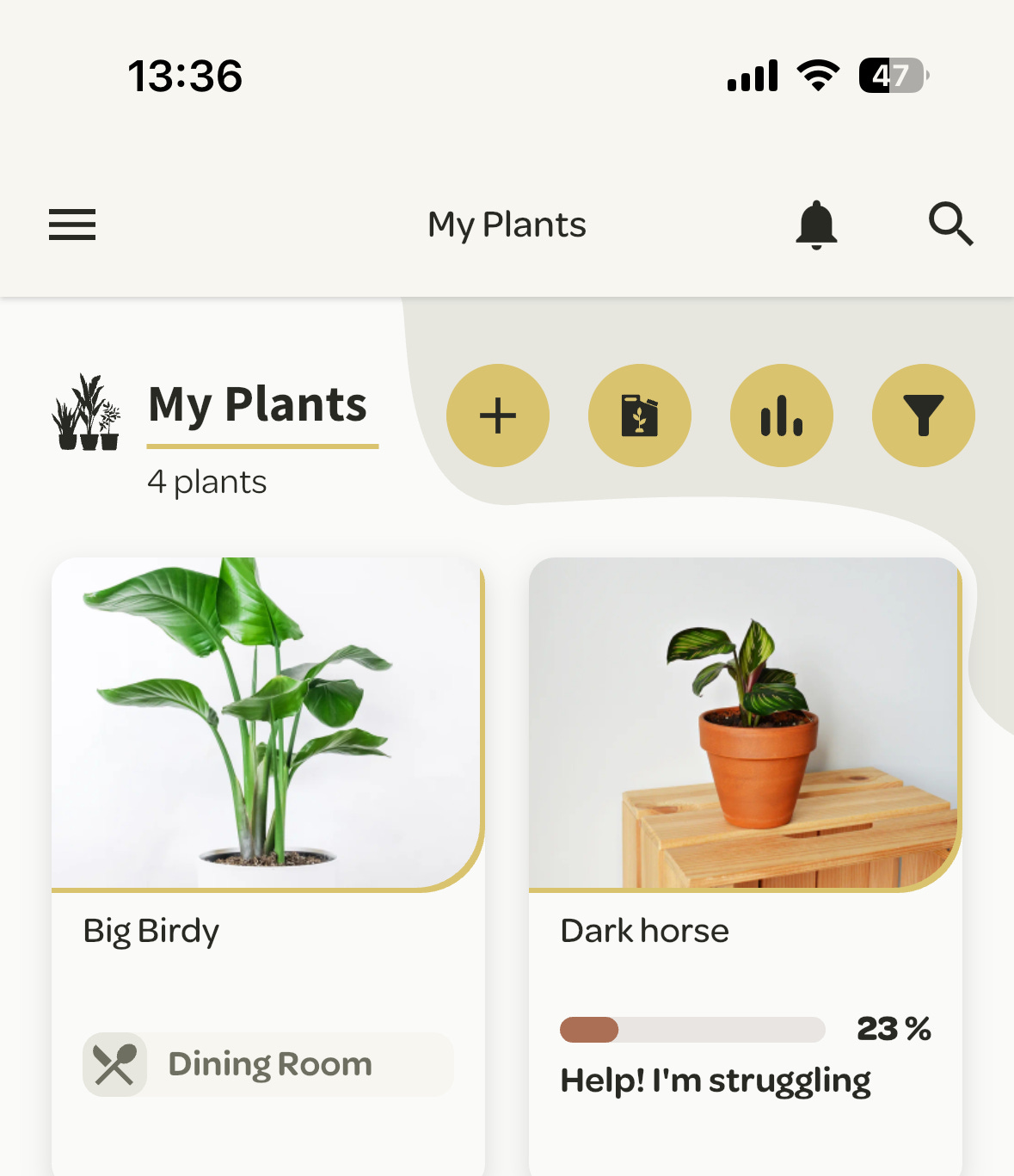
It worked. Dark horse went from 23% to 72%. Downstairs Denise went from 31% to 71%.
Then, two days later, this landed:
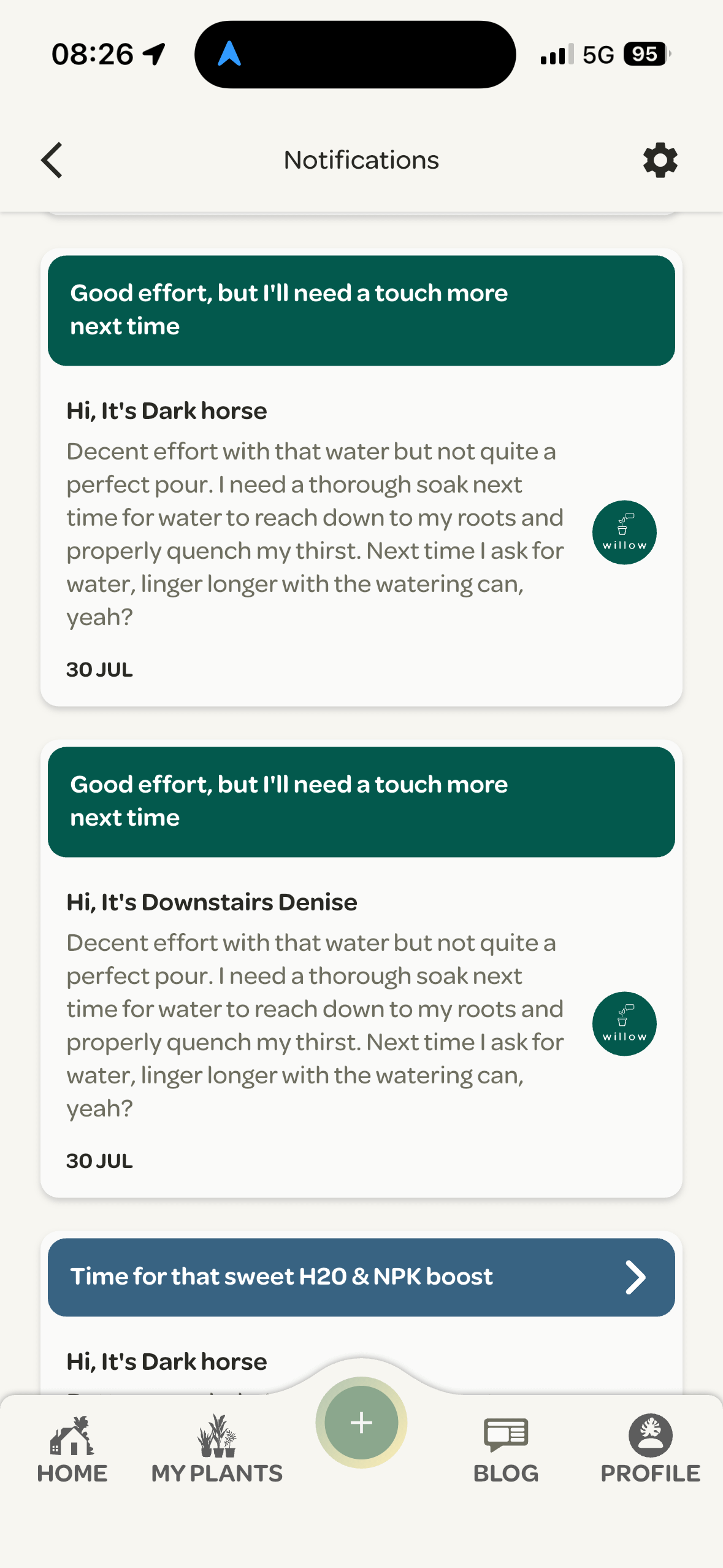
“Excuse you! I was not prepared for that bath”
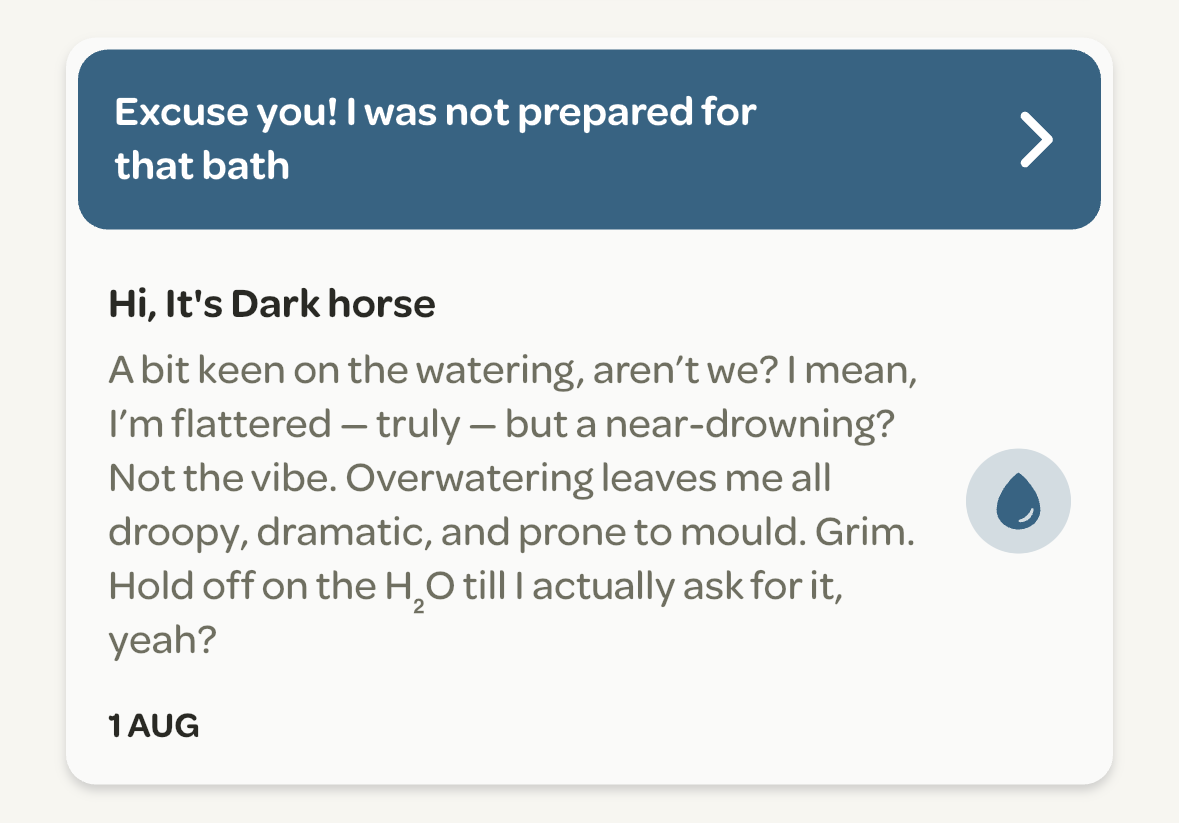
A Calathea told me off. And I deserved it.
Here’s why that exchange is worth your attention.
Let me rewind a little.
Willow is a set of soil sensors and an app. For £75 (a Christmas gift), I got three sensors and a hub. The sensors measure light, moisture, humidity and temperature. That part is boring. What they do with those readings isn’t.
Most apps shape behaviour with streaks. Miss a day, the number drops to zero, and there’s nothing you can do about it. The guilt has no exit, so you delete the app, because that’s the only way to make the feeling stop.
Willow’s happiness score works differently. It dropped when I neglected the plant. It climbed within hours when I watered it. Then it pushed back when I overcorrected.
That’s not a nag loop. It’s a calibration loop.
In 48 hours, I learned what “too dry” and “too much” actually felt like, without killing anything. My behaviour didn’t just become more frequent; it became more accurate.
It also acknowledged the small stuff. After I watered, it replied: “Good effort, but I’ll need a touch more next time.” Not a gold star. Not a telling-off. Just a quiet acknowledgment that it noticed. Somehow, that landed more than either.
If your core metric only ever goes down, and the only way to recover is to start over, ask yourself what a lapsed user is actually supposed to do with that feeling.
This is a strong start. Here’s what would make it powerful
Willow told me my humidity was too low. It never told me how to fix it.
Instead, I showered with my plant.
What I should have done was go on Reddit first.
Later, I found myself reading forty comments arguing about whether misting leaves does anything (mostly no), whether pebble trays work (also mostly no), and whether the answer is just buying a humidifier (mostly yes). I emerged an hour later slightly better informed and considerably more annoyed.
The frustrating part is that Willow already has the hard bit. They’ve built a voice I actually want to listen to. Getting people to read product copy is difficult and expensive, and they’ve managed it. I even love that you can choose its personality.
While I was complaining to my husband (who’d given me the sensors for Christmas) that Willow was being mean, he pointed out that I’d chosen that personality myself.
Which is exactly why I wanted it to go one step further.
Don’t just tell me my humidity is low. Tell me what to do next. If your product has earned the right to be listened to, use that attention to teach me, not send me to Reddit.
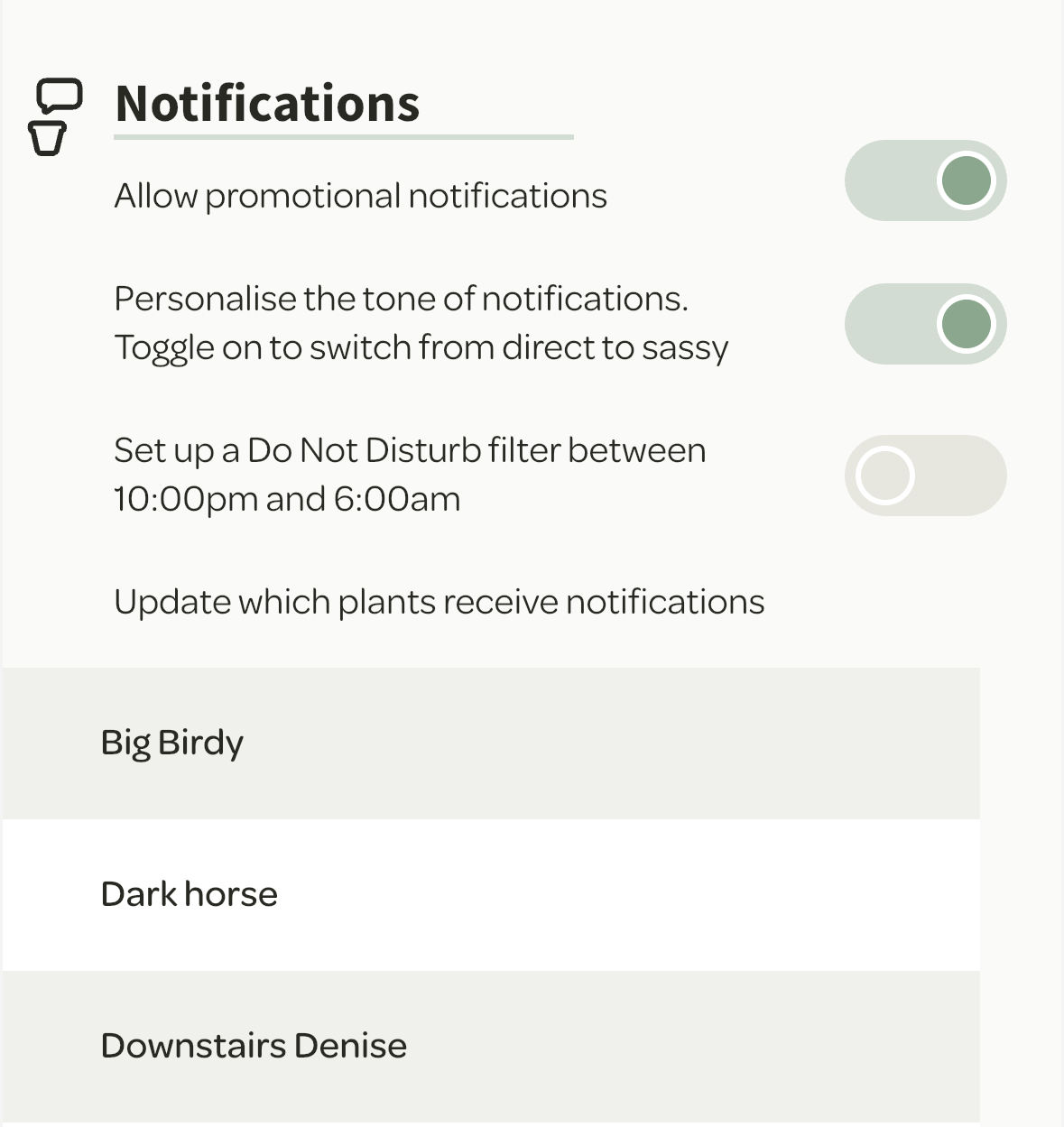
The same Calathea that told me off for the bath could just as easily have said: “Misting me is a myth, babe. Get a humidifier.” One extra sentence, same character, and the loop closes instead of dumping me on Reddit.
They can clearly do it, too. When my third sensor dropped offline, I got this:
“My Sensor and I aren’t communicating very well. If both the Hub and Sensor are powered and flashing, it’s likely that the devices are out of range of one another. Please reach out to support@plantwithwillow.com.au to help troubleshoot.”
Diagnosis, likely cause, next step, and a human to email. They’ve written proper troubleshooting for their own hardware. They just haven’t written it for my plant.
Guilt with no fix is churn
Guilt with a fix is retention
The whole mechanic I’ve spent 400 words praising only closes if the user knows what to do next. I was stubborn enough to go and find out (and weird enough to shower with my plant).
A less stubborn person watches the number sit at 23%, decides the app is nagging them about something they can’t solve, and turns notifications off.
If you’ve done the hard work of getting someone to care, don’t make them Google the next step.
💡 What I’d recommend this week
BJ Fogg'sTiny Habits, or honestly just the model at the centre of it: B = MAP.
I'll decode that bunch of letters for you, because I know you're probably frowning at your screen as you read it.
Behaviour happens when Motivation, Ability and a Prompt converge at the same momentclearesthe cleanest explanation I know of both why my plant app worked so well, and where it stopped working.

Willow gave me a brilliant Prompt and a lot of Motivation (a named creature visibly suffering in my living room) and then left Ability entirely alone.
Fogg's argument is that Ability is the cheapest of the three to fix and the one most teams skip in favour of prompting harder.
All in all, I'm sold on Willow. I can even see myself getting more sensors. I like my plants talking to me, and I no longer feel like they're quiet without me knowing why. It's more fun, more interactive, and, frankly, more useful than sending endless photos to Claude.
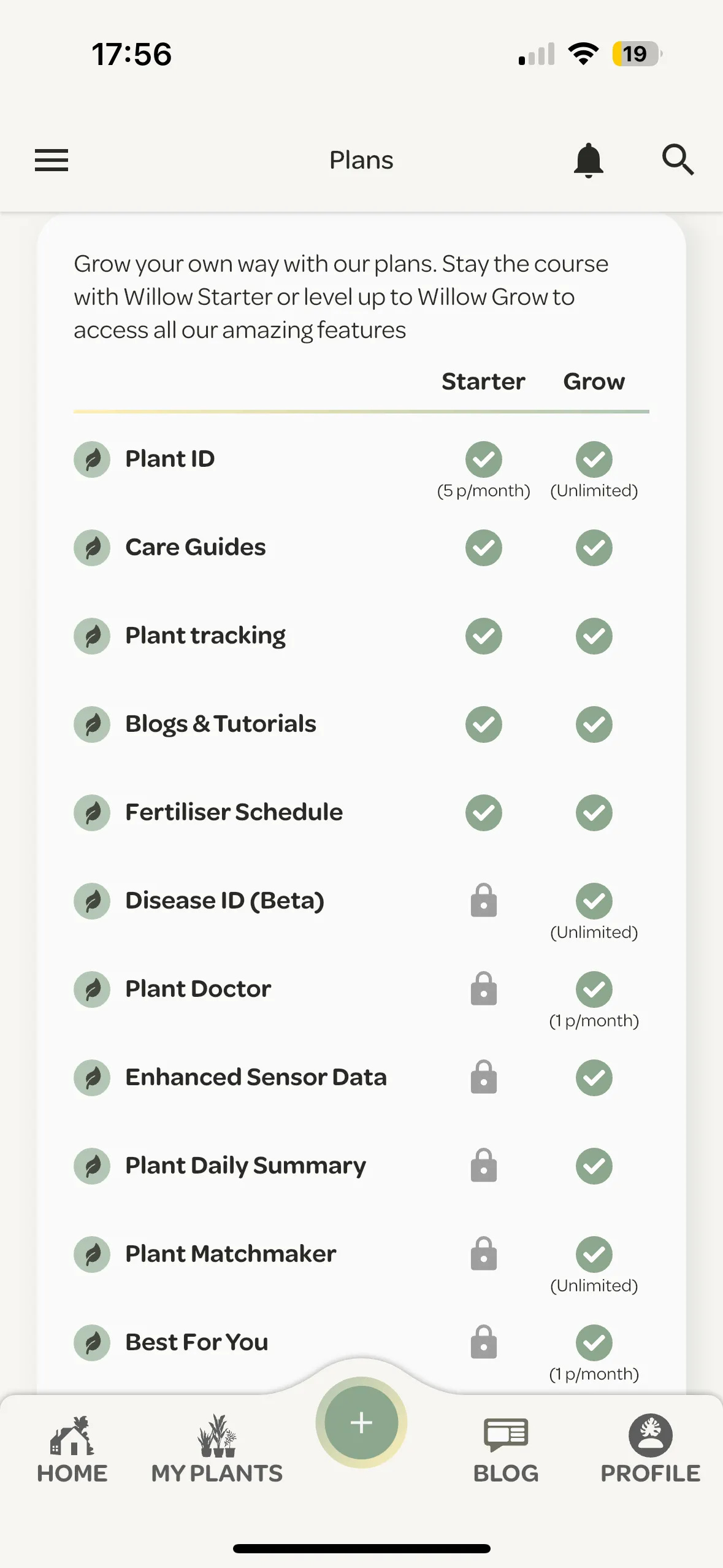
I'm even planning to take out the subscription so I can access the full historical data and nerd out over it. Usually, subscriptions attached to physical products feel like a cheeky add-on.
At £25 a year, this one feels different. The hardware gives me the data; the subscription gives me the ability to do something more interesting with it.
While your users won’t carry your app into the shower, you can use its playful phrasing and guidance to add value.
We usually see notifications as an add-on, simple and direct, but Willow shows they can do so much more.
Speak soon,
Daphne