


Hi there,
Over the years, I’ve gotten the chance to work with multiple startups, either in several countries or expanding to new markets.
I’ve seen companies launch successfully and scale up their startup, and I’ve also seen startups waste vast amounts of money only to decide, “Maybe we will leave expanding to the US for now.”

I think it’s because maths-wise, it makes sense: you can hugely expand your market and reach it by going abroad.
But the reality is that it adds a tremendous amount of complexity, from legal compliances to technical setup (especially if you are going multi-language).
So before you jump to the new country of opportunity, here is my checklist for what to check if the timing is right.
Note I’m talking about expanding here vs. pivoting to an alternative market (the checklist looks very different).
1. Product-Market Fit
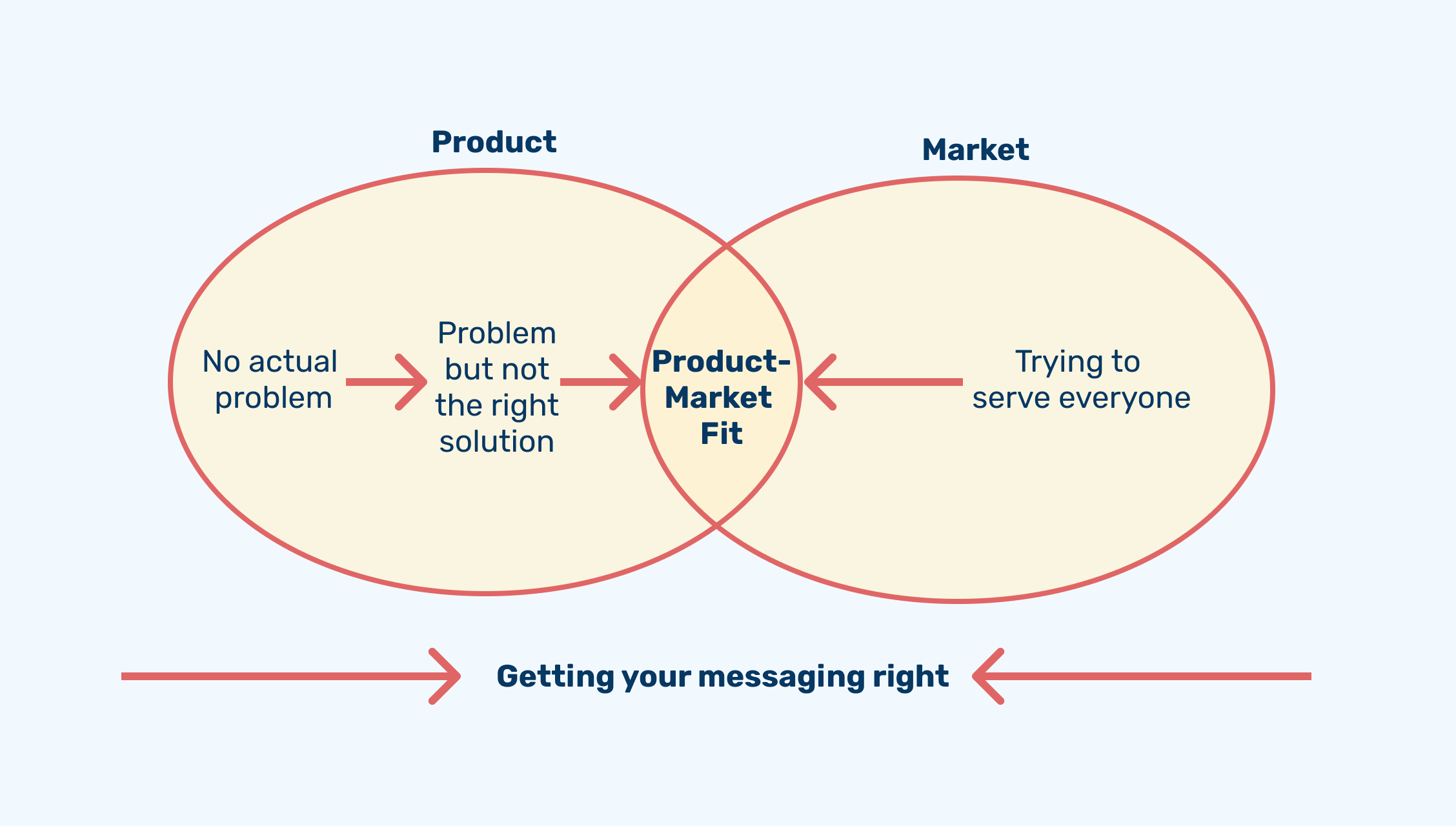
You have strong signs of Product-Market Fit in your current market, with high retention, as is word of mouth.
Even though Product-Market Fit and especially Message-Market Fit might look different for that new market, you want to start with a strong foundation.
2. Saturation in your existing market
Based on market research, you are reaching saturation within your market.
You have explored other expansion options (e.g., through products and/or services) and maximized or ruled out those opportunities.
I personally would prioritize relevant expansion in an existing market over a new one because it is often more cost-effective as it usually results in driving up existing customers’ lifetime value rather than seeking additional customers.
3. Market research to back it up
A common mistake I see is the assumption that because there is demand in your current country, there is demand in another. It just isn’t true.
One DTC supplement brand I know is very successful in Belgium, but they don’t see the same response in the Netherlands. Despite the two small countries being very similar in some aspects, what customers value and want differs.
This isn’t just in terms of positioning but also pricing, expectations, channels, etc. You need to have done the research to identify how and what differs to prepare a successful launch plan.
4. Operational team and set up to support it
Expanding to a new country is like pouring oil on the fire if your current logistics, fulfillment, and customer support aren’t robust and structured.
While you might not go immediately for local fulfillment/production, you must ensure you have the operational capacity and skills to expand.
5. Consistent high profits to fuel the expansion
While growth may have slowed down due to hitting market saturation, you should still see a high monthly revenue and a reasonable profit margin, which will be needed to fuel your expansion.
Ideally, you are profitable at this stage or close to it, as you’ll need the available funds to expand.
6. You are prepared to invest in a multichannel approach
The successful launches I’ve seen have been a beautiful combined effort of brand and growth marketing to build awareness and trust and push to convert customers.
The less successful ones hoped they could get away with paid ads and were surprised at the high acquisition costs and low conversion rates.
You can do a bit of pre-launch testing via paid ads for initial research. A strong brand launch requires a localized experience combined with a multichannel launch.
-
Recommendation
As usual, here are some helpful resources to help you along the way.
If you are in the curiosity stage of exploring new markets while it is tech-focused, Crossing the Chasm by Geoffery Moore is an exciting read.

Now if you’ve decided, “Yes! It’s time to expand, we’ve made it through Daphne’s 6 point checklist”, then it’s time for a new checklist: Shopify’s 10 step checklist on a successful international launch.
-
Reading over this newsletter, I wondered if I’d been too strict on the criteria to be ready to expand. Still, I then thought back to all those times I’d seen international expansions go wrong in the beginning and felt that this was what would have hopefully helped those founders.
Not to say, no, we won’t do it, but rather to question:
Is it the right time?
Is it the right move for us?
More importantly, if the answer is yes to both of those questions, I want to feel confident investing wholeheartedly in the expansion rather than approaching it as a side project.
Feel free to share your expansion stories with me (the good and the bad); always curious to hear others’ learnings,
Daphne