


Hi there,
I’ve been chatting with various Head of Growths about why their growth has slowed down.
What is the real reason to blame?
One thing that popped up in various stories was competition: new competitors entering the field or existing competitors getting big investments.
But it’s a tough reason to give your founder:
How do you know it is the competition?
So what? That’s out of our control?
And it’s true. Your investors won’t accept it as an excuse, but understanding it will help you combat it and prevent it from slowing down your growth.
So here is your two-minute “competitors have got us down” guide.
Step 1: Do the check
The problem is that the symptoms of increased competition, e.g. higher cost per impressions for ads, lower conversion rates, can have many causes.
Whilst it isn’t foolproof, I believe the easiest way to check if that paranoid feeling is real is to check if there has indeed been a change:
Look at search volume for their brands per month, has this spiked recently? (A more in depth check is to work out total category search: so all main competitors and keywords and compare how their percentage of the category is changing).
Look at their ads, are they running a specific or better deal?
Is there any other major press release / campaign happening?
When I’ve done this I’ve seen cases of peak in search volume and higher deals which have helped me realise that was indeed potentially impacting our growth.
I also have a competitor overview with key details that helps me compare / understand if they’ve initiated any changes.
This helped me for one brand realise they’d increased the discount they were offering for subscriptions and really focusing on that.
Step 2: Re-evaluate your differentiators
I’m a big fan of working out your positioning gap, and what makes you different. This is a much more positive approach than getting caught up on what your competitors are doing.
If the reason they are growing is more aggressive offers, you don’t want to end up in a price war; no one wins at that.
You do this by:
Looking at what your customers value
Looking at what your strengths are
Looking at what the competitor’s strengths are
And then find a gap. If a competitor has suddenly grown, you might need to reevaluate which strengths you lean on and communicate.
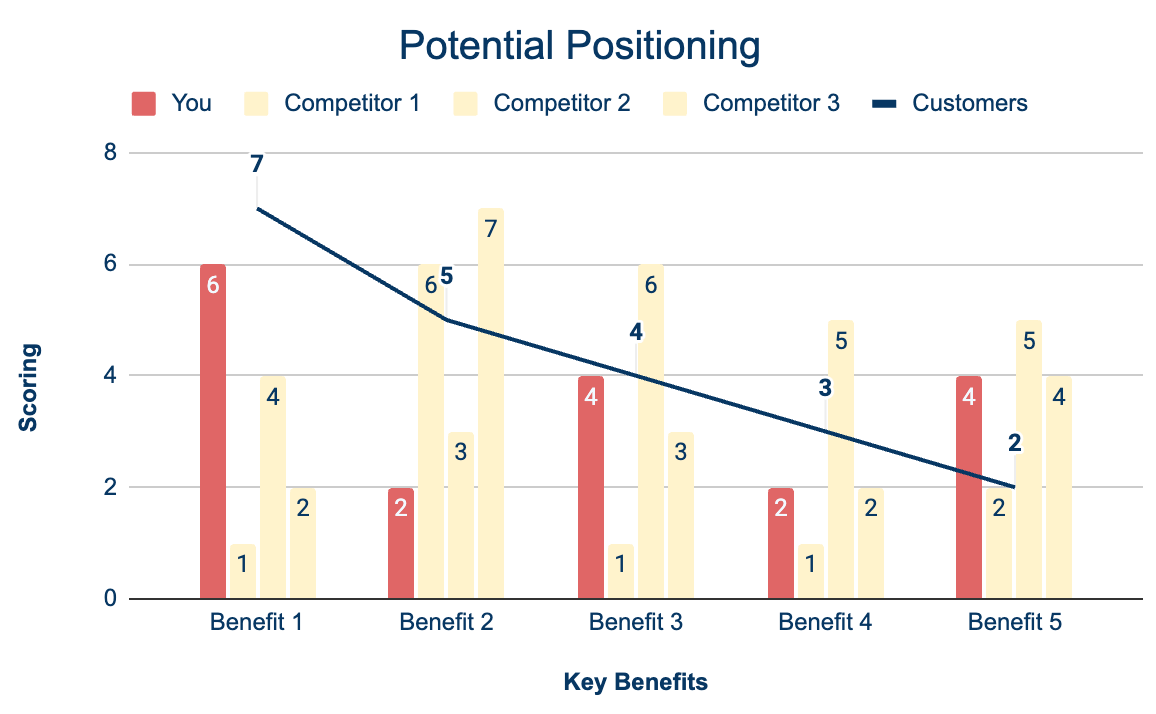
If you are struggling to understand them, definitely go back to your customers and focus on where your product-market fit is currently coming from. User interviews with your customers and that of your competitors can be very insightful in this step.
If it feels then like there is no gap it might be a sign that you need to work on finding a stronger and better differentiator. Product-Market Fit can shift over time especially when a competitor is making significant changes.
Step 3: Experiment
Once you have a good understanding as to why they are impacting your growth and how to stand out you can start to build a list of hypotheses based on potential opportunities, for example:
Because we see Competitor X focusing more on free gifts with their offer and we see Customers value benefit Y we believe by offering a gift related to that with first purchase will result in a significant increase in conversion rate.
With these experiments, you aren’t trying to copy them; rather, you should start to understand why customers might prefer them and lean into your differences whilst meeting your customers' needs.
Remember you aren’t likely to succeed immediately with the first experiment so build a strong backlog of ideas per hypothesis so that you can rule them out one by one and start to stand out from the crowd.
-
Recommendation
Writing this newsletter made me think of a quote of Sun Tzu from the Art of War (sorry, usually not one to get philosophical but bear with me!):
“If you know the enemy and know yourself, you need not fear the result of a hundred battles
If you know yourself but not the enemy, for every victory gained you will also suffer a defeat.
If you know neither the enemy nor yourself, you will succumb in every battle.”
Today we’ve talked about understanding both your ‘enemy’, I mean ahem, competitor, and yourself.
I debated then what resource to give you, one to understand better your competitor or yourself?
After a long internal battle I decided yourself, because that is the most common one brands lack. So if you need more guidance on it please check out my Crash Course on Message Market Fit.
If you don’t have the budget to buy it (it’s £45) you can get it also for free by referring 3 new email subscribers.
-
It’s hard when a competitor's changes impact your growth; it feels very out of control. But remember, your response is within your control. It will push you to get more innovative and more creative in your approach.
So keep experimenting and fighting the next battle,
Daphne