


Hi there,
We’re going to talk about one of the most frustrating aspects of subscription-based brands: the churn. That neverending, inexplicable subscription churn. It’s enough to make you pull out your hair.
But no longer, as today we’re going to discover:
What is a ‘good’ rate
What causes subscription churn
How to fight the main reasons
I’ve been working a lot with brands on improving their subscription setup as it is such a key driver of growth, with customers often having a far higher Lifetime Value than one-time purchasers. Today, I’m going to share all those hard-earned lessons in one newsletter. We’ve got a lot to cover, so let’s get started.
What is a ‘good’ churn rate?
It’s hard to find benchmarks for e-commerce subscriptions vs. general subscription benchmarks, so I’ll focus on my experience and insights with 30+ e-commerce subscription businesses.
When it comes to e-commerce subscription churn, most brands that offer monthly subscriptions want to aim for an 8-10% monthly churn rate, in my opinion.
This is how I calculated this figure:
Total number of subscriptions churned during the month / Total number of subscriptions active at the beginning of the month
If you offer quarterly or annual plans, you can aim even lower. When I was Head of Growth at Heights, a brain supplement brand, our monthly subscription churn was at its best, 6-7%, with most of our subscribers on a quarterly plan (so paying once a quarter).
The percentage is, of course, higher for shorter-term usage products (though most of those products don’t offer a subscription option). For those cases, it’s definitely worth excluding that ‘positive’ churn from your calculations (customers who churn because they’ve achieved their goal).
Understanding what drives churn
When it’s too high, the natural thing to do is dive into the post-cancellation survey. The most common reasons I see across brands are:
I no longer use the product
It’s too expensive
I have too much product
I’m not noticing a difference
Here’s how you should act for each reason given. That’s not to say that you’ll immediately do all of them, but focus on the leading cause of churn.
Note: if you see “Other” as the top reason, you must revise your survey options to get more accurate insights into what drives churn.
1. I no longer use the product
This is the most concerning reason. It signals that fundamental product issues might have caused them to never use the product the way they intended or stop using it.
Again, we are excluding ‘positive’ churn from this calculation, as you should hopefully have an option for that in your survey. For example, I worked with a supplement brand that helps women conceive, and for them, positive churn was “I’m pregnant” as a reason to stop using it.
No. If I see this as the main reason, I first check these customers' average duration. Do they churn within 1 or 2 purchases or later? This helps me understand whether long-term habitual usage is more of an issue than their initial experience.
I’ll also examine broader retention data to see how it differs from the first to the second order and the NPS data, review score, etc. Basically, I'll look for any other signs of potential product issues.
Take this reason very seriously. It could be that your product is great, but you are attracting the wrong types of customers. In that case, you should still use the feedback and insights to improve your targeting.
One founder I worked with took the time to call all the customers who gave that reason (in a very non-salesy way), which uncovered many new insights into iterating and improving both the product and packaging.
2. It’s too expensive
So, this is a tricky one; it could be a price issue or a lack of value delivery. Here, I would suggest including in the survey (if you can) or reaching out with follow-up questions:
Was there something that [XYZ] didn't do that you were expecting it did?
What would have provided enough value that [XYZ] would be worth the price?
They paid that price initially, so you want to understand:
Is it for reasons out of your/their control, e.g., made redundant, other costs increasing?
Is it not living up to their expectations?
Something to consider here is what deal brought them in as a customer. Sometimes, a too-aggressive acquisition strategy can result in the wrong types of customers who don’t stick around. I had a product I happily used for three months at 50% off, but I was never going to pay the full price because it wasn’t worth that for me.
Now, you can offer a one-off discount to keep them around, but don’t offer this each time as it further devalues your product in their eyes.
3. I have too much product
Getting product frequency right is an art; I kid you not. At Heights, the supplements come in 30-day packs, so we’d ship it every 30 days, right? Wrong; people run out by the renewal date (if they are consistent).
But make it too short, and people build up too much product and cancel, which isn’t ideal either. Our product manager at Heights spent hours determining if it should be 27/28/29 days. It sounds like no difference, but trust me, it makes a lot of difference.
So, if you are getting this reason, you want to do the following:
When they click this reason, ensure they immediately see an option to skip instead (most subscription tools offer this)
Work out if the build-up occurs at a certain point, e.g., order 3 to 4, and add in a proactive push to skip/adjust the delivery date via email and/or SMS
Ensure, in general, you are communicating about and making sure it is easy to adjust to ensure they are less likely to cancel
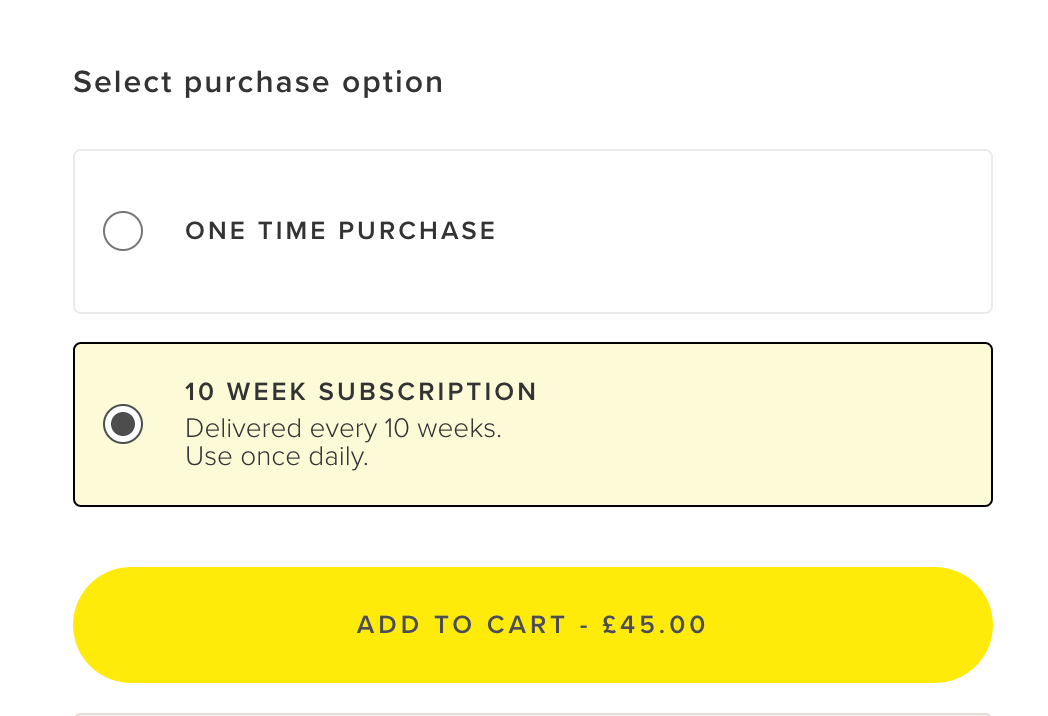
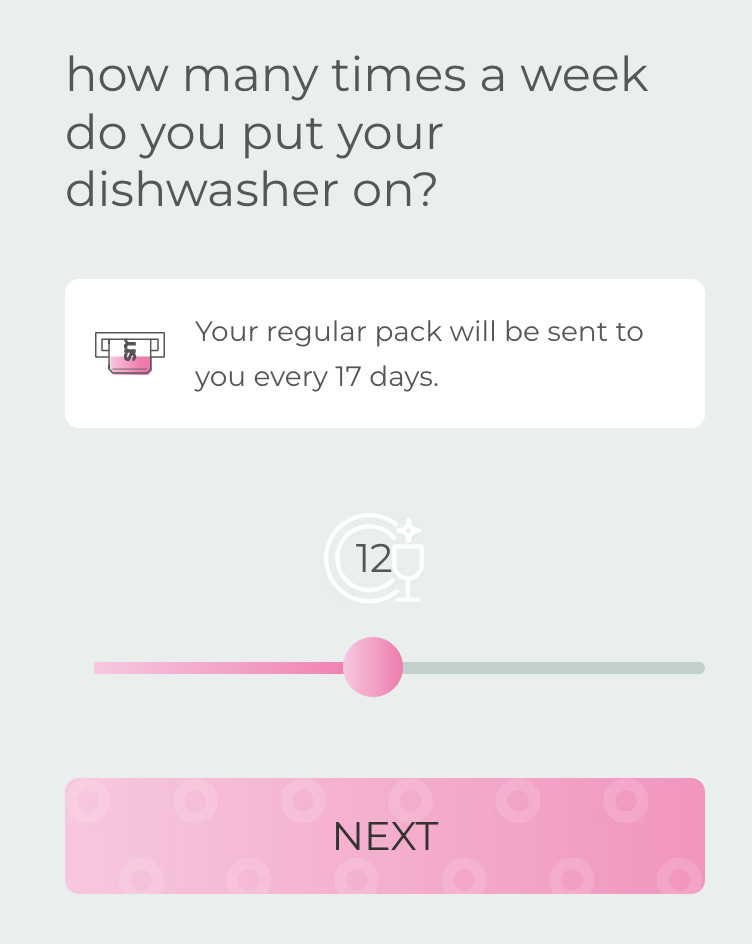
Work out how to support them better in finding the right frequency for them
This is especially key for products that offer multiple options. You could build this into the product block as Absolute Collegan does:
Or have a quiz built into the purchase journey to help them work out the right frequency for them like Smol does:
4. I’m not noticing a difference
I mainly work with health and wellness brands, so while this one won’t apply to everyone, I thought it was worth covering as every product has some form of expectation of it to help them with what they need.
Now, your product won’t work for everyone (and that’s okay), but if this reason is popping up a lot, it could mean you have a:
Targeting issue: Certain customers won’t feel the effects, and you want to know that upfront
Communication issue: There might be an expectation mismatch, e.g., they are churning after one month when the product takes three months to work, or you are overselling what they should feel
Product issue: The effectiveness of the product needs to be improved
For this reason, nothing beats customer interviews to dive into:
What was the main reason you bought [XYZ]?
What differences did they expect to see, and when?
Why did they expect to see that?
Were there any other differences they were expecting?
How and when did they realise it wasn’t working for them?
I would do the same with your highest-spending subscribers to determine the differences: Is it a targeting, communication, or product issue?
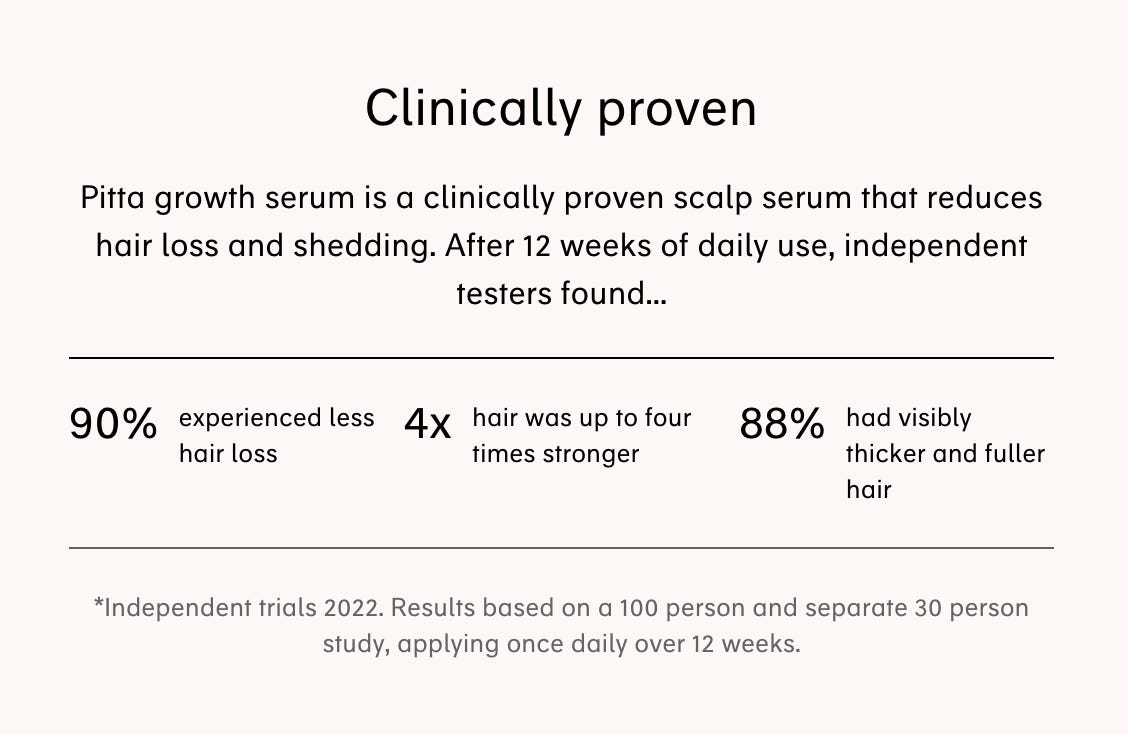
For communication, you want to communicate it before they buy, when they buy, and after. For example, Champo, an Ayurvedic natural haircare brand, clearly shows for their hair growth serum how long you need to use it to see results:
And even explain it again in their FAQ:
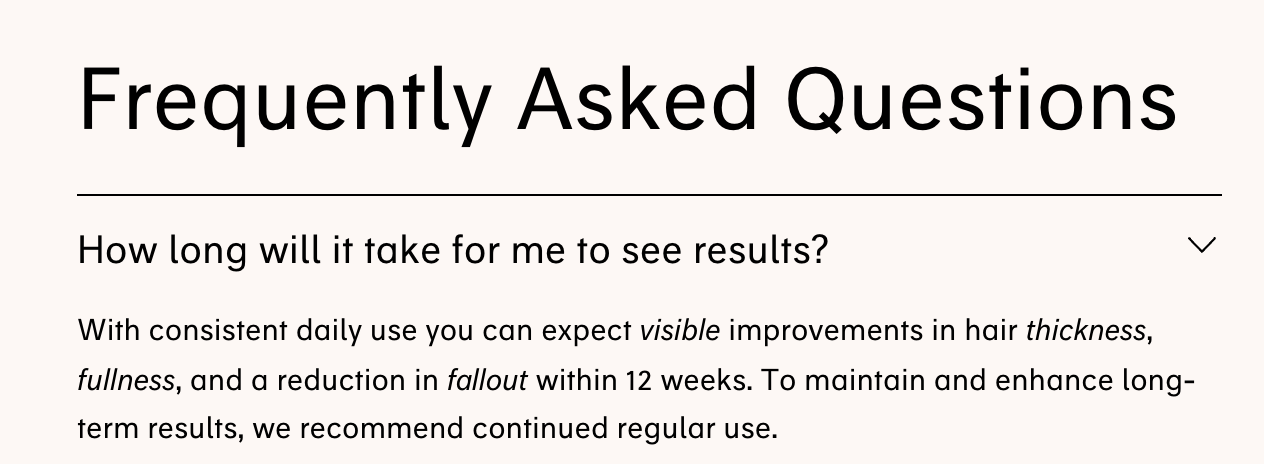
Then, they continue to do this in their email flows, which is a great way of building the right expectations upfront. As someone currently using Champo, I know it’s a matter of settling in for the long haul — and, hopefully, long hair!
Recommendation
I recently made two videos with CXL about e-commerce subscriptions that are free to watch on YouTube:
I hope they help on your journey to improve your subscription setup and drive more subscribers.
Fighting churn starts with understanding what drives it; only then can you work on improving it. You’ll notice I barely focus on win-back offers. That’s because I believe the best way to reduce churn is to reduce the number of customers who reach the point of opting to cancel.
Feel free to hit reply and share what you’ve been working on to reduce your subscriber churn,
Daphne
This is GOLD for subscription-based brands. The breakdown of churn reasons is spot on especially the part about “positive churn” (never thought of it that way before). That 8-10% benchmark is super insightful, but I’m curious, have you seen cases where brands manage to push it even lower without just locking people into longer commitments?
Great insights, Daphne! The breakdown of churn reasons is spot on especially the part about product frequency. The delicate balance between too frequent and too infrequent deliveries really can make or break subscription retention.
Have you seen any innovative strategies where brands use predictive analytics or AI to automatically adjust delivery frequencies based on customer usage patterns? Would love to hear if there are any standout examples you've come across.