

Hi there,
Almost every startup I work with struggles with the same challenge.
It is the root cause of much of their other fun challenges (because let's be honest, growing a startup is full of challenges).
Yet, it isn't a new one: lack of focus.
But I do have a new, unusual suspect to blame 🕵️♀️..
Your prioritisation framework - Most startups are prioritising in the wrong way
When ICE Scoring is Not Enough
A key part of the growth process is your prioritisation framework: how do you score and compare different growth experiments? But they have a fatal flaw...
Let's take ICE as our example prioritisation framework:
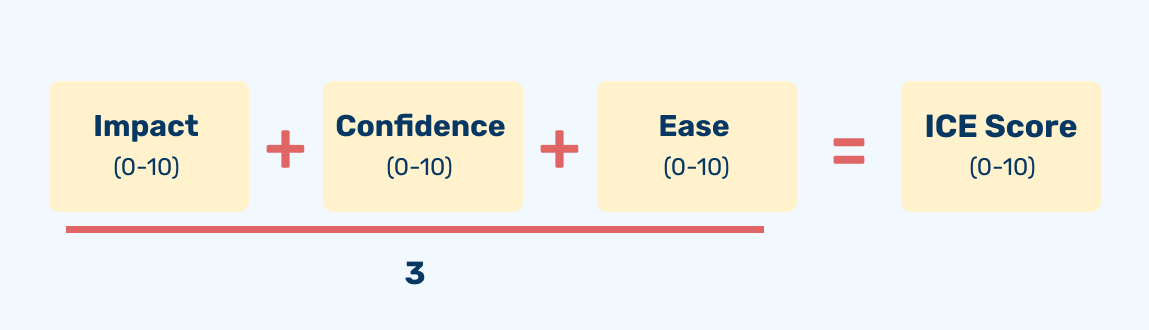
Sean Ellis’ ICE scoring methodology is a great tool for prioritising ideas, but I see teams fail when they use this method too broadly and without a solid anchor point.
If you ICE score every idea in your backlog, you will likely have many ideas with precisely the same score. However, this doesn’t help solve your prioritisation problem.
If you get past that issue (of similar scores) by creating a more complex scoring system, you’ll still find you are comparing growth experiments across multiple growth levers:
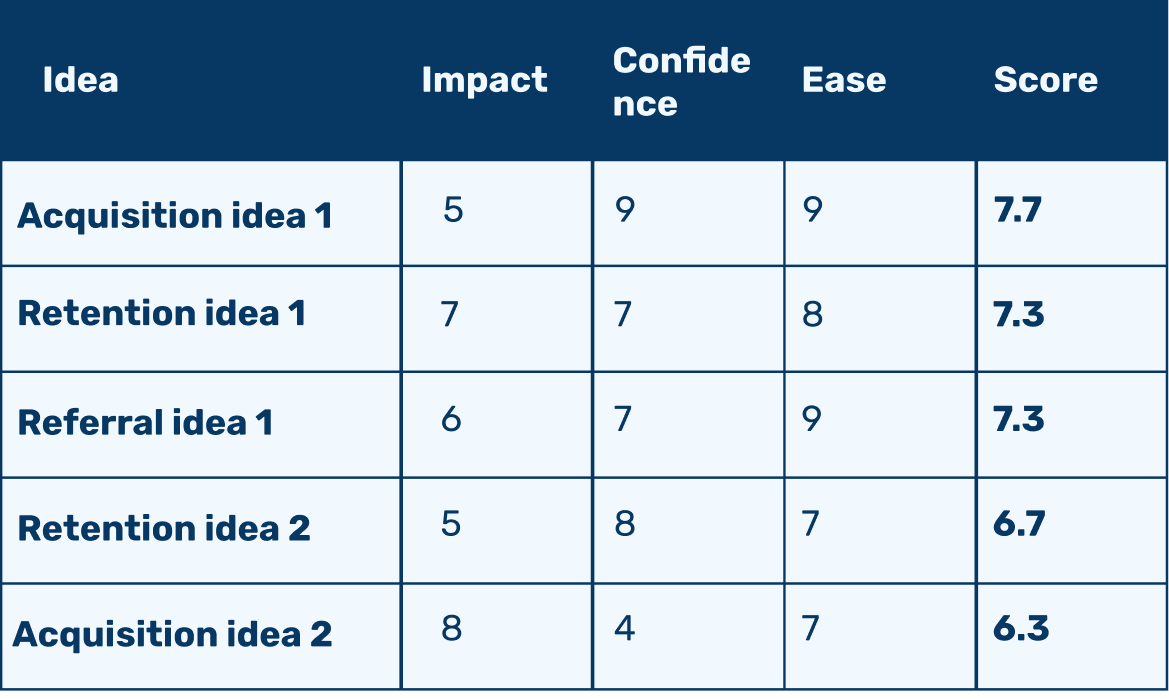
So, if an acquisition idea gets a 7.7 ICE score and a retention idea receives a 7.3, can you effectively decide which one to focus on first?
Enter Growth Levers
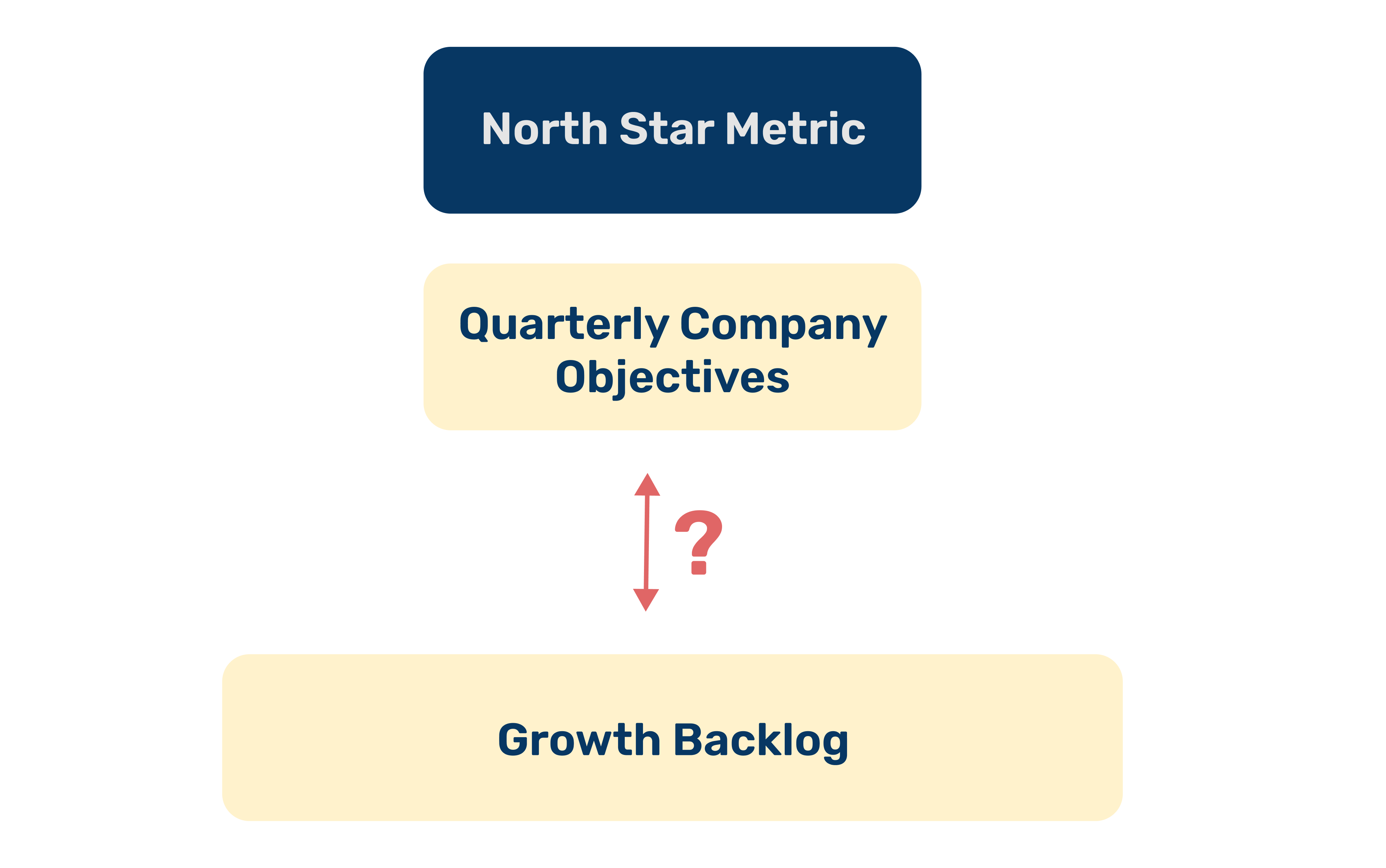
I believe the set of KPIs missing is a layer between our North Star Metric, quarterly focus points, and backlog. We need to first determine what our key growth levers are and, from there, develop individual backlogs and focus points around each one.
Growth levers are specific focus areas that could help lead to faster growth, e.g., improving paid ads conversion rate, reducing churn within the first 7 days.
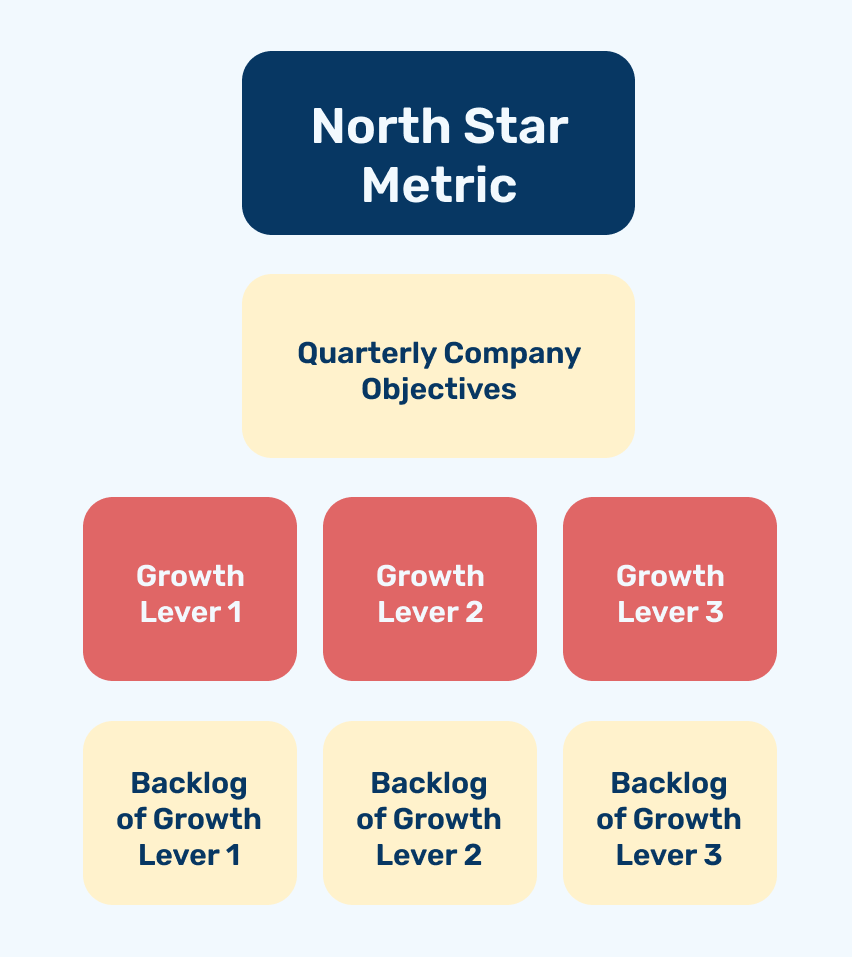
We work out our growth levers by going through the following steps:
Define / update your growth model. What are the funnels and/or loops that lead to growth, aka how do you grow?
Identify opportunities within that growth model. How is each of those loops / parts of the funnel performing, which part is holding your growth back?
Work out the quantitative impact of improving those opportunities, aka growth levers. Calculate how much it will help you in reaching your North Star Metric. This is often at best an estimation, but starts interesting discussions and allows you to compare various areas.
Pick the key growth lever(s) and source experiment ideas. Narrow down the different potential opportunities to ideally just 1-3, work out the quantitative metric. Start doing further research to source ideas.
Prioritise ideas and execute. Now your chosen prioritisation framework can come into play to organise your smaller more focused backlogs.
To learn how to do this in more detail, check out Ethan Garr and mine full article on how to identify and use growth levers
What makes a strong growth lever
A client once asked me a tricky question:
What makes a good growth lever? Can you give me a concrete framework?
I wish like hypotheses there was a concrete framework I could give, almost like an experiment hypothesis framework, but I don't have one because:
It depends on your business size/stage how narrow or wide a growth lever is. A young startup may focus on retention as a growth lever, but for a larger organisation, that is too broad, and reducing churn before day 7 may be a better lever.
Growth levers aren't just conversion rates or parts of your funnels/loops. They can also be other areas that help drive growth, such as pricing or exploring a new market.
But I can make it more concrete, good growth levers:
Relate to and impact your North Star Metric
Give focus rather than span too broadly across different groups
Have a clear start point and end point (e.g. what is it now and where do we want it to be by when)
A defined way of measuring it
Is within your control (to a certain extent)
Doesn’t contradict with other focus points
They are not vanity metrics
Recommendation
In every newsletter, I will also share a related book, individual or newsletter to check out related to the topic of the week.
The content of this newsletter and the related article were created together with Ethan Garr. I met Ethan through LinkedIn during lockdown, and since then, we've had calls every two months, or let me say... growth rants.
Sharing everything we were struggling with and working on, helping each other along.
So when we both realised we'd seen the same issue: a missing layer in a company’s prioritisation framework, it only made sense to write an article on it together.
Definitely check him out and his podcast, Breakout Growth, which he co-hosts with Sean Ellis.
Bonus recommendations:
Now you have a better idea of what your growth levers are time to turn them into strong OKRs to guide your behaviour.
I’m excited to be hosting a free RevenueCat Webinar on just that topic (together with two incredible Product and Growth Leaders: Hanna Grevelius and Rosie Hoggmascall) next month.
Whilst the focus is on subscription apps, there will be so many valuable insights into setting better KPIs.

To be clear, Ethan and I did not invent growth levers by any means; it’s a concept that has been written about for years, made even more popular recently through Matt Lerner and his great book, Growth Levers.
However, while many companies know they need to find growth levers, I think not enough relate them to their prioritization framework or set them in a structured way.
Ultimately, we finish where we started: with focus. Focus is what matters, and growth levers are a means to an end that achieves it.
Daphne
Love it, and highly recommend Daphne's sessions, and Matt Lerner's book too!