


Hi there,
A few weeks ago, I mentioned that one of my clients had been featured on a podcast.
Time to tell the full story.
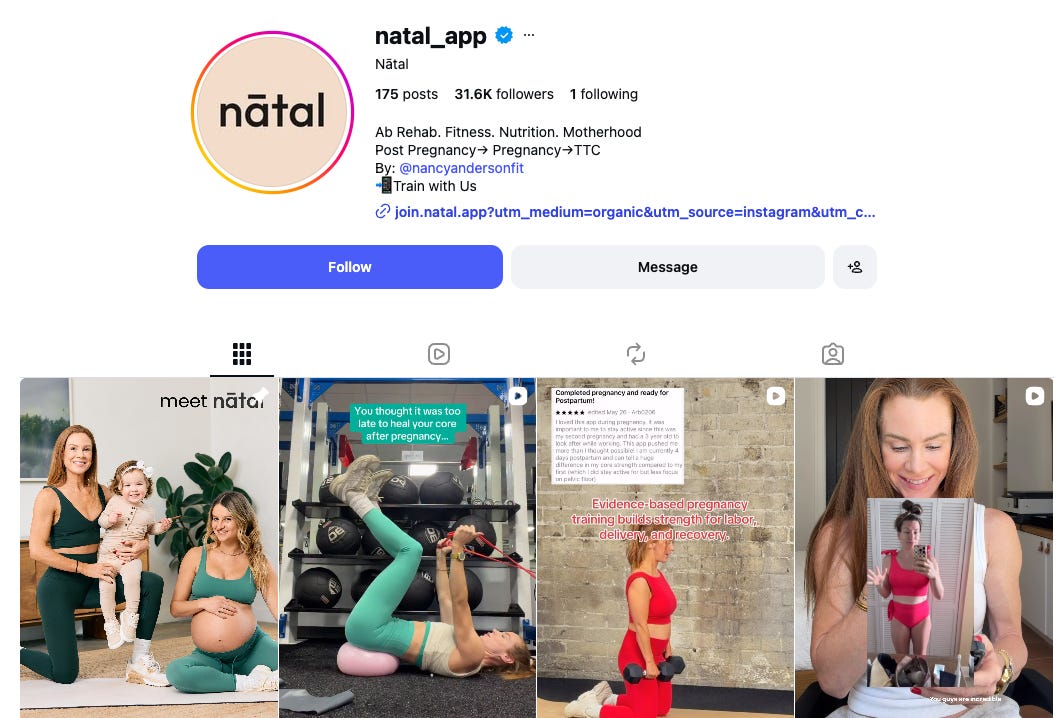
The client is Natal, a pre- and postnatal fitness app that I support in its growth alongside Alice Muir.
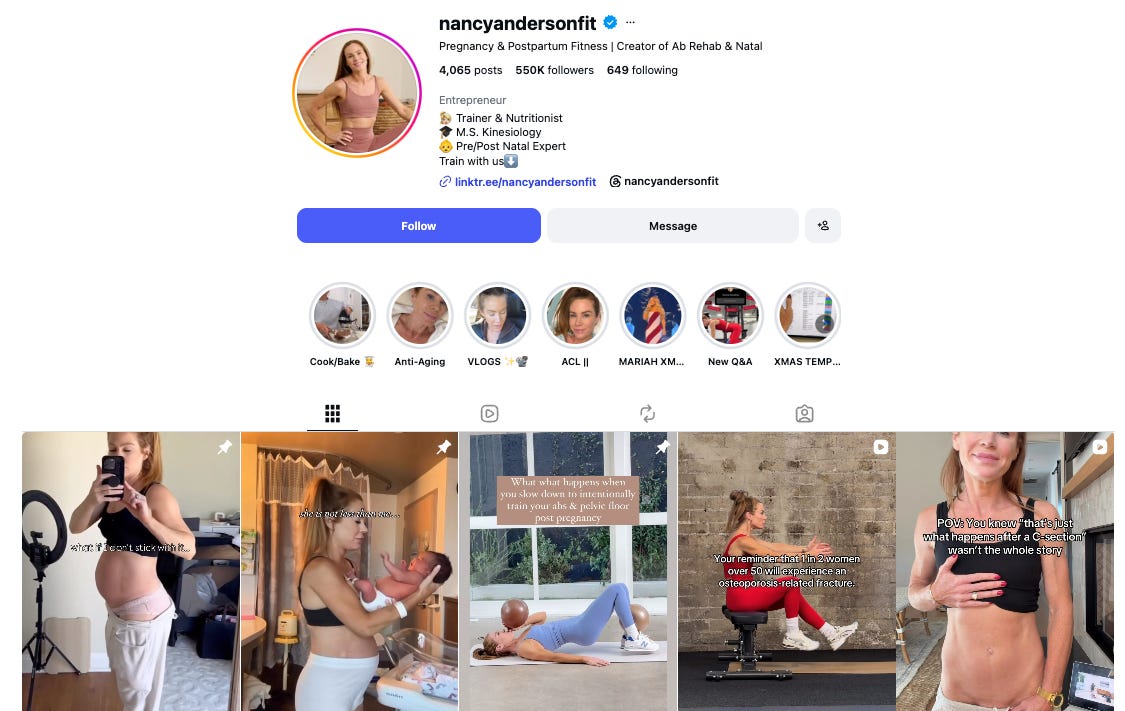
Their founder, Nancy Anderson, appeared on Sub Club — my favorite podcast in the subscription app space (I’ve had the honor of being on it myself, both in a regular episode and more recently a Sub Club Live), which made the whole thing even more exciting.
And there I was, out walking my dog, listening to someone I work with casually share a number most founders would probably frame and hang above their desk:
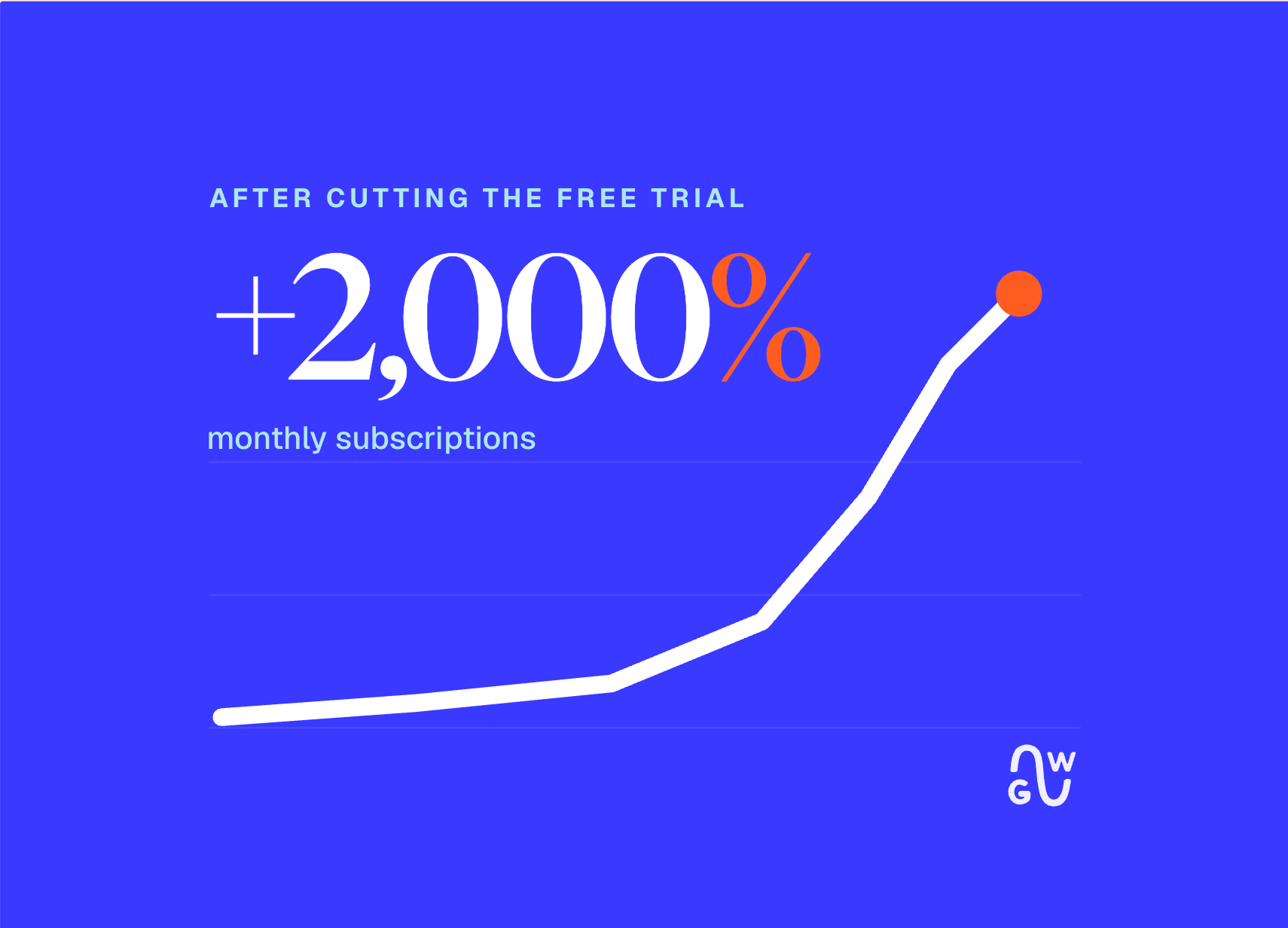
They removed their free trial. Monthly subscriptions grew 2,000%.
Yes, you read that right. Not 20%. Two thousand.
Hearing it made me weirdly proud, like watching a friend absolutely nail a wedding speech. I can’t always share client numbers, so when a client like Natal is open about both their challenges and successes, I can’t help but celebrate it.
Everything below comes from that episode. These were the biggest lessons and moments that stood out to me from Nancy’s story.
1. The free trial was a delay, not a converter
Natal removed the free trial from their monthly plan entirely; that is the irony of it all. Monthly subscriptions increased by 2,000%, quarterly subscriptions by 46%, and annual subscriptions by 21%. It worked so well that they made the change permanent.
My favorite part? The idea wasn’t even theirs.
They heard it on the same podcast, in an episode featuring the Zumba team. Nancy’s reaction was basically: “Huh, that makes sense. Let’s try it.” Even she was surprised by how well it worked.
So why did it work?
Because by the time a Natal user reaches the paywall, the selling is already done. 93% of people who reach their web checkout go on to download the app. Their trial conversion rate is around 68%, compared with an industry average of roughly 38%.
When someone arrives that convinced, a free trial doesn’t necessarily build confidence — it just delays the commitment they were already prepared to make.
Now for the uncomfortable flip side: if your users are arriving cold from a Meta ad and your onboarding experience has to do all the persuading, removing your trial will probably hurt. A lot.
The lesson isn’t “remove your free trial.” The lesson is that the conviction built before the paywall matters more than the paywall itself. What’s interesting is we are now taking this a step further and testing around paid trials instead for the web-to-app funnel.
2. The payment method that unlocked the “I can’t afford it” audience
This is one almost nobody talks about, but it’s a powerful lever in the US:
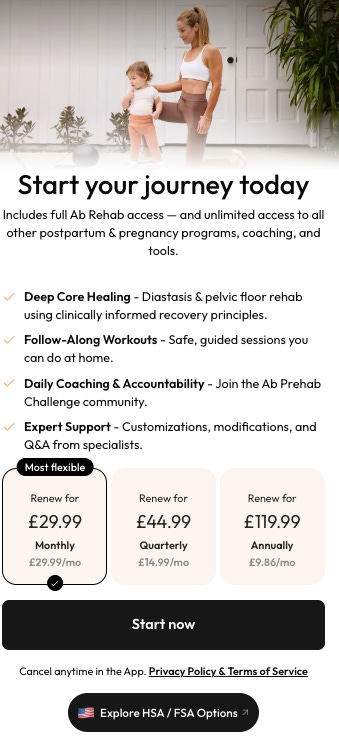
Natal started accepting HSA payments (Health Savings Accounts), which allow eligible users to pay for healthcare-related expenses with pre-tax money. In practice, that can make the app feel 30–40% cheaper for those users.

The demand was hiding in plain sight. For years, women had been paying full price and then manually submitting receipts to their insurance providers.
Nancy heard about it constantly through her DMs. So she wanted to help make it easier for those women to take advantage of an HSA.
Here’s the part I love: they launched it quietly. No big announcement. No campaign. Nothing. Within two weeks, tens of thousands in revenue came from people simply discovering the option at checkout.
Think about what we usually mean when we talk about a “growth lever”: a new channel, a new feature, a new acquisition strategy. This was none of those.
It was a payment method that converted “I want this so badly, but I can’t afford it” messages into subscribers. There’s even a built-in seasonal push: HSA dollars often expire at the end of the year, creating a natural Q4 urgency around using those funds before they disappear.
(Yes, this is US-specific. But the underlying question applies everywhere: who already wants to pay you, and what friction is stopping them?)
3. The lever that no dashboard can measure
Nancy has tried to outsource content production many times. It keeps not working. It keeps not working. In a niche as sensitive as pre- and postnatal health, words matter. A lot.
And nobody can capture her voice, expertise, and understanding of her audience quite like she can. Having been in many meetings with her, I’m still in awe of her knowledge and passion for what she does.
So she kept doing it herself. In the podcast episode, she shared that a recent audit showed their organic content outperforms competitors by 90%.
Her most honest line from the episode was that growth would be easier if she “could get tech bros to buy into” trust, because trust is almost impossible to quantify in a meeting. You can’t A/B test it. You can’t put it neatly into a spreadsheet.
But you can see the impact everywhere downstream: the 68% trial conversion rate, the paywall that works without a trial, the checkout visitors who actually go on to download.
Founder-led content can be slower and difficult to scale. It’s also almost impossible to attribute, but it’s powerful. We saw this at Heights too, when I was Head of Growth; much of the initial traction came from founder-led initiatives.
Worth a listen (Recommendation)
The full episode is genuinely worth your commute or dog walk: How Removing the Free Trial Grew Monthly Subs 2,000% — Nancy Anderson on Sub Club.

Nancy is brilliant at explaining why she still writes her own content and reads her own DMs. (And no, she didn’t ask me to share it; I offered because I’m so proud of what they’ve built.)
If you want the origin story of the no-trial idea, the Zumba episode of Sub Club is where the Natal team first heard it. A nice reminder that good ideas are lying around everywhere — the skill is knowing which ones fit your app.

Please don’t copy Natal
I know, I know. After 800 words or so of “look how well this worked,” here I am telling you not to do it.
The irony is not lost on me: Natal’s biggest win of the year came from copying a podcast tip.
And it worked because it built on years of trust-building. Their audience was arriving at the paywall already convinced. The exact same test on an app fuelled by cold paid traffic could go very wrong.
I’ve spent years helping founders improve their trial-to-paid conversion, but I’ve realized we need to be more critical and ask whether the trial should exist in the first place.
That’s the real takeaway: your monetization setup is full of defaults you’ve never questioned. Whether that is:
Trial length
Trial existence
Plan mix
Payment methods
Pricing
So don’t copy the answer; rather, copy the behavior: look at your data, understand your customers, and keep testing.
Till next time,
Daphne
Many thanks for sharing this. Very insightful. QQ - I'm curious about the 68% trial conversion rate—what specific elements in the web onboarding or messaging are driving that level of conviction before users hit the paywall?
Also, how are you currently measuring success for your paid trial tests?