


Hi there,
Talia Wolf recently asked me for her year-end roundup for GetUplift:
What is one big thing from 2025 I’m taking into 2026
Now I’ve shared my top 25, but which is my favourite lesson?
It got me thinking about what I had been giving talks about, the client work I loved most and what actually moved the needle. One theme kept coming up.
I didn’t optimise for sales, but for Jobs to be Done.
I focused on what customers actually needed and wanted to achieve.
It’s not new to 2025; it is the whole reason I created a course on Message-Market Fit, but it is one I’ve been shouting about more and more because of its power in helping you optimise the full customer journey.
If you aren’t familar with JTBD, I definitely recommend reading this article I wrote first. It is the story I love to tell to help people understand JTBD in real life.
So in the spirit of December reflection, here is the lesson I want to give you for 2026.
The realisation
For a long time, I thought of Jobs to Be Done as:
A research framework
A messaging exercise
Something you do at the start of a project
What 2025 taught me is that JTBD is much more fundamental than that.
It’s a way of answering one deceptively simple question:
“What is someone trying to make progress on when they choose us?”
Not:
What industry are we in
What features do we ship
What channels do we grow through
But:
What situation are they in
What outcome do they want
What feeling are they trying to move away from (or towards)
Once you start looking at your customers through that lens, a lot of things snap into focus.
Why this mattered so much in 2025
It’s so easy as a startup to get caught up in a million focus points, trying to perfect everything and executing too little.
When you focus on JTBD and ask yourself first:
Which JTBD should we be focusing in on?
Versus trying to serve five different segments equally, and then once you narrow it down asking yourself
Will this help our customers achieve their JTBD better?
It becomes easier to focus, to speak to them to resonate with them.
How to take this into 2026
1. Fewer assumptions, more listening
You are never too busy to speak to customers; nothing beats it. Stop asking yourself how to improve an area; instead, ask your customers questions.
If they aren’t converting, ask them questions like:
What led you to search for a new solution?
What alternatives did you try before this?
What worries and concerns came up about trying something new?
JTBD are what drive users to pay and stay.
2. Make emotional context real, not fluffy
One of the most common questions I got when presenting about JTBD was: How does this relate to personas?
Good personas are JTBD personas:
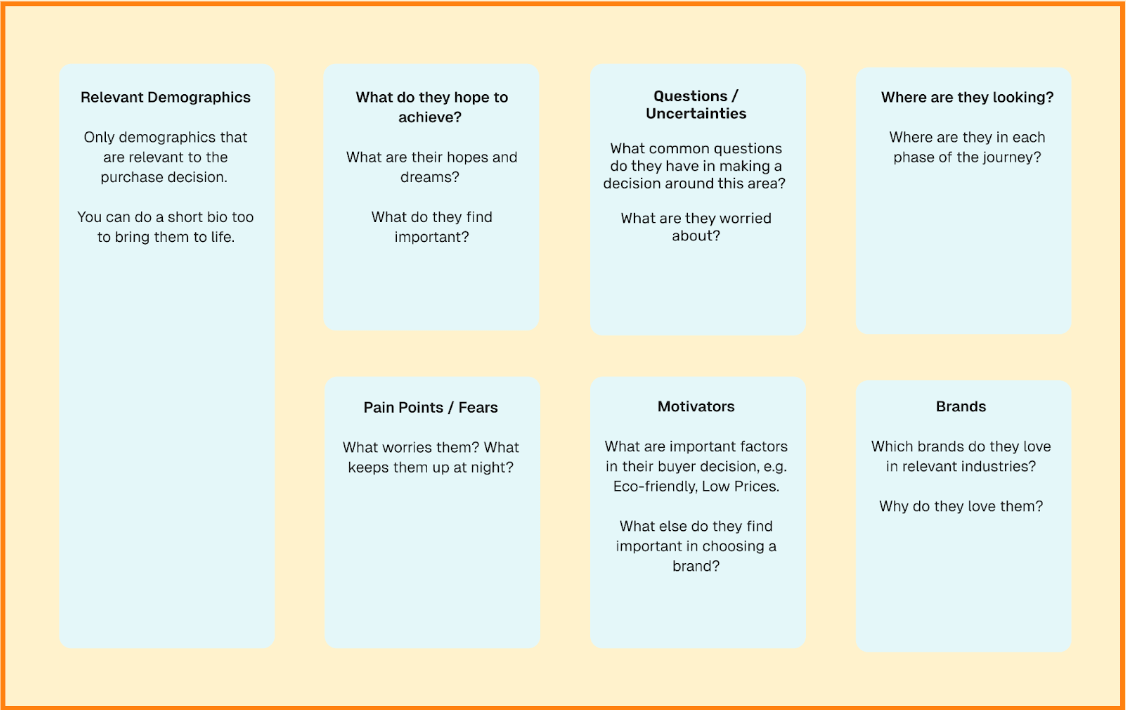
They focus on what matters to the end customer vs just demographics. Make sure everyone understands them, and they are top of mind. Emotional context is invaluable.
3. Ensure your key metrics reflect the JTBD
I hate revenue as a North Star Metric (NSM) it doesn’t focus on value at all.
Instead, make sure your NSM or at least the key metrics underneath it reflect that you are helping your user complete their JTBD.
This gets you focused on long-term value creation over short-term wins.
A simple exercise for 2026 planning
This is the easiest test to see if you understand your customer’s JTBD. For your app or main product, complete the following sentence:
When ___, I want to ___, so I can ___.
If that sentence feels vague, generic, or hard to agree on internally, then a huge opportunity for 2026 is narrowing it down.
Recommendation
In every edition of Growth Waves, I also share a related resource to check out related to the week's topic.
Not only did Talia inspired the topic of this newsletter, she’s shaped a lot of my thinking around speaking to your customer’s emotions.
She released a great book this year called Emotional Targeting about how to understand your customers. She focuses on B2B in it because if you can do it there, you can do it anywhere, but her Emotional Targeting™ Framework applies to all types of businesses. So definitely check it out.

Looking back, the work I’m proudest of this year had one thing in common:
It was grounded in a deep understanding of what people were actually trying to achieve, not just what we wanted them to do.
That’s the lesson I’m taking with me into 2026,
Daphne