

Hi there,
If you ask most app or e-commerce teams what’s holding growth back, you’ll hear a familiar answer:
We’re struggling with acquisition
Why, because their LTV is often too low. So eventually they realise, maybe it is a churn issue.
So they start working on retention: improving winback flows, encouraging longer subscriptions.
But most retention issues are also actually not retention issues.
The number-one challenge that came up in the growth audits I conducted last year?
Activation issues.
For apps, the dropoff is often steep in the first seven days or even the first session.
For e-commerce, it is often the first- to second-order rate.
This is more important than ever, especially in competitive categories.
I shared some data on LinkedIn recently: the top 5 health & fitness apps control 73% of ad spend. If you're not one of them, you're not going to out-acquire them — you have to out-retain them, starting with activating effectively.
So how do you know if you have a retention issue, and what can you do about it?
How to tell if you actually have an activation problem
Activation issues rarely announce themselves clearly. They show up as secondary symptoms.
Here are the most reliable signals I see across both apps and e-commerce:
1. Users drop off fast, not slowly
If most churn happens right after signup, download, or first purchase, that’s not a loyalty issue. It’s a value-delivery issue.
2. Monetisation feels “forced”
If paywalls or products only convert with heavy discounts or long trials, users likely don’t yet understand why the product is worth paying for.
3. You’re debating pricing more than usage/value perception
When teams argue endlessly about price points but can’t clearly describe early user behaviour, activation is the missing link.
4. Support and reviews sound confused
Comments like “I didn’t know I could do this” or “I expected something else” alongside support questions about basic features or information you believe they should know… they’re activation warnings.
5. Power users look nothing like average users
If a small group uses the product frequently and sticks around, while most users never adopt those behaviours, the gap isn’t retention, it’s early guidance.
When you see multiple of these at once, fixing churn or pricing won’t solve the root cause.
How to fix an activation problem (without overcomplicating it)
The teams that make progress on activation don’t do more. They do less, better.
They don’t get caught up in onboarding completion or email open rates; instead, they focus on the following:
1. Define one activation behaviour that matters most
Not a vanity metric. A behaviour that clearly separates retained users from churned ones.
2. Design onboarding around action, not explanation
If users need to understand everything before doing anything, activation will stay low. Keep it simple and focus on the most important things, rather than telling them everything
3. Remove optionality early
Templates, defaults, and guided paths outperform choice during the first experience. Choice is only valuable when you give them guidance on how to know what is right for them
4. Delay monetisation pressure until after value is felt
Paywalls work better when users already know what they’re upgrading for. I’ve seen this with e-commerce too for high-end products: show the price too quickly, and they may not give you a chance to show value, build a relationship first.
The good news is that none of this requires a full rebuild. Small changes to early flows often outperform months of downstream optimisation.
Recommendation
In every edition of Growth Waves, I also share a resource related to the week's topic.
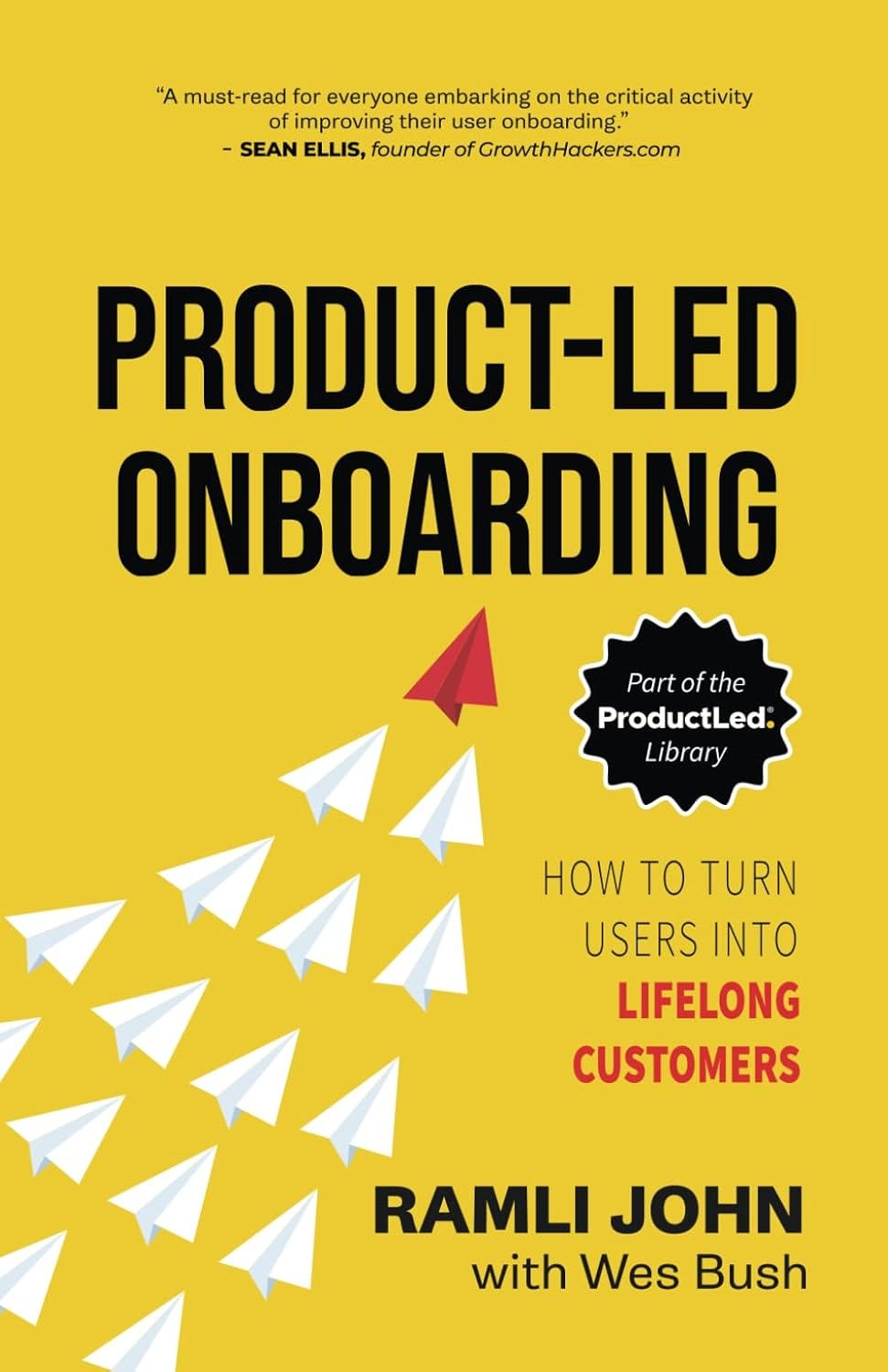
This week, it’s the book Product-Led Onboarding by Ramli John.
It’s written with SaaS products in mind, but one insight from the book maps perfectly to what we’ve been talking about here:
Onboarding shouldn’t teach users what your product can do.
It should guide them to do the thing that makes the product valuable.
That distinction sounds subtle, but it’s precisely where many teams go wrong.
Most onboarding flows focus on:
Explaining features
Highlighting flexibility
Showing everything the product is capable of
But the best onboarding does the opposite:
Narrows the path
Removes choices
Pushes users toward one meaningful action as fast as possible
That’s activation.
Whether you’re building a SaaS product, a subscription app, or an e-commerce brand, the principle holds:
Value isn’t understood, it’s experienced.
If users don’t get there quickly, no amount of retention work will save you.
If growth feels harder than it should, don’t start with churn, pricing, or paywalls (and definitely don’t over-obsess about acquisition)
Start by asking:
How many users truly experience value early on?
Because if activation is broken, no amount of tape will fill your leaky bucket of users.
Till next week,
Daphne
The version of this I've seen in financial services: a customer who hasn't transacted in a year gets a retention email.
As if the problem is communication.
Nobody ever stopped to ask whether they ever actually did the thing the account was for.