


Hi there,
I was chatting with my friend Rosie Hoggmascall recently, and she said something that stuck with me.
Rosie joined Fyxer as Growth Lead. She’s incredible at user research, genuinely one of the best I know, so naturally she became the research person.
People kept coming to her for it. At a fast-growing AI startup, it can easily become a full-time job.
But here’s the thing: as much as Rosie loved research, it wasn’t the main thing she wanted to do. It wasn’t where her special skills lie.
Research was her Zone of Excellence, not her Zone of Genius.
The trap of being “good enough”
This is the challenge with growth and product roles. They’re so broad that you can easily get pulled into your zone of excellence, or worse, spend most of your time in your zone of competence.
I had this at Heights.
There was no Head of Marketing, so I ended up managing influencer marketing and overseeing the social media team. Definitely not my Zone of Genius. Barely my Zone of Competence, if I’m honest.
I felt awful. Influencer marketing wasn’t performing how it should, and I didn’t know what I was doing.
I spent time learning and trying to get better, but I didn’t enjoy any of it. Every week left me drained and burned out.
The worst part? I was still doing the work I loved — growth strategy, optimising the customer journey — but I had less energy for it. I was juggling so much that even my Zone of Genius started to suffer.
And when you let this happen, whether you’re a Head of Growth or a founder, no one wins:
You aren’t doing the things you thrive at
You aren’t delivering at the level you need to
You feel frustrated because you’re working so hard, but not excelling
Sound familiar?
The four zones
This concept comes from Gay Hendricks’ book The Big Leap, and it’s one of the most useful frameworks I come back to with founders and growth leaders.
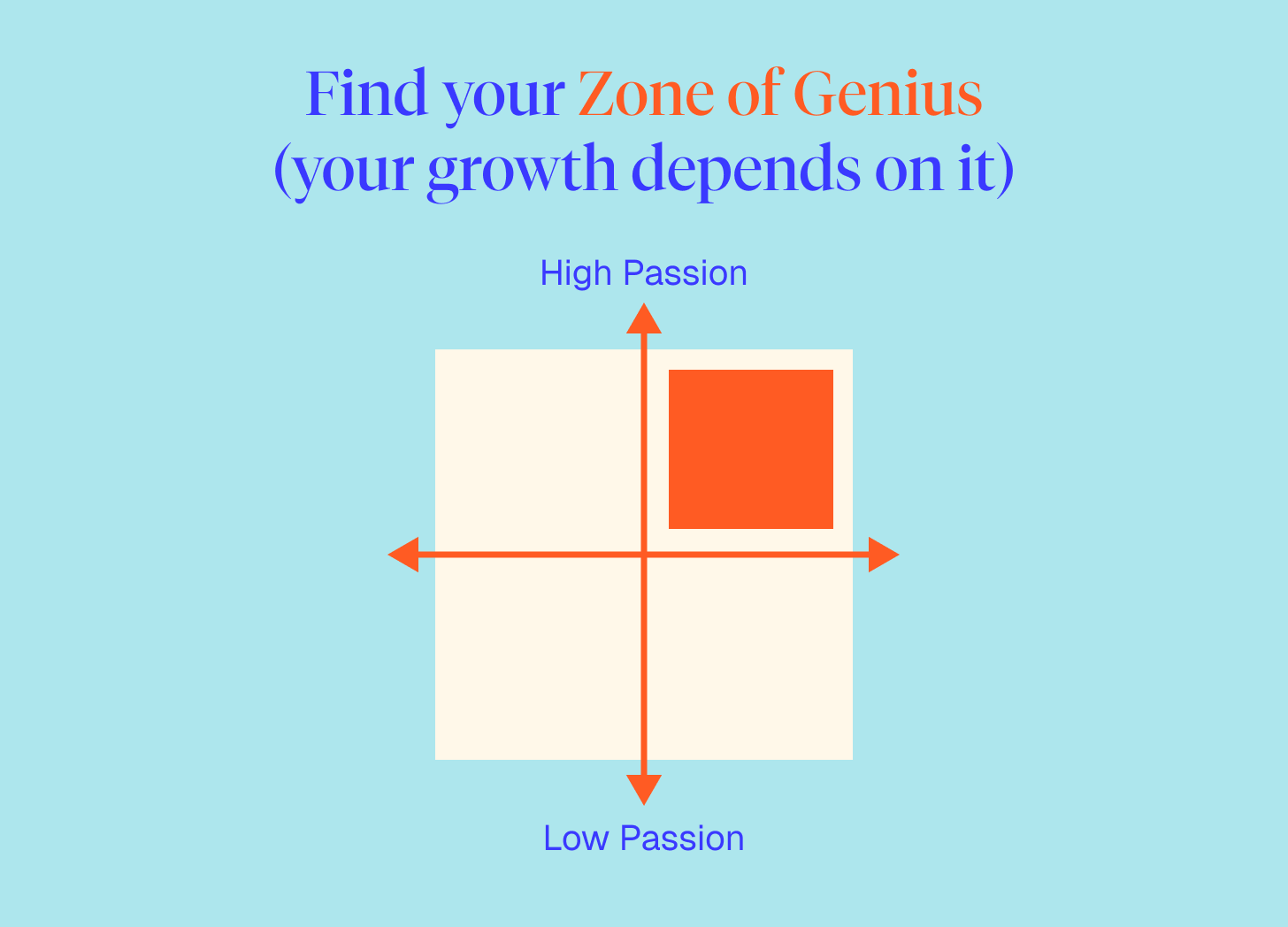
Hendricks frames it around two axes:
Passion: How motivated does this work make you? How fast does time go? How energised do you feel?
Skill: What are you uniquely good at? What can you pick up quickly and execute better than others? Where’s your leverage?
When both are high, you’re in your Zone of Genius. When skill is high, but passion is low, you’re in the danger zone: excellence without energy.
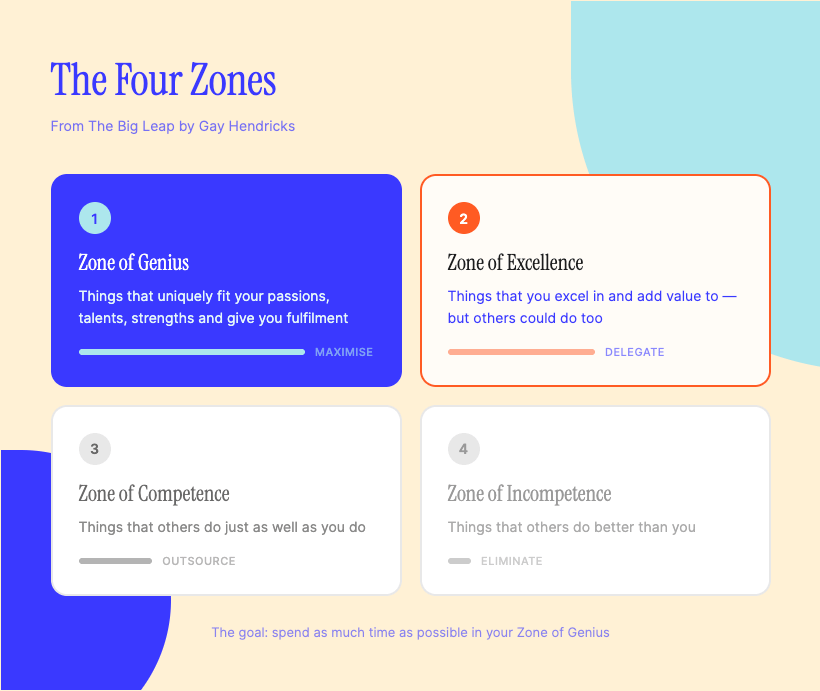
Here are the four zones:
Zone of Genius: The sweet spot. The things that come naturally to you, that energise you, that you’re uniquely brilliant at. This is where you create the most value and where you should spend as much time as possible.
Zone of Excellence: Things you’re really good at. Often, what you’re known for. But here’s the trap: just because you’re excellent at something doesn’t mean it’s where you should spend your time.
Zone of Competence: Things you can do adequately, but so can many others. No real advantage here.
Zone of Incompetence: Things you’re bad at. Others can do them far better. You probably already delegate these (or should).
The problem? Most high performers get stuck in their Zone of Excellence.
It feels productive. People praise you for it. But it’s not where you do your best work, and over time, it drains you.
What a Zone of Genius looks like
Rosie and I talked about this. I’ve known her for years, so together we narrowed it down quite quickly.
Her Zone of Genius isn’t research.
It’s building strong strategy and visualising journeys in a way that’s easy to understand. Research was a tool she used well, but strategy and clarity were where she truly shone.
Once she recognised that, she shaped her role around it.
She recently got promoted to Head of Product and UX at Fyxer (big congrats!), a role she helped define. Not Head of Product Research.
The difference matters.
My Zone of Genius?
Product growth strategy and turning massive amounts of data and insights into practical strategy that drives focus and impact. Not managing influencers. Not overseeing social media. Analysing, synthesising, and creating clarity that moves things forward.
Finally voicing this at Heights changed everything. We reshaped the team structure and started looking for a Head of Brand Marketing. The impact wasn’t just on my happiness; it impacted growth. I could finally focus on my strengths.
I wish I’d been more critical upfront. My “I’ll help with everything” attitude actually hindered me. Now I’m brutally honest in every sales call about where my strengths do and don’t lie.
How to find your Zone of Genius
If you’re trying to figure out your own Zone of Genius, ask yourself:
What energises me? Not just what I’m good at, but what I could do for hours without feeling drained.
What do people specifically come to me for? Look for patterns in what others recognise in you.
What feels effortless to me but hard for others? Your genius often hides in plain sight because it comes so naturally.
If I could only do one type of work, what would I choose? Strip away the “shoulds” and listen to what pulls you.
You’ll never be 100% of your time in your Zone of Genius, but already shifting it from 10%-20% to 50% makes a huge impact.
This applies to your team, too
Here’s where it gets interesting for founders and growth leaders.
It’s not just about finding your Zone of Genius. It’s about helping your team find theirs.
The thing is, it's hard to see this in yourself. Rosie and I figured out her zones through conversation - she needed someone outside her own head to help connect the dots. Your team likely needs the same.
Taking time to have these conversations isn't soft management fluff. It's how you unlock performance.
When everyone on a team is operating in their Zone of Genius:
Work gets done faster (and better)
People are more engaged and less likely to burn out
You stop duplicating effort in areas where no one excels
When people are stuck in their Zones of Competence or Excellence:
Everything feels harder than it should
You’re overpaying for mediocre output
Frustration builds on all sides
The unlock for growth isn’t just hiring more people. It’s making sure the people you have are doing the work they’re uniquely brilliant at.
The hard question
Sometimes, shaping your role around your Zone of Genius isn’t possible. The company needs something different.
The role was mis-scoped from the start. The founder wants you to be someone you’re not.
If that’s the case, it might be worth asking a harder question: is this the right fit?
I’ve seen too many talented growth people burn out in roles that were never going to let them do their best work.
Rosie could have stayed as “the research person” at Fyxer. She would have been good at it. But she wouldn’t have thrived as much as she could have.
Instead, she had the conversation; she shaped the role. And now she’s doing incredible work in a position that actually fits.
She’s shared her incredible journey of finding her Zone of Genius and reflecting on it in a recent newsletter. She seems to love the framework as much as I do. There is also a great template in there for mapping out your Zone of Genius.

Recommendation
In every edition of Growth Waves, I share a resource related to the week’s topic.
If this resonated, I’d genuinely recommend reading The Big Leap by Gay Hendricks. It goes much deeper into how we self-sabotage and why we often resist moving into our Zone of Genius (spoiler: it’s uncomfortable to admit what we’re not meant to be doing).

One thing to try this week:
Write down where you’re spending your time. Be honest. Then categorise each activity: incompetence, competence, excellence, or genius.
If genius isn’t taking up the majority? That’s your signal.
And if you manage a team, have this conversation with them. Ask where they feel energised and where they feel drained. You might be surprised by what you learn.
Till next week,
Daphne
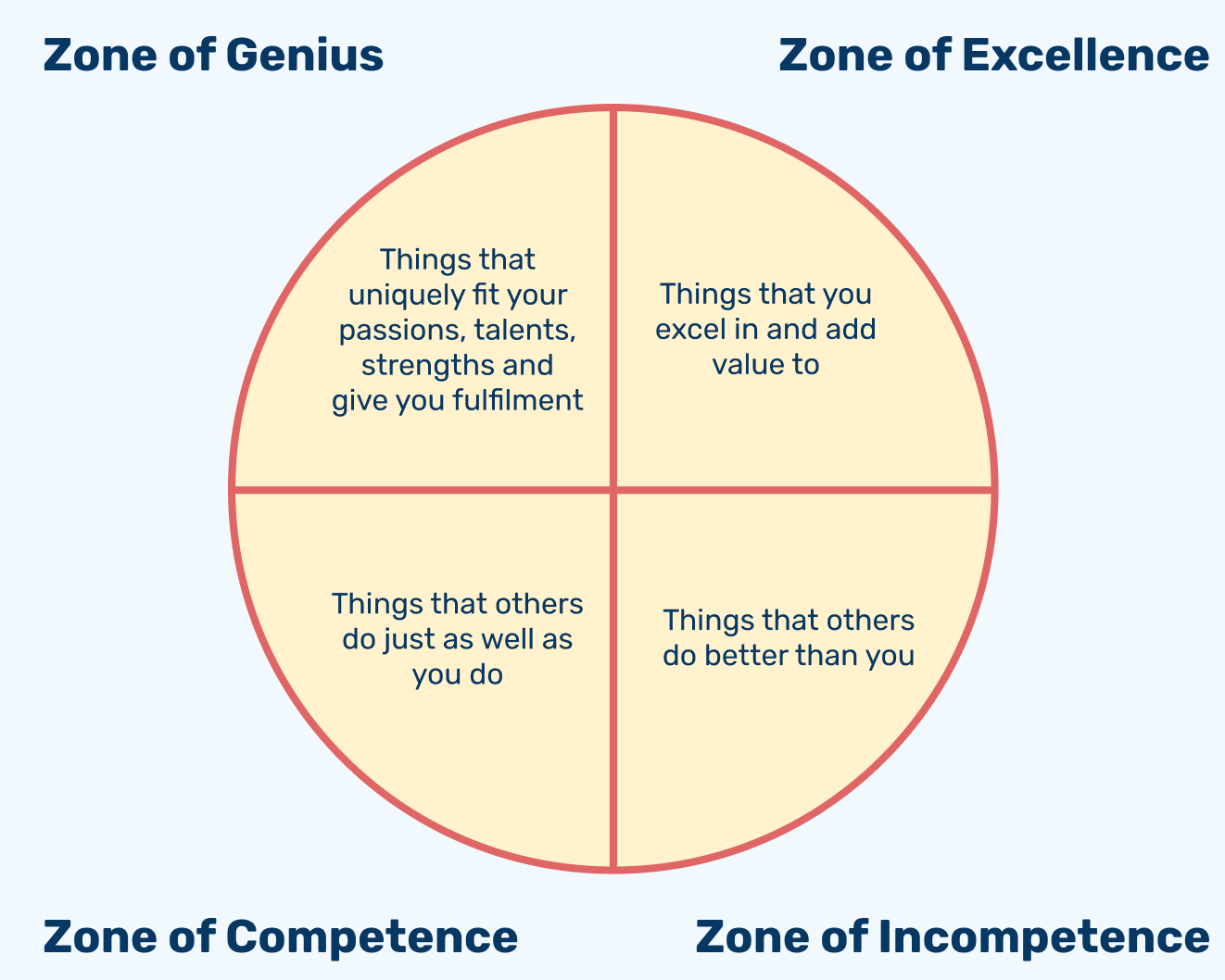
P.S. My Zone of Incompetence is definitely creating diagrams; I delegated the one above to AI. What do you think? This was the original one in my old branding from two years ago:
Helpful read. Thank you for writing this. I have some work to do