


We’re taught Day 0 matters for trial conversions. That’s when 75% to 80% “should” happen, or at least do on average across all categories, according to RevenueCat’s State of Subscription Apps 2026 report.
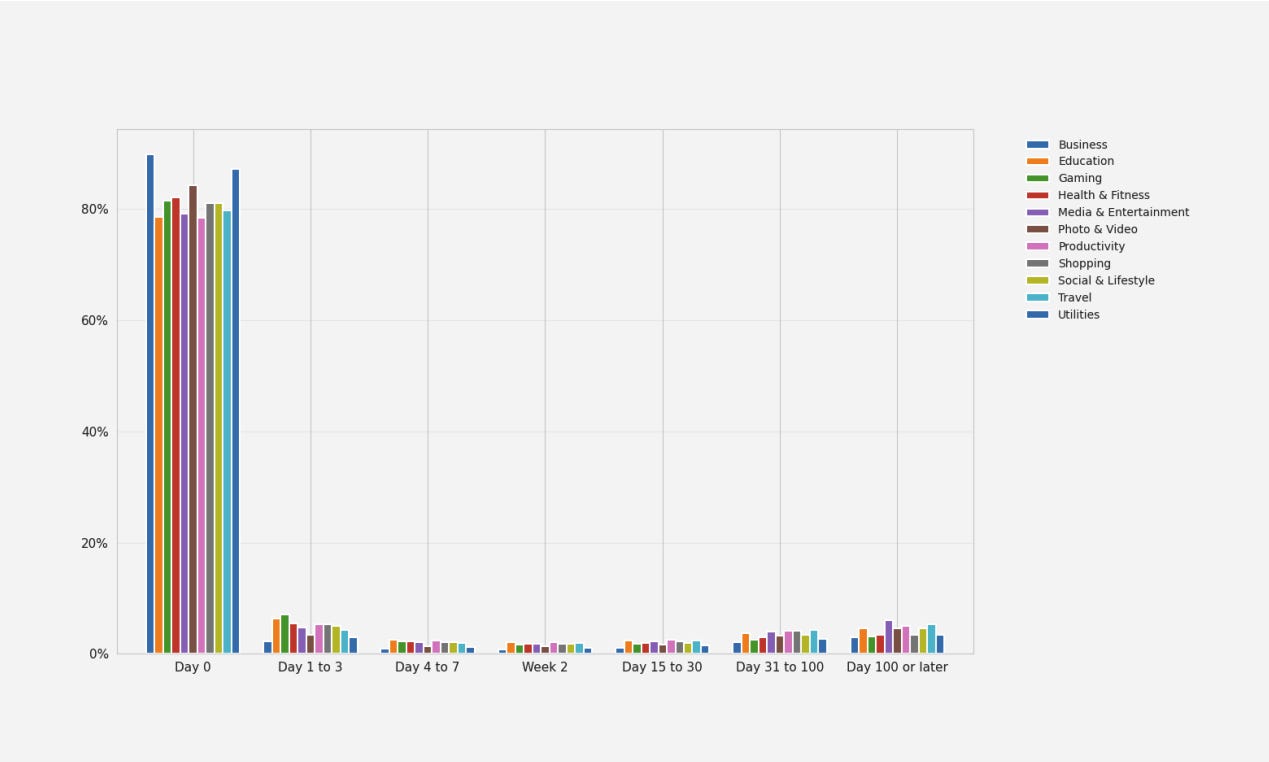
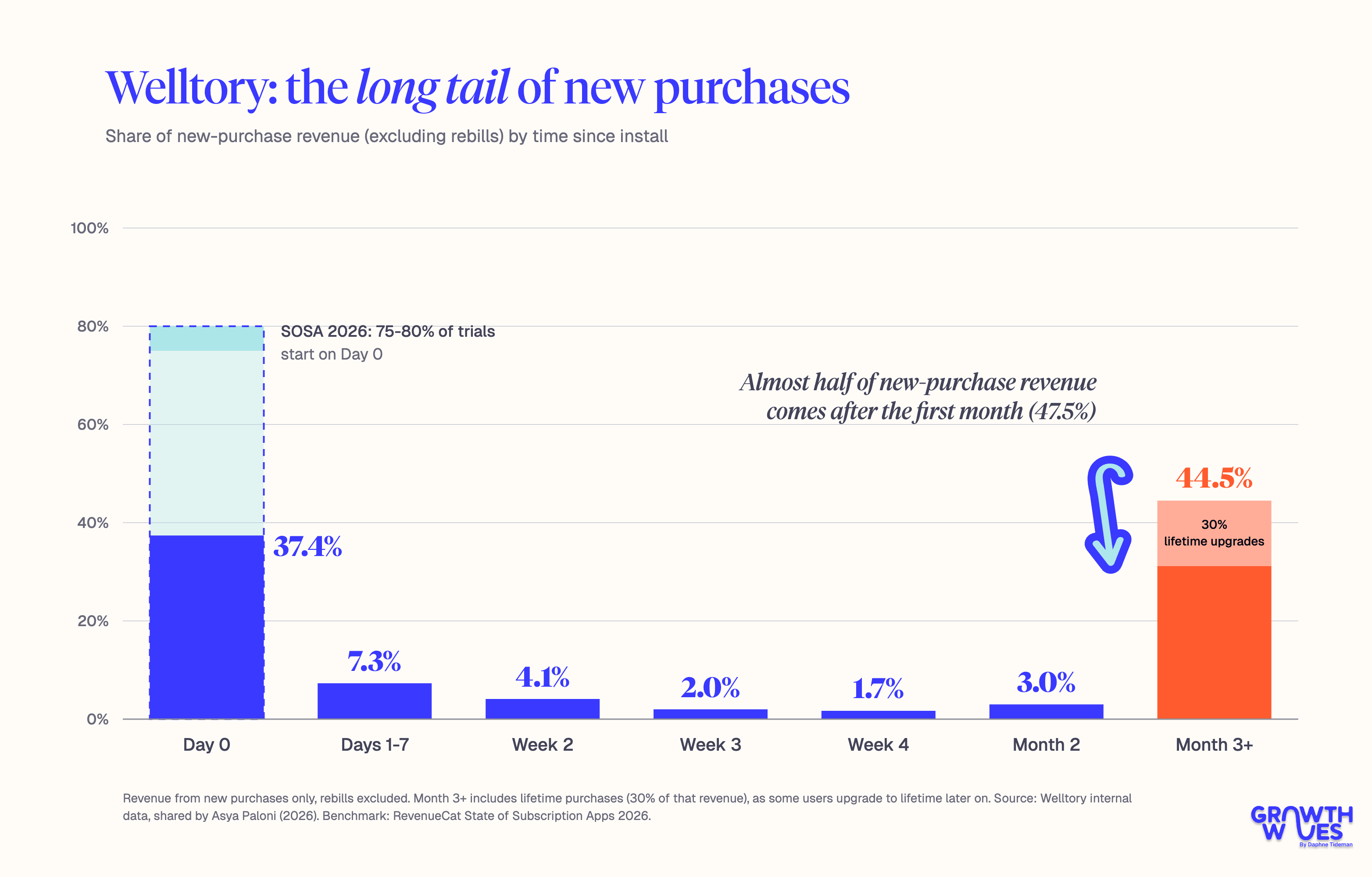
So when I heard Asya Paloni, Chief Product Officer at Welltory, say on a podcast episode that most of their conversions don’t happen on Day 0, I did two things:
Went back 30 seconds to make sure my ADHD brain hadn’t misheard her at 1.8x playback speed (it hadn’t).
Promptly redownloaded Welltory to put it to the test.
Two weeks into my test, I messaged Asya to ask if she would be open to sharing more in a newsletter.
Luckily for you (and me), she said yes.
Here’s everything you need to know about delayed trial starts, and why they aren’t as bad as you might expect.
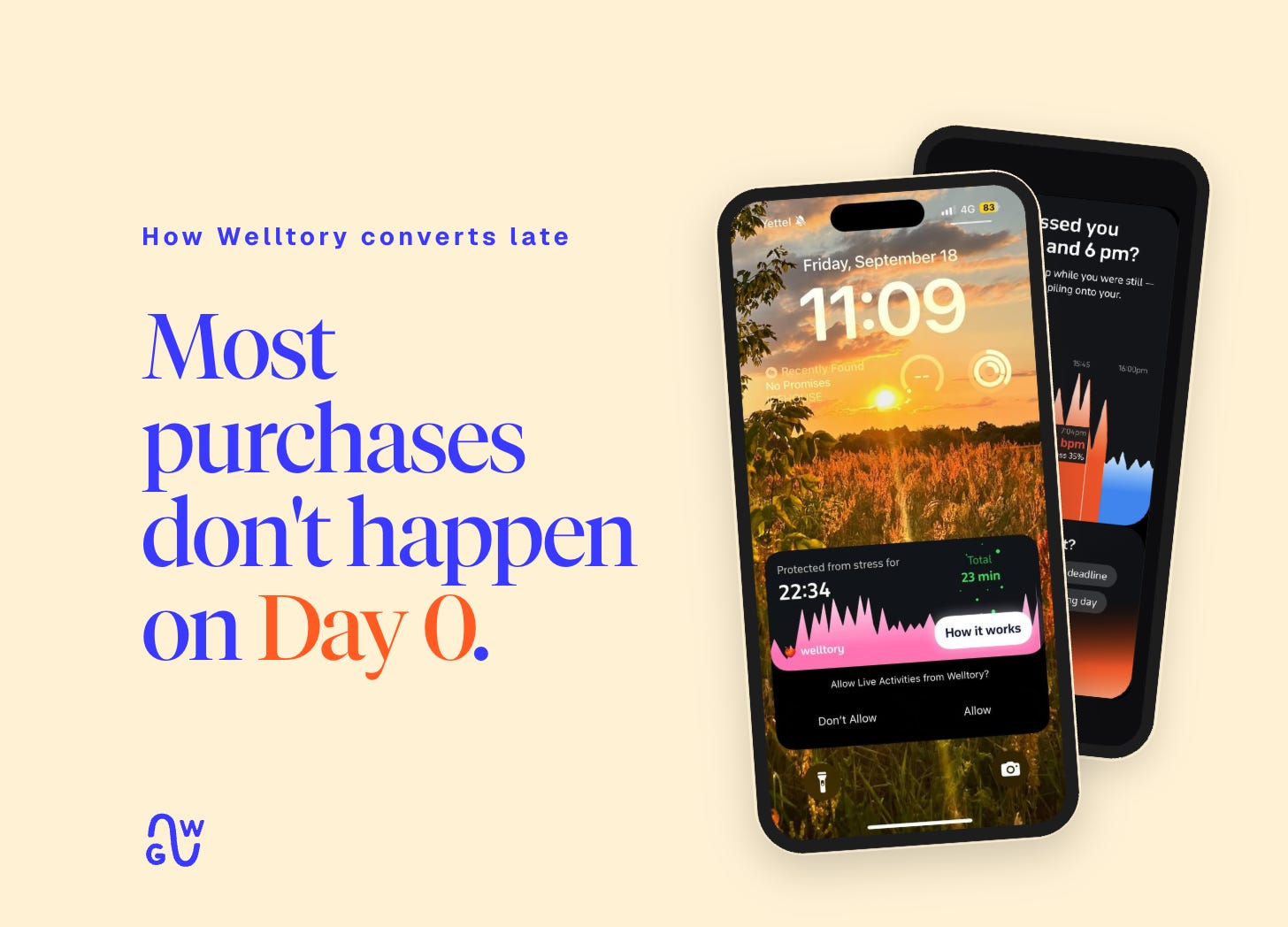
Welltory was never built for Day 0
Welltory is a health tracking app with around $18 million ARR. It turns your health data into simple, actionable guidance.
They’ve always had a generous free tier. From the start, they focused on building a product that drives retention and long-term usage.
Not the classic “I bought this because I know it’s good for me, but never use it” (hence the health space is full of subscription hangovers every January).
I love this. They aren’t building a buy-once, never-open-again app, but one for the long term.
Asya even mentioned they didn’t have a paywall in their onboarding until 2023 🤯. But it makes sense, as Asya explains:
“Just randomly putting paywalls in more places doesn’t work. You’d think adding a big obvious ‘go Premium’ button to the main screen would increase conversions. Nope.”
What worked instead was showing users how a moment in their day impacts their stress and energy, both positively and negatively.
That’s what shows the value. And that can take time.
3 ways Welltory drives conversions after Day 0
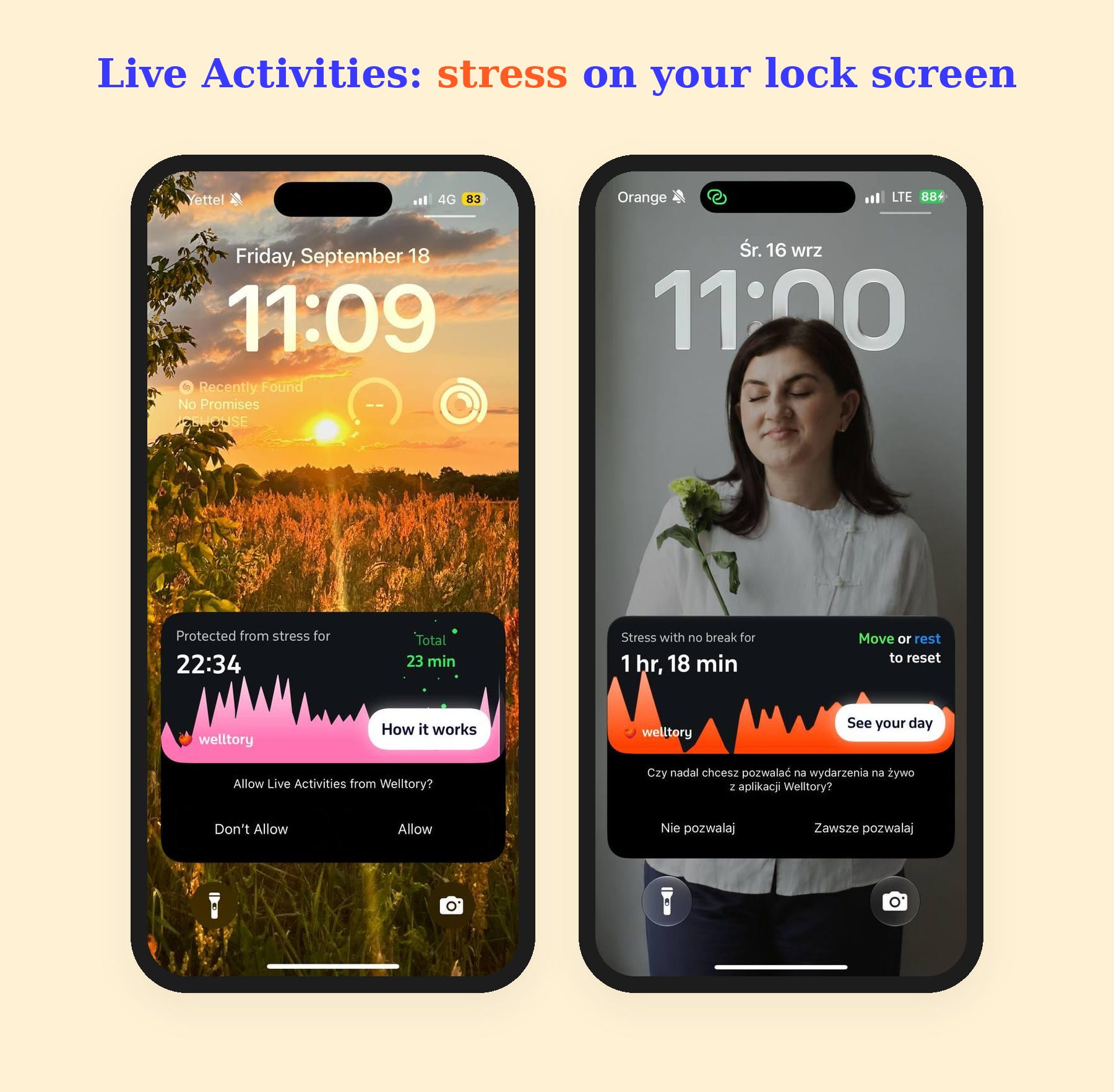
1. Live Activities that show you when stress is building up
I tested this one out myself, and what I can tell you for sure: I am very relaxed walking around Bilbao on holiday, enjoying pintxos and vino. Not quite the test Asya probably had in mind.
But the functionality is clever. It shows you:
When stress is building up
When you’ve earned stress-protection minutes (for me, these often come from walks and workouts)
So you can see the value of Welltory even when you aren’t in the app, plus what it can measure and tell you that your Apple Watch can’t.
Asya explains:
“You might see that stress is building, or that you’ve earned stress-protection minutes, and have this moment of: oh, this thing is actually monitoring what’s happening to my body in real time.”
2. Surfacing pieces of paid value for free
Welltory’s value lies in personalized insights. But when all of that sits behind Premium, free users don’t know what they’re missing out on.
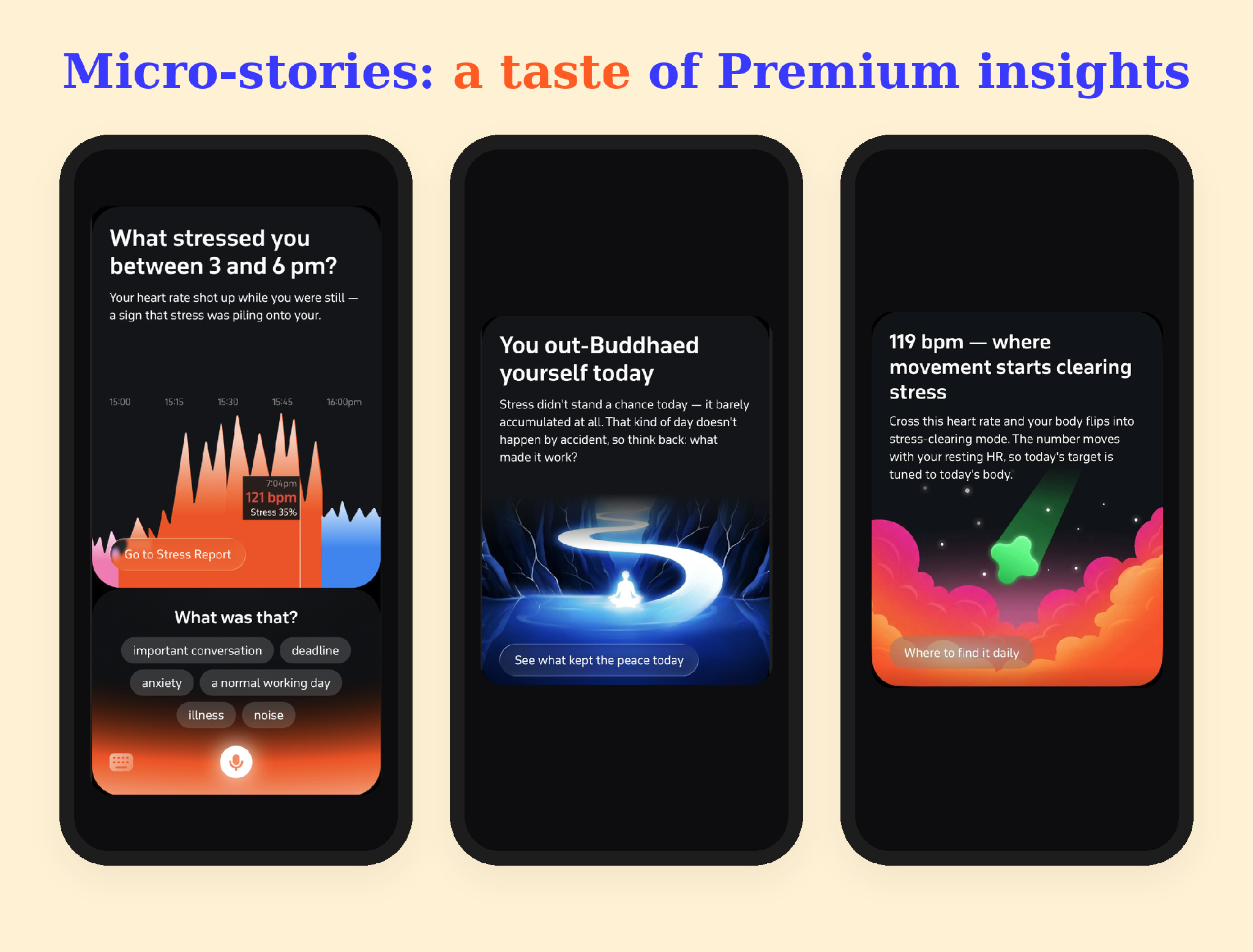
So Welltory pulled small pieces of those insights onto the main screen (micro-stories). They help you see what’s happening with your body, which feels like a small victory.
This is how I learned that gardening, which I thought was relaxing me, was apparently stressing me the hell out. Okay, I was chopping down half a tree.
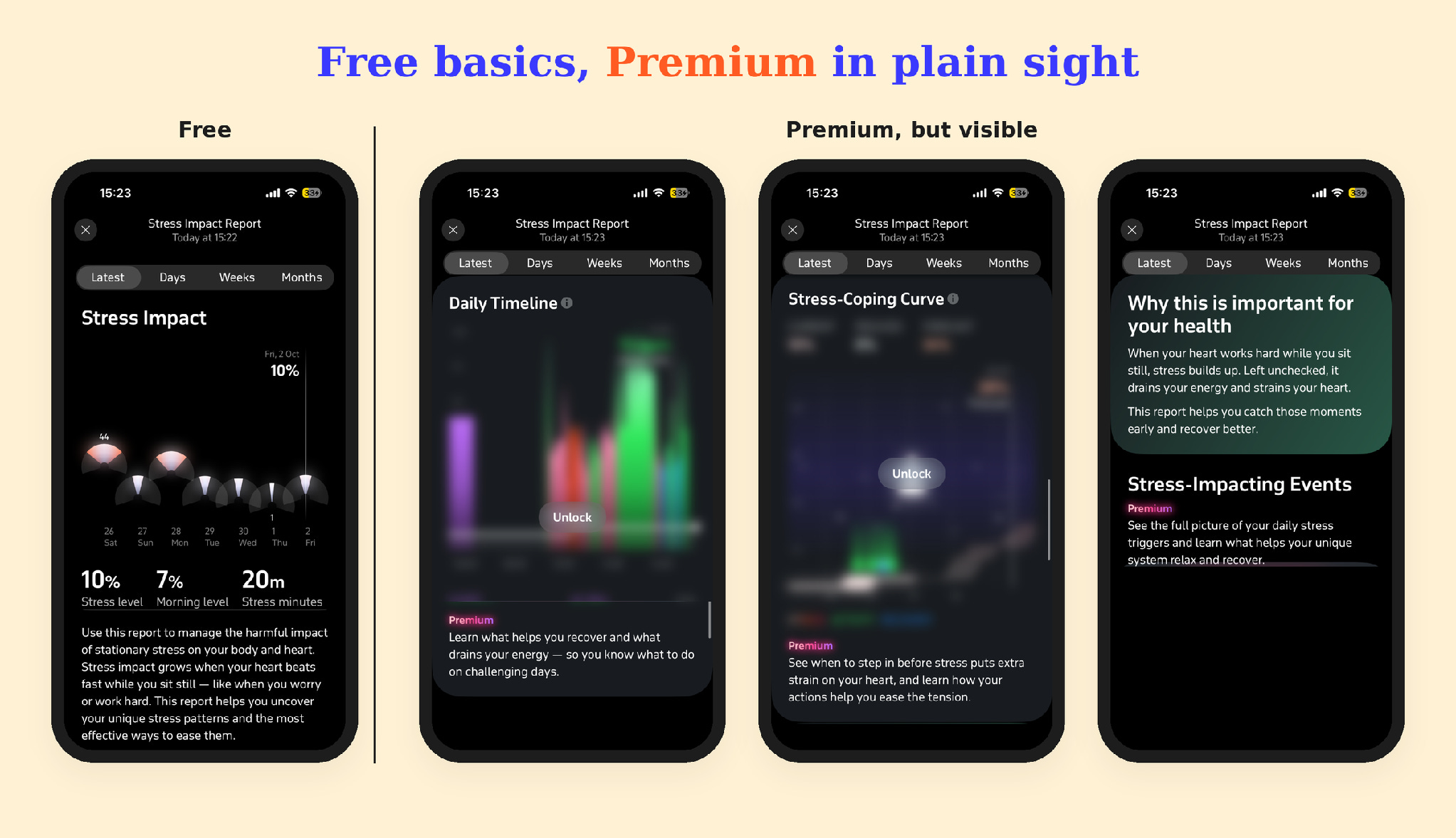
This pattern repeats itself throughout Welltory. When you look at an activity (e.g., walking) or a general score (e.g., stress), you get the basic insights for free. The rest is visible, but Premium.
That gives you a far better idea of what you’d get than a vague promise of “more in-depth data.”
3. Feature launches
I’ve lost count of the times I’ve told a founder “I wish it could do this…”, only for them to show me where it’s hidden in the app.
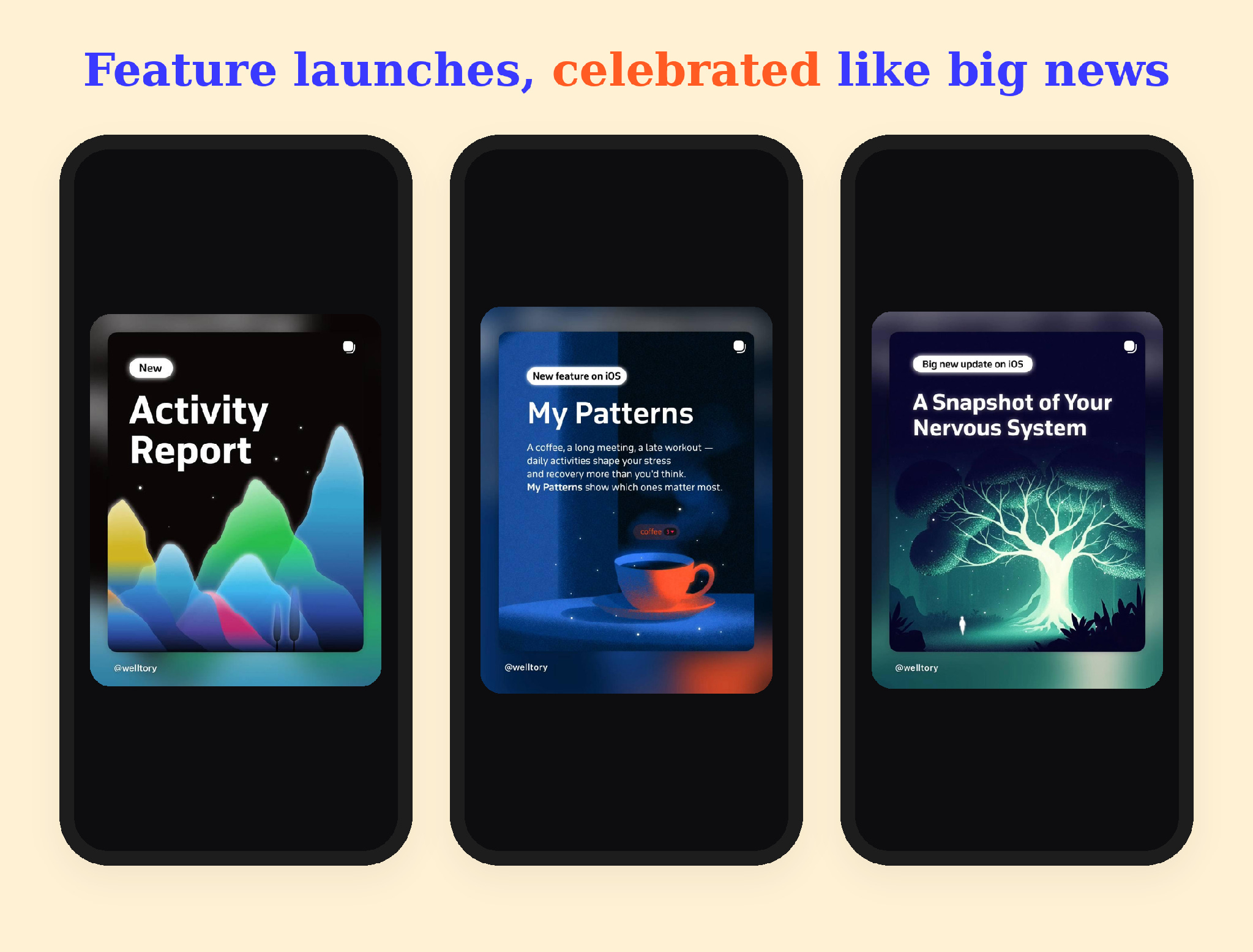
Welltory treats product releases as major launches, building a whole celebration around each one. It shows free users the value and gives them a reason to reconsider Premium.
As a result, they consistently see feature launches drive purchases.
They haven’t given up on Day 0 either
Welltory doesn’t use the delay as an excuse to sit back on Day 0. Their onboarding does include a paywall now, but the focus is on showing you as much value as possible.
They encourage you to run an experiment after you’ve signed up and see what happens to your body.
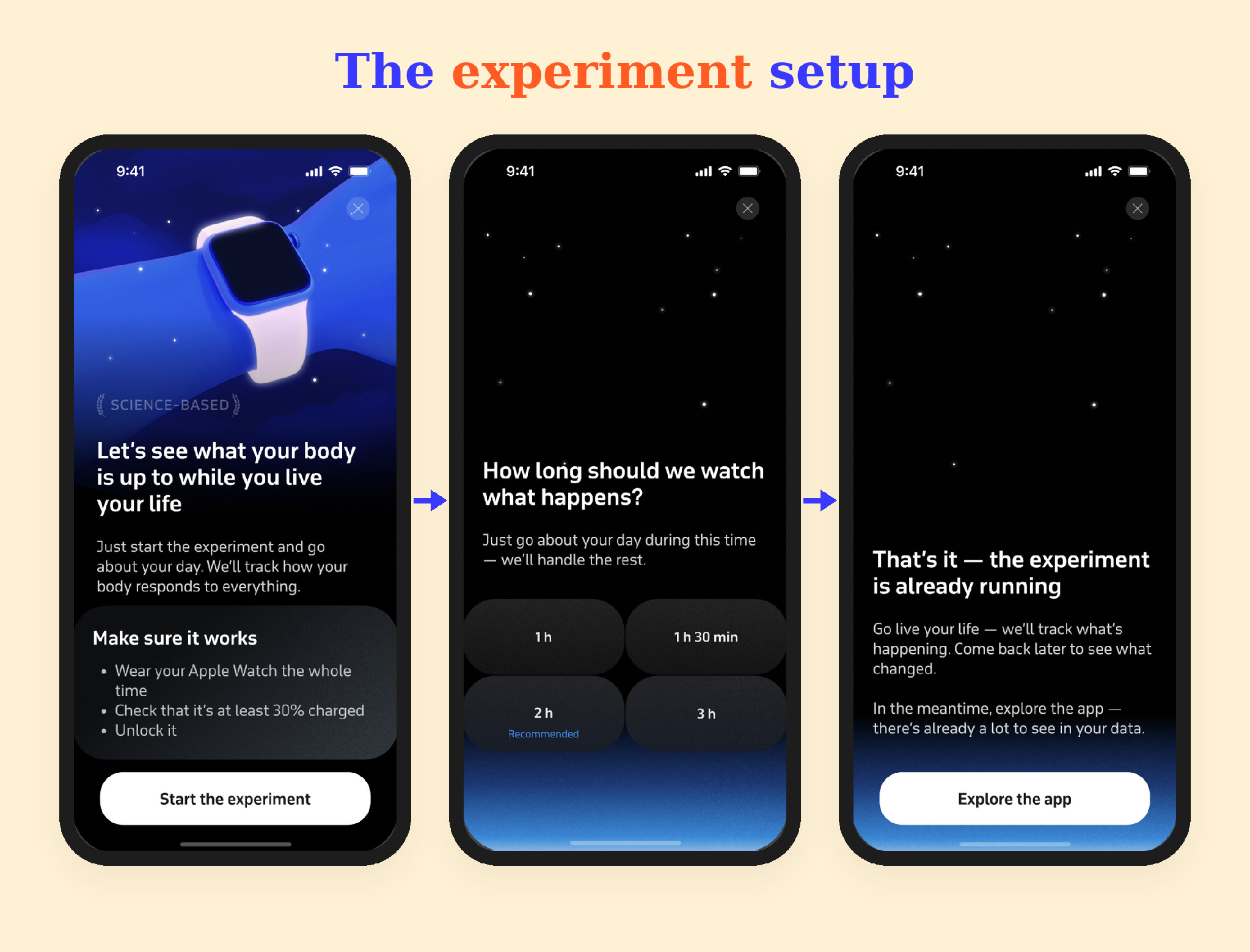
Then they show you what happened:
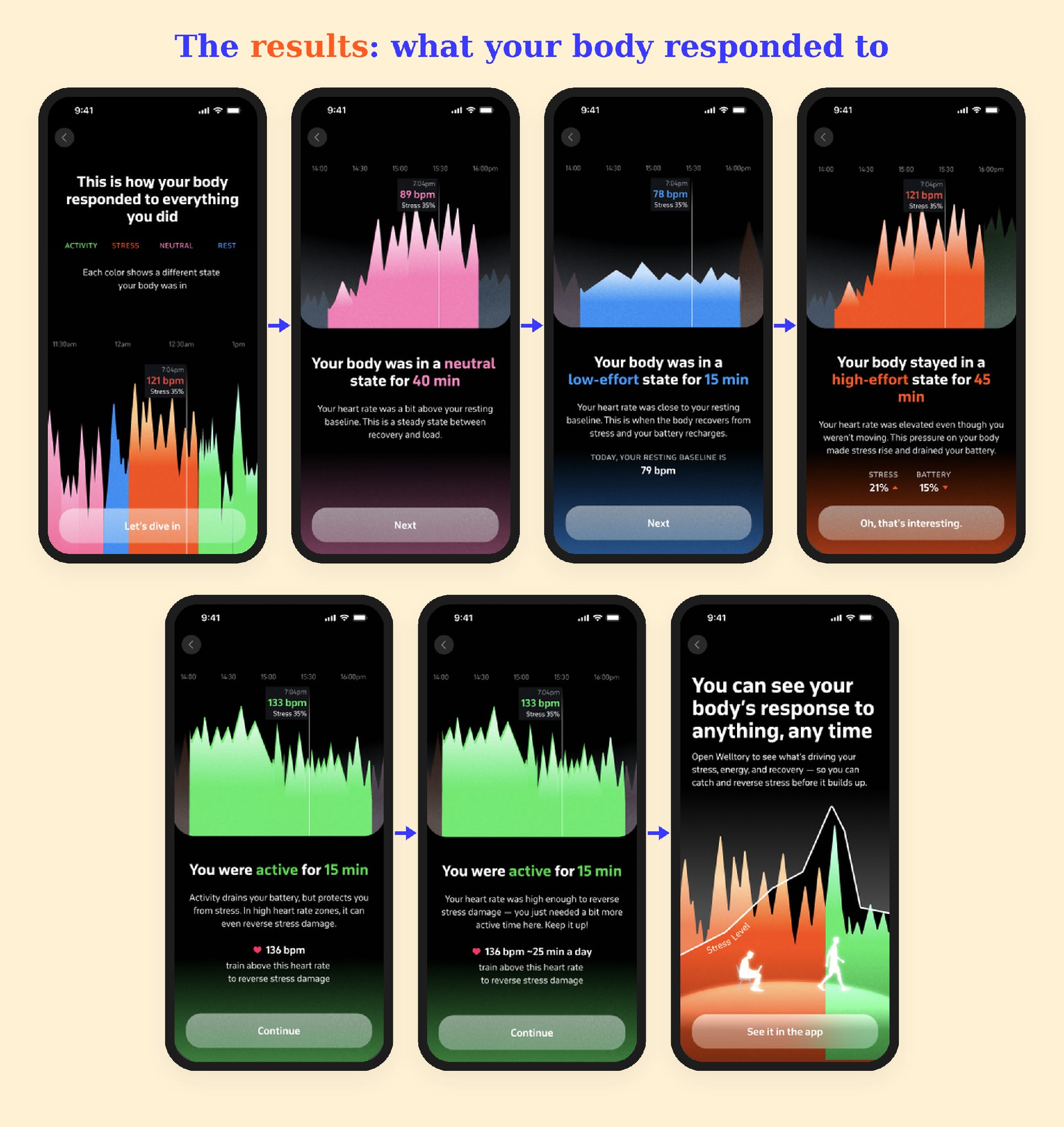
Users who see that and understand what their body is responding to (just like my gardening moment) are 6 to 10x more likely to convert.
Asya’s advice if you’re struggling with Day 0 conversions
“First: don’t panic, diagnose,” Asya recommends. “Low Day 0 conversion can mean very different things.”
“If people aren’t converting on Day 0 and they aren’t coming back, you probably have a value problem. If they’re coming back but never paying, you may have a monetisation or value-communication problem.”
“But if they’re coming back, engaging more deeply with the product, and gradually converting over time, you may just have a product whose value takes longer to understand.”
From there, you need to understand what drives conversion and who takes those actions.
Learn from Welltory: the solution isn’t to stick a load of extra paywalls in there. It’s to find those moments of value.
We often obsess over our onboarding paywall, but it’s the timely, contextual ones that often outperform. (I previously broke down the three types of paywalls and when each one works.)
💡 What I’d recommend this week
Firstly, listen to Asya on The Superwall Podcast, where I first heard about Welltory’s onboarding and the stat that started this whole issue.
And if you want to keep learning from this incredible product leader, also check out her Sub Club episode on why Duolingo’s engagement strategy won’t work for every app.
A huge thanks again to Asya for openly sharing her learnings.
Welltory is such a great example that while Day 0 does matter, it isn’t everything. Especially for freemium apps, or apps that need more time to deliver and show value.
With a clever balance between free and Premium content, and specific mechanisms to bring across the aha moment, Welltory converts users in the months that follow. And most importantly, it attracts quality users.
See you next week,
Daphne